Specs are compiled from manufacturer listings and verified buyer reviews and can change over time — please confirm the key details on the product page before buying.
For one bottle that covers salads, roasting, and a daily spoonful, look for a real harvest date, cold extraction, and a peppery finish you can feel in your throat. That tingle is the polyphenols (natural plant compounds that give fresh olive oil its bite) doing their job. Below are three bottles worth your counter space, each checked against what owners taste and report.
I’m Mo Min — the founder and writer behind Non Toxic Blog. This guide is built by comparing the manufacturers’ published specifications and the patterns across verified customer reviews, so you get each pick’s real strengths and trade-offs instead of marketing spin.
Most shoppers grab whatever bottle is closest and never check the harvest date, the extraction method, or the polyphenol count. This breakdown of 100 Pure Olive Oil shows which three bottles earn a spot in your kitchen and why.
Our Picks at a Glance
How To Choose The Best 100 Pure Olive Oil
You can judge most of an olive oil before you open the bottle — if you know which label words matter. Four things separate a bottle that tastes alive from one that tastes flat, and you can spot all four on the shelf. Here is what to check.
Extraction Method And Temperature
Cold extraction means the oil was pressed at a temperature below 80°F, and that gentle process preserves the volatile aromas, polyphenols, antioxidants, and vitamins naturally inside the olives. Heat during pressing speeds up yield but cooks off the character. If a label mentions cold extraction or cold-pressed, that is a real quality signal worth paying attention to.
Polyphenol Content And The Peppery Tingle
Polyphenols are the natural compounds that give fresh olive oil its bitterness and that distinctive peppery burn at the back of your throat. A high polyphenol count is what serious buyers hunt for, because it signals an early-harvest oil pressed at peak freshness rather than late-season fruit. If you swallow a spoonful and feel a cough-inducing tingle, that is the polyphenols showing up.
Packaging That Protects The Oil
Light and heat are the two fastest ways to ruin olive oil. Dark glass and opaque tins block light so the oil keeps its flavor and nutrition longer, while a clear bottle on a sunny shelf goes stale faster than most people realize. Look for dark glass, opaque white glass, or a tin — any of the three beats a clear container.
Origin, Harvest Date, And Bottle Size
Single-origin oils come from one region or one farm, which means more consistent flavor from bottle to bottle. A harvest date on the label lets you judge how fresh the oil actually is instead of guessing. And bottle size matters for everyday use — a large format works for heavy roasting and grilling, while a smaller bottle keeps a finishing oil from sitting open too long.
Quick Comparison
| Model | Best For | Size | Extraction | Origin | Amazon |
|---|---|---|---|---|---|
| Cobram Estate Classic 100% California Extra Virgin Olive Oil★ Best Overall | Everyday all-rounder cooking | 12.68 fl oz | First cold pressed | 100% California olives | Amazon |
| De Cecco Extra Virgin 100% Olive Oil | Large-format roasting and grilling | 25.4 oz | Cold extraction | 100% Italian olives | Amazon |
| Kosterina Original Extra Virgin Olive Oil | High-polyphenol daily spoonful | 16.9 oz | Cold-pressed, early harvest | 100% Koroneiki olives, Greece | Amazon |
In‑Depth Reviews
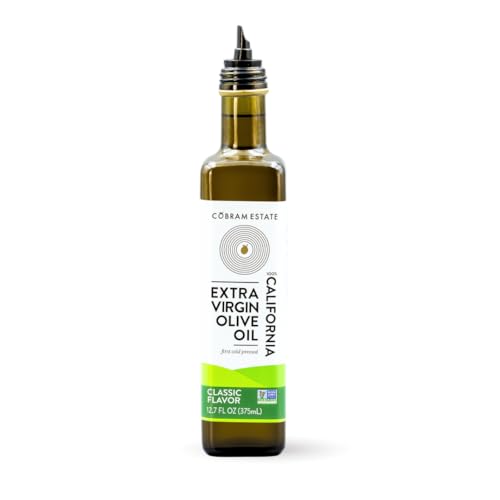
1. Cobram Estate Classic 100% California Extra Virgin Olive Oil
Our pick — over 4.5★ from 500+ verified ratings; the strongest balance of quality and price.
The all-rounder that pours clean and tastes like fresh green California fruit
If your oil has to do everything — dress a salad, finish a fish, sauté vegetables, and still taste good straight off a spoon — this is the bottle to start with. It is made from only 100% California olives grown in the Sacramento Valley and pressed first cold, so the fruit character survives the process. A 12.68 fluid-ounce bottle in a kitchen-friendly size that gets used up before it ever goes stale.
What wins people over is the flavor balance — the tomato-leaf and unripe tropical fruit notes with moderate bitterness and a bit of pepper on the finish. It is not too light and not too heavy, which is why it works across salads, pasta, vegetables, and fish without fighting any of them. Buyers report the flavor is a clear step up from supermarket oil, and the pop-up pourer spout under the cap draws steady praise for clean pouring with no sprayer or mister needed. You can drizzle directly over a plate without a slick mess down the bottle neck.
Compared to the Kosterina below, this one is easier to cook with because it holds its character at high heat rather than being built purely for finishing. The catch is size — at 12.68 fluid ounces it empties faster than the 25.4-ounce De Cecco, so heavy roasters will restock sooner. It also runs a bit smaller than that larger bottle, which makes it a finishing and everyday oil rather than a bulk grilling supply.
What earned it the top spot
- Only 100% California olives from the Sacramento Valley, pressed first cold
- Balanced flavor with tomato-leaf and unripe tropical fruit notes plus moderate bitterness and pungency
- The pop-up pourer spout means a clean pour every time with no extra tools
- Works across high-heat cooking, salads, pasta, vegetables, and fish without losing its character
- Gold and Silver medals from the LA, London, New York, and California State Fair competitions
Worth knowing before you buy
- At 12.68 fluid ounces it empties quickly in a heavy-cooking kitchen
- Smaller format than the 25.4-ounce De Cecco below, so heavy roasters restock more often
- Priced above basic supermarket olive oil if you just need a bulk cooking supply
Reach for this if: you want one bottle that handles high-heat cooking and raw finishing without a second oil on the shelf.
Think twice if: you need a larger format for constant roasting and grilling, where the De Cecco below makes more sense.
2. De Cecco Extra Virgin 100% Olive Oil
The large-format Italian bottle that keeps a busy kitchen supplied
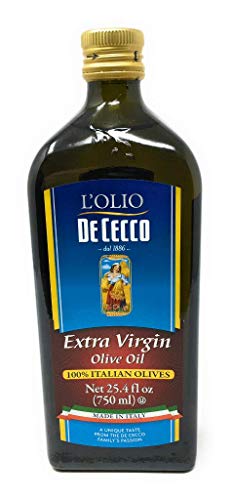
For heavy roasting and grilling, bottle size matters as much as flavor — and this one delivers 25.4 ounces, which is far more oil per bottle than the 16.9-ounce Kosterina above. That size is the single biggest reason to pick it if you go through oil quickly. It is made exclusively from selected olives grown in Italy.
The flavor here is sweet, almond-like, and lightly fruity with acidity below 0.3%, so it stays gentle on the palate. Cold extraction at a temperature below 80°F preserves the volatile aromas, polyphenols, antioxidants, and vitamins naturally inside the olives. The dark glass bottle blocks light to protect those organoleptic (flavor, aroma, and texture) and nutritional qualities, which is exactly the kind of packaging smart buyers look for. Owners mention high quality, versatility across roasting, dressings, and finishing, and a clean, fresh taste that never overpowers a dish.
One thing to plan around: an occasional can arrives dented in transit. A few buyers also flagged that the oil goes up in price over time, and expiration dates are a recurring concern, so check the best-by date when your delivery lands. But the everyday cooking case is strong and the 980-plus ratings back it up. If you want a single large bottle that covers roasting, grilling, and salads.
Big-bottle advantage: 25.4 ounces is the largest format in this lineup, which is a real edge if you cook with oil daily. Dark glass and cold extraction below 80°F keep the flavor and nutrition where they belong.
One delivery quirk: an occasional can arrives dented even though the oil inside is fine — and the recurring gripe across the reviews is that the expiration date is worth checking on arrival rather than trusting the listing.
Best matched to: a household that roasts, grills, and dresses salads constantly and goes through a large bottle fast.
Less ideal if: you want a finishing oil for a nightly spoonful — the Kosterina below is built for exactly that.
3. Kosterina Original Extra Virgin Olive Oil
The peppery Greek bottle with the throat tingle polyphenol hunters chase
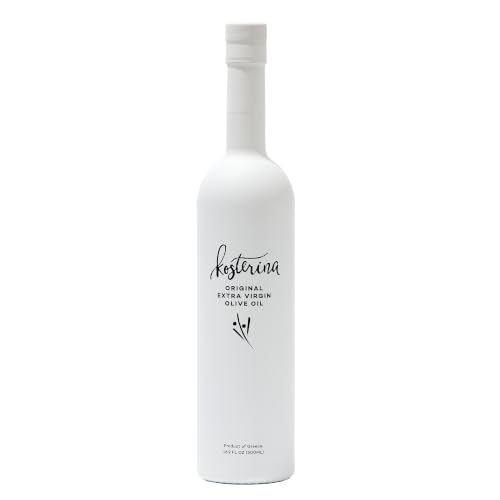
Cold-pressed from early-harvest Koroneiki olives hand-harvested in southern Greece, this is the bottle for the nightly spoonful crowd. The peppery burn at the back of the throat is the signal of fresh, high-polyphenol oil — and this one delivers it. At 16.9 ounces it sits in the middle of the size range, larger than the Cobram and smaller than the De Cecco.
This bottle ships in opaque glass or tin, which blocks the light that turns a fresh oil stale. Customers note a very good taste with the sturdy, single-origin character that Koroneiki olives (a Greek olive variety known for peppery oil) are known for. What gets talked about most is the quality and taste — both the peppery finish and the way the flavor holds up drizzled over a finished dish or used in medium-heat cooking.
Two honest notes. First, this is the highest-priced option here and it comes in the middle size, so it is built for finishing rather than bulk cooking — the De Cecco above handles the volume jobs better. Second, freshness gets mixed feedback across the reviews, so check the harvest and best-by dates printed on the label when it arrives.
Bold and peppery on purpose: early-harvest Koroneiki olives from southern Greece give it the sturdy, peppery finish that has made single-origin Greek oil a favorite for raw drizzling and daily spoonfuls. The opaque glass or tin keeps light out so the polyphenols (natural antioxidants in olive oil) stay intact.
The freshness question: freshness is the one aspect reviewers are split on, so check the harvest date on the label after delivery — and this bottle earns its spot as a finishing oil rather than a bulk cooking supply.
Choose this when: you want the boldest, most peppery oil of the three for raw drizzling and a daily spoonful.
Look elsewhere if: you need a large-format bottle for everyday roasting at a lower cost per pour.
Understanding the Specs
Cold Extraction And Cold Pressing
Both terms mean the olives were pressed at a temperature below 80°F, and it matters because heat speeds up yield but cooks off the delicate compounds inside the fruit. Volatile aromas, polyphenols, antioxidants, and vitamins are exactly the things a gentle, cold process preserves. That is why cold extraction shows up on the good bottles, and why two of the three picks here lead with it on the label.
Polyphenols And The Peppery Burn
Polyphenols are the natural plant compounds behind olive oil’s bitterness and that peppery tingle at the back of the throat. Early-harvest olives pressed at the start of the season tend to carry more of them than late-season fruit. If a spoonful makes you cough, that is not a flaw — it is the polyphenols showing up, which is exactly what makes a bottle like the Kosterina so popular among people who take their oil seriously.
Packaging That Protects The Oil
Light and heat break olive oil down faster than anything else, which is why dark glass and opaque tins are the gold standard. The De Cecco below uses dark glass to preserve its flavor and nutrition, and Kosterina ships in opaque glass or tin. A clear bottle sitting on a bright counter is the fastest way to turn fresh, peppery oil into something flat and tired.
Harvest Date, Origin, And Bottle Size
A harvest date printed on the label tells you how fresh the oil really is, and single-origin bottles from one region or farm tend to be more consistent from pour to pour. Size is the other practical spec — 25.4 ounces covers heavy roasting, while 12.68 fluid ounces suits a finishing and everyday kitchen that wants the bottle to stay fresh rather than sit half-used for months.
FAQ
What does cold extraction mean and why does it matter in olive oil?
Why does good olive oil make me cough when I swallow a spoonful?
Does the color of the bottle actually protect the oil?
How do I know if olive oil is really 100% pure and not blended?
Which of these olive oils is best for high-heat roasting and grilling?
Can I use a premium finishing olive oil for everyday cooking?
What size olive oil bottle should I buy for a two-person household?
Should I check the harvest date before or after I buy olive oil?
Is single-origin olive oil better than a multi-country blend?
Does extra virgin olive oil really go bad over time?
Final Thoughts: The Verdict
For most kitchens, the 100 pure olive oil winner is the Cobram Estate Classic 100% California Extra Virgin Olive Oil because it does the most jobs in one bottle and does them well. If you cook with oil every day and want the bigger format, grab the De Cecco Extra Virgin 100% Olive Oil. And for that peppery spoonful that polyphenol hunters chase, the Kosterina Original Extra Virgin Olive Oil is the one to reach for.
How We Picked
We do not accept paid placement. Every pick is matched to a real buyer and a real use-case; we do not hands-on test units.
Sources & Methodology
Specifications: manufacturer listings and product documentation. Review insights: verified customer reviews, as of September 2026. Pricing: not shown on this page (it changes often); check the current price via the retailer link.
As an Amazon Associate, Non Toxic Blog earns from qualifying purchases. This does not affect which products we feature.