Specs are compiled from manufacturer listings and verified buyer reviews and can change over time — please confirm the key details on the product page before buying.
Buying a shallow well pump for a half-horsepower job means matching three things: how deep your water sits, how many fixtures you need to feed, and whether your wiring is 115V or 230V. Get those three right and the rest is plumbing. Get them wrong and you will re-prime a pump every spring until you give up and buy the correct one. This list sorts both the well depth each pick actually handles and the gallons-per-minute (GPM — how much water moves through the pipe in a minute) each one delivers at pressure, so you can buy once.
I’m Mo Min — the founder and writer behind Non Toxic Blog. This guide is built by comparing the manufacturers’ published specifications and the patterns across verified customer reviews, so you get each pick’s real strengths and trade-offs instead of marketing spin.
A quick note before the picks: this list uses flexible same-type matching — every pump here is a shallow well jet pump (the type that sits above ground and pulls water from a well up to about 25 feet deep using suction), and a couple of picks are the next size up in the same family rather than the exact half-horsepower model searched. That does not change how you shop. What follows is the honest breakdown of the best 1/2 HP Shallow Well Pump picks, including the ones that are worth stepping up for.
Our Picks at a Glance


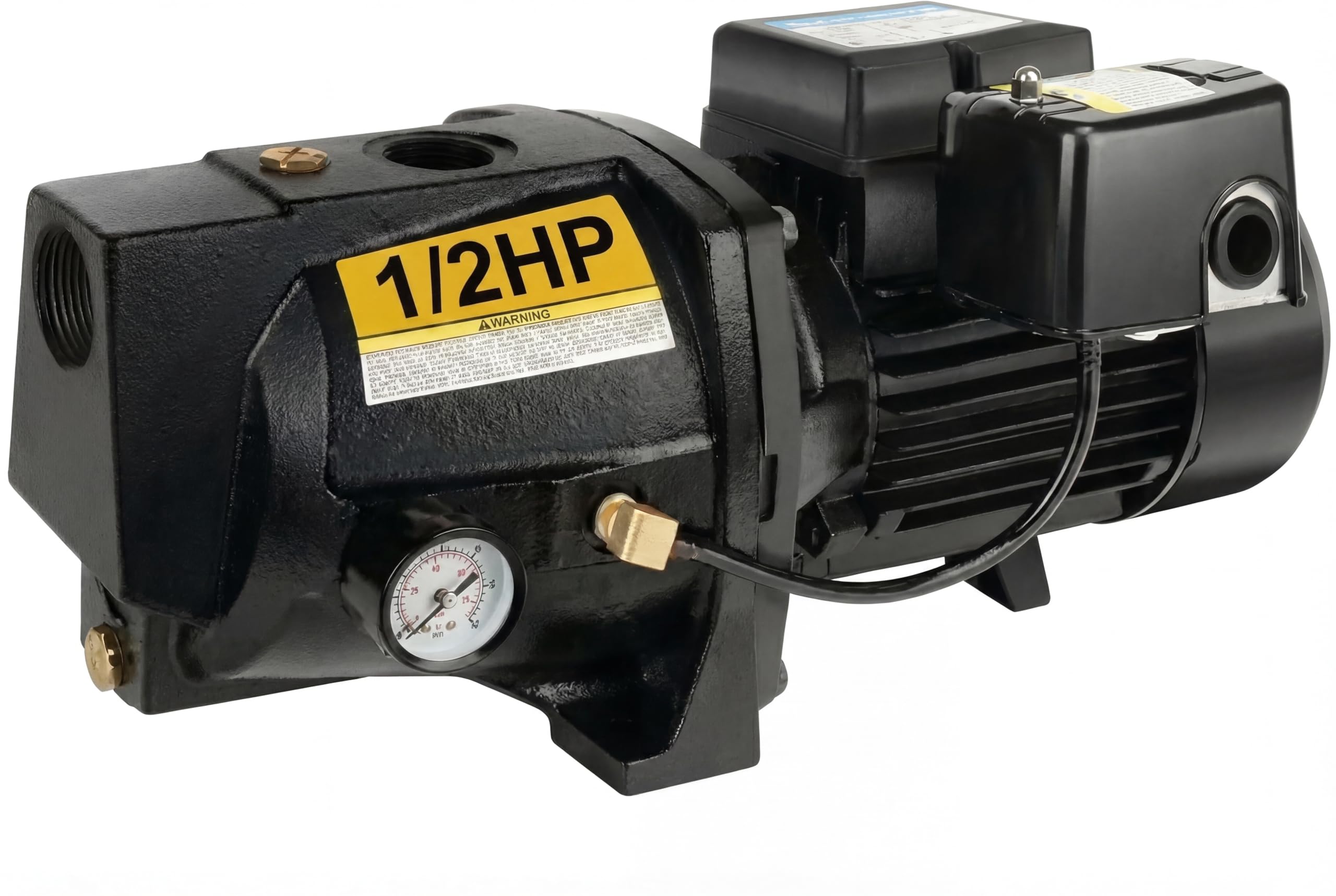
How To Choose The Best 1/2 HP Shallow Well Pump
The pump does not know what you plan to water. It only knows how far it must lift water, how fast you want it delivered, and how much pressure the system needs to hold. Those three numbers decide everything else.
Suction lift is the hard ceiling
A shallow well jet pump pulls water up from the well by suction, and suction has a physical limit — roughly 25 feet of vertical lift at sea level. Every pump on this list with a 25-foot maximum is built for that ceiling. If your well is deeper, no amount of horsepower fixes it, and you need a different pump type entirely. Measure from the water line in the well to the pump, not from the ground surface, because the number that matters is the water depth, not the well casing depth.
Flow rate at pressure, not peak flow rate
Gallons per minute (GPM) quoted on the box is usually the best-case number. What you live with is flow at your working pressure — often 30 PSI to 50 PSI for a household system. A pump rated 12 GPM at 30 PSI behaves very differently in a one-bathroom cabin than in a lawn with eighteen sprinkler zones. Match the flow figure to the fixtures you will actually run at once, and add margin if you plan to irrigate.
Voltage, pressure switch, and priming
Most homes run 115V on the circuit a well pump would use, but many of these motors ship factory-set for 230V. Check the nameplate and the internal switch before you power anything, or you risk tripping the overload. A pre-set pressure switch (commonly 30/50 PSI) means the pump starts and stops on its own without you babysitting a valve. And priming — filling the pump housing with water before first run — is a one-time job on a good install, but a pump with trapped air will fight you, which is why a dedicated priming port matters more than shoppers expect.
Quick Comparison
| Model | Best For | Flow Rate | Max Lift | Voltage | Amazon |
|---|---|---|---|---|---|
| Flotec FP4012-10★ Best Overall | All-round household supply | 10 GPM at 40 PSI | 25 ft | 230/115 V | Amazon |
| TDRFORCE 1/2 HP Booster PumpBest for Irrigation | Lawn sprinkler and hose pressure | 14.5 GPM | 108 ft | 110 V AC | Amazon |
| Acquaer Shallow Well Jet PumpBest Pressure Control | Gardens, lawns, and farms | — | 147 ft | 115/230 V | Amazon |
| Red Lion PWJET50 | Cottages, one-bathroom homes | 7.4 GPM at 30 PSI | 25 ft | 115/230 V | Amazon |
| WAYNE SWS50 | Cabins and light household | 375 gal/hr | 25 ft | 120/240 V | Amazon |
| Red Lion RJS-50-PREM | Small homes, starting power | 12 GPM | 25 ft | 115/230 V | Amazon |
| Pentair Myers HR50S | Pressurized cabin water | 9.5 GPM | — | — | Amazon |
| Goulds J5SH | Quiet in-house well systems | 12 GPM | — | 115/230 V | Amazon |
| Goulds J5S | Long-service replacement duty | 16.5 GPM | 25 ft | 115/230 V | Amazon |
In‑Depth Reviews
1. Flotec FP4012-10 1/2 HP Shallow Well Pump Jet
Our pick — over 4.5★ from 300+ verified ratings; the strongest balance of quality and price.
The one that quietly fills the tank and keeps its mouth shut about it
Start with the number that decides whether this pump suits your house: it delivers 10 GPM at 40 PSI. That is a flow rate — gallons per minute — at a pressure strong enough to keep a shower running while a washer fills. For a typical single-bath home on a shallow well, that is comfortable headroom. The fiberglass-reinforced thermoplastic body is the second thing that matters, because sandy, slightly gritty well water chews through cheaper housings over time. There is also a dust-proof cover over the electrical components, which keeps insects and grit out of the wiring compartment.
What wins people over here is performance that outperforms pricier rivals — owners routinely compare it to pumps that cost considerably more and find the pressure holds up. Setups vary too: it runs on a cistern just as happily as it does a well, which is more flexibility than most pumps in this bracket offer. Installation leans easy. The one wrinkle new buyers hit is thread sealing — a drip at the front plugs on first start is a re-tape problem, not a defect, and it is worth applying thread tape carefully before you crack the valve. Against the Acquaer, the Flotec moves water at a more conservative flow but at a stated working pressure, where the Acquaer lists no flow figure at all.
The honest trade-off is durability of the housing, which is the most evenly split point of debate among long-term owners — a large share report many years of service, and a smaller share have seen the pump housing give out. That is a materials question, not a performance one, and the thermoplastic is specifically chosen for corrosion and sandy-water resistance. Owners also log long service on old wells alongside the occasional stripped intake thread from over-tightening, so hand-tight plus a quarter turn is the right instinct.
Where it pulls ahead
- 10 GPM at 40 PSI — real working pressure, not a peak-flow claim
- Fiberglass-reinforced thermoplastic resists corrosion and sandy water
- Dust-proof electrical cover keeps bugs and grit out of the wiring
- Works on a well or a cistern with the same plumbing
What to plan around
- Front plugs need fresh thread tape at startup or they drip
- Over-tightening the intake threads can strip them
- Housing longevity is the most debated point among owners
Best for: a one- or two-bath home on a well 25 feet or shallower that wants steady pressure without paying premium-brand money.
Think twice if: you plan to pull from deeper than 25 feet, or you want a cast iron housing instead of thermoplastic.
2. TDRFORCE 1/2 HP Shallow Well Pump 120V AC Garden Hose Pump
A hose-thread pump that turns a weak spigot into a sprinkler that actually reaches
If the job is a lawn, a garden, or a garden hose that has gone limp, this is the pick to look at first. It moves 14.5 GPM, which is the highest flow rate on this list, and its 108-foot max head means it can push water up a rise or across a long run without quitting. The 1-inch inlet and outlet connect straight to a garden hose and standard home water plumbing, and it runs on 110V AC with a standard US plug on a 6.5-foot cord. Max pressure is 4 bar, roughly the pressure you would want for sprinkler coverage.
The controller is the clever part. It starts the pump automatically when water starts running and shuts it down when it detects dry pumping, so you are not flicking a switch every time a sprinkler head cycles. The pressure screw behind the controller lets you dial in the pressure to suit your setup, and it is self-priming, which means you fill it once and it takes over. The stainless steel construction is a durability plus on a pump that will spend its life outdoors in the weather.
Be honest about the fittings before you buy. The weak point here is the connection tolerances — getting a leak-free seal at the inlet and outlet can take more thread tape and more torque than it should, and that is the recurring note in buyer feedback. The controller and the pump body themselves hold up, and when something does fail, TDRFORCE has a 180-day warranty and a track record of working with buyers on replacements. One reviewer noted the pump stopped after a year and the seller arranged a replacement, so the support line works even when the hardware does not. Treat the 180-day coverage as the real durability window it is, and this is a solid irrigation pump.
Flow king of the list: 14.5 GPM is the highest rated flow here, and the 108-foot max head gives it reach a plain booster cannot match.
The fit note: this is an irrigation and pressure-boosting pump with a standard plug, not a permanently wired shallow-well household install.
Reach for this if you need to wake up a weak spigot or run sprinklers off a shallow well or holding tank and want the flow.
Look elsewhere if you need a hard-wired household pump the local inspector expects to see plumbed into a pressure tank.
3. Acquaer Shallow Well Jet Pump, Cast Iron, Well Depth Up to 25 ft
A cast-iron workhorse that manages its own pressure and calls it a day
The headline number here is the 147-foot maximum lifting height — the farthest reach on this entire list, and roughly six times the lift of the Flotec’s 25 feet. That does not mean it will pull from a 147-foot well, because a shallow well jet pump’s practical suction ceiling is what the suction side allows; what that figure represents is the total head (the pump’s ability to push water against pressure and height on the discharge side), which matters if your water has to climb, travel a long run, or feed a sprinkler system that needs real push. If you are running a lawn, a garden, or a farm supply with elevation involved, that number is the one that decides whether the pump has the muscle. The cast iron casing and volute are built for hard use, and the compact 16 by 8 by 8-inch footprint slips into tight spots where bigger pumps will not fit.
The automatic pressure switch is what makes this pump feel smarter than the price tag suggests. It kicks on when system pressure drops below 20 PSI and shuts off above 35 PSI, so you get water without staring at a gauge. A pressure gauge sits right on the casing, which saves you buying one. The dual-voltage motor runs on 115V or 230V and comes factory-set for 230V, and there is built-in thermal overload protection that shuts the motor off if it starts to overheat. Speaking of which, what the review pages rave about most is the sheer quality of the build for the money, followed by how straightforward the instal is for anyone comfortable with PVC connections and wiring.
Here is the catch worth knowing: the durability and noise reviews are genuinely split, and a handful of owners have had a unit fail early. It is a minority outcome against a large body of happy users, but it is real, and the freeze-up that one owner reported is a reminder to drain and winterize this pump properly rather than leave water in the housing. Buy it for the cast iron construction and the automatic pressure control, and it will do exactly what it says.
Why owners single this out: the build quality is what keeps coming up — cast iron casing and volute that feel and perform like a heavier-dollar pump.
What to watch: the pressure switch cycles between 20 PSI and 35 PSI, which is a modest range for a full household; for a single sprinkler zone or garden supply, that is more than enough.
Pick this one if you want a cast iron pump with automatic pressure switching for a garden, lawn, farm, or irrigation system.
skip it if you need the widest household pressure band, or you are in a climate where the pump will freeze if you leave it full.
4. Red Lion PWJET50 1/2 HP Shallow Well Jet Pump

The cast-iron cottage pump that keeps two taps and a potable-water line happy
This is the pump for a small home or cottage where one bathroom and a kitchen tap is the whole demand. It draws up to 7.4 GPM at 30 PSI with a 5-foot suction lift, runs on either 115V or 230V, and carries a factory pre-set 30/50 pressure switch that delivers a working maximum of 50 PSI. It is built for wells down to 25 feet. The cast iron casing and volute are paired with a glass-filled thermoplastic impeller and diffuser — that is the spinning part that actually pushes the water — and the whole assembly is certified for potable water and CSA listed, which means it has been tested to a recognized standard for drinking-water use. It comes with a 4-amp draw at 115V and a maximum pressure of 63 PSI on a 145-foot maximum head.
It has a well-earned reputation for quietly doing its job. The pump pages describe it as smooth and reasonably quiet, One owner has run it on a sump-pit drip irrigation setup since 2017, with repair parts still available. One of the more recent pumps is on a seasonal duty, so owners do not spend much time thinking about it.
The honest catch is leakage and durability. A few buyers report the pressure-switch tube being brittle from the start, and a few others have found the pump not as long-lasting as they hoped. That is a small slice of a large install base, but it is worth the note: inspect the pressure tube on arrival, and confirm the voltage switch position under the top cover — four screws and a glance — before you power it. One buyer on a recent installation did exactly that and found the sticker reading 230V while the unit was internally set to 115V, which is a two-minute check that could save you a service call. For a cottage or workshop that needs steady potable water from a shallow source, this is a well-made pump.
Best if: you are replacing a small cottage or one-bathroom-household pump and want cast iron construction at a mid-range cost, with a 30/50 switch already set.
The ideal match: seasonal property owners and anyone with a single-bathroom demand who wants a cast-iron pump rated for potable water.
Worth knowing before you buy: check the internal voltage switch under the cover before powering up, since more than one unit has shipped with the sticker and the switch disagreeing.
5. WAYNE SWS50 1/2 HP Cast Iron Shallow Well Jet Pump
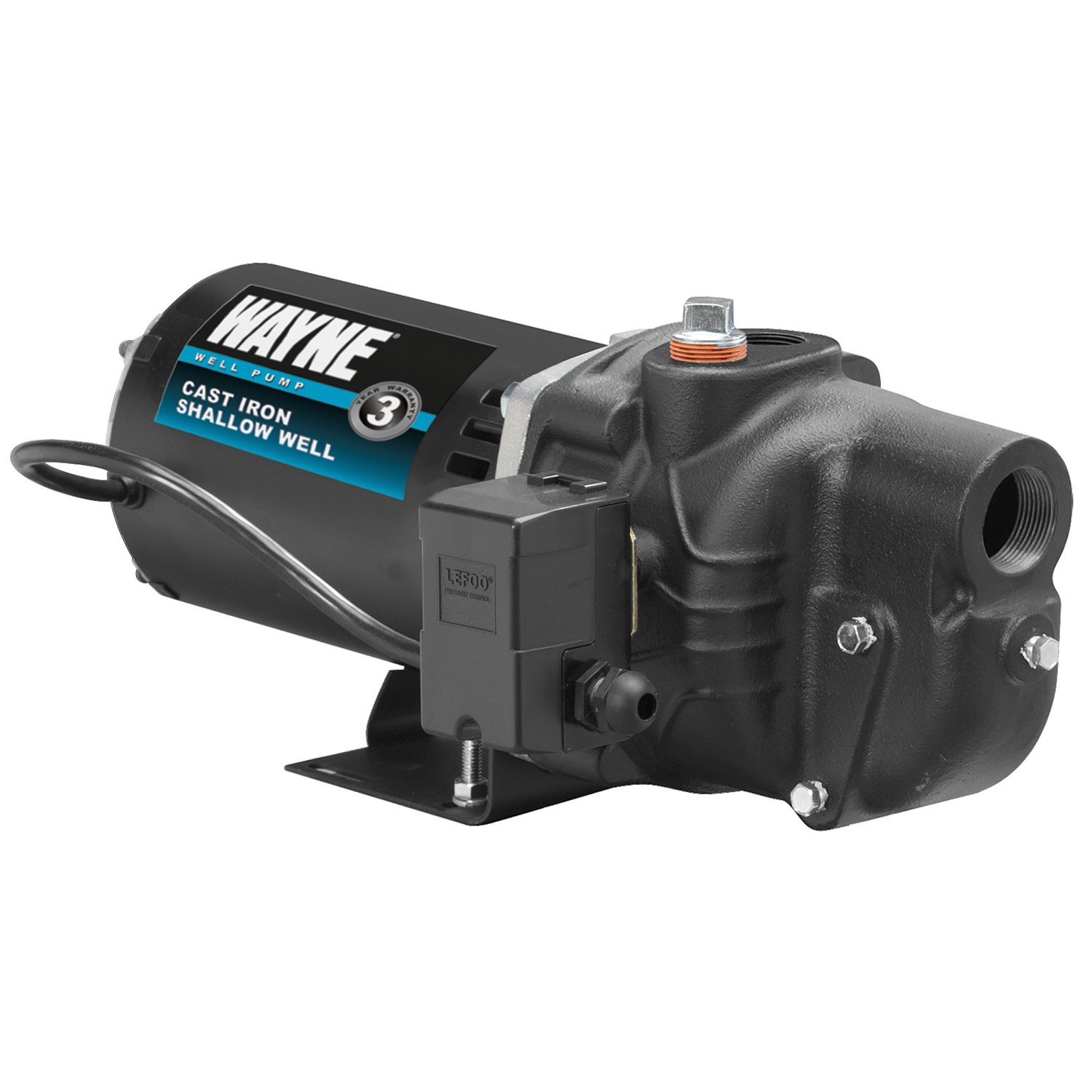
A pump that primes in seven minutes, installs in an hour, and watches itself
The Wayne SWS50 is the quiet-confidence pick. Its cast iron volute comes with a dedicated priming port, so filling the housing before first run is a straightforward job, not a wrestling match. It moves up to 375 gallons per hour at 50 PSI, runs on a dual-voltage 120V/240V square-flange motor set for 240V from the factory, and carries a factory pre-set 30/50 PSI switch for fully automatic operation. The suction side takes 1-1/4 inch NPT pipe and the discharge handles 3/4 inch NPT. The warranty is three years, which gives you real backup if something goes wrong in the first season.
Owners mention that it primes without a fuss and runs cool — one account logs a full hour-long install and a seven-minute prime with the tank filling steadily after. Another owner replaced a pump that had served the same location for thirty years, a vote of confidence in the design rather than one unit. Several buyers have stepped down from a 3/4 HP to this 1/2 HP and found the smaller pump performs just as well, cycling on and off in under a minute for their pressure needs. It is described as more reliable than cheaper imports in the same category.
There is one installation adjustment to plan for. The mounting bracket is light for the job, and owners commonly brace it to reduce vibration. The pressure switch can also arrive set to a narrow band that cycles the pump more often than some systems need — the fix is a quick turn of the adjustment screw, not a repair. And one thing nobody tells you until the pipe is threaded: the discharge outlet measures 7/8 inch NPT, not the 1 inch the spec sheet namespace-wide might suggest, so pick up an adapter before you start. With those two adjustments, the Wayne SWS50 is a clean, dependable household pump.
The reasoning behind the label
- Dedicated priming port makes the first fill easy and repeatable
- Three-year warranty on a pump this price is real protection
- Dual-voltage 120V/240V motor with a simple internal switch
- Full factory 30/50 PSI switch for automatic start and stop
What buyers adjust after install
- The mounting bracket is flimsy — plan on bracing it
- Pressure switch may cycle quickly on a small tank until you tune it
- Discharge outlet is 7/8 inch NPT, so get an adapter before you plumb
Built for: a household or cabin that wants a quiet, self-starting pump with a real warranty and a priming port you will only use twice.
Not the one for: anyone who wants to skip pipe-thread surprises — expect to buy one adapter for the discharge side.
6. Red Lion RJS-50-PREM 1/2 HP Shallow Well Jet Pump

A 12-GPM cast-iron pump that starts hard and holds its pressure band
The RJS-50-PREM puts out 12 GPM, its 1-1/4 inch FNPT suction intake and 1 inch FNPT discharge match standard plumbing, and it runs on 115V or 230V with a capacitor built in for extra starting power. That capacitor matters on shallow wells that have to pull water a good distance before the suction line fills. It carries a factory pre-set 30/50 pressure switch producing a working maximum of 50 PSI and comes with a pressure gauge in the box. The heavy cast iron casing and volute are designed for long service, the impeller and diffuser are glass-filled thermoplastic, and the unit is CSA listed for US and Canadian use. Maximum pressure is 65 PSI with a 150-foot maximum head.
What people comment on most is how easy the install is once the plumbing lines up — it runs on a 1-1/4 inch input and 1 inch output and drops into most existing shallow well systems with only minor adjustment. The motor starts smoothly and runs quietly once primed. If you are replacing a Goulds J5 or a similar setup, the plumbing ports match up closely, so much of the installation is a straight swap with a few fittings.
The real story of this pump is its mixed reputation for long-term reliability. Most units run fine, but a small share report the pump freezing up after a few years and needing a manual twist of the shaft to restart, which is a sign of a motor dead spot rather than a failure of the pump itself. Take two extra steps before you commit: buy the 1.25-inch check valve separately if your install needs one, because the wrong-size valve is a common box mistake, and plan your priming carefully, because this housing holds more air than a smaller-body pump and wants the vent and priming plugs opened to bleed it out. Do those two things right and the RJS-50-PREM is a smart, capable pump for the money.
What to know up front: the included check valve is 1 inch but the suction side needs 1.25 inch — pick up the correct one before the pump arrives.
The honest long-run picture: expect a solid few years of service from the motor, and budget for a possible priming or startup tweak after that.
This is your pick if you want a cast-iron pump with a capacitor for strong starts and a 12 GPM flow rate to feed a small home or cottage.
Give it a skip if you are not prepared to source and fit the right suction-side check valve yourself, or you want a pump with no long-term questions at all.
7. Pentair Myers HR50S 1/2 HP Cast Iron Shallow Well Jet Pump

The spare-time backup pump that saves a cabin when the primary dies
The Myers HR50S is built for people who treat a well pump the way they treat a generator — as a backup that needs to work on demand. It delivers 9.5 GPM, has a pressure regulator included, and its compact 20.1 by 11.3 by 8.6-inch footprint means it stores without eating a shelf. The cast iron build is made for real duty and, in one owner’s words, it is “the heart and soul of my emergency water supply for our mountain cabin.”
The story owners keep telling about this pump is that it replaces a Myers that lasted. Twenty-five years comes up more than once in owner accounts, which is the reassurance a buyer wants when replacing a decades-old Myers unit. The alloy steel build is another way of saying the pump is spec’d for the long run, and the included pressure regulator takes one item off your shopping list. If your existing system already has the right plumbing, the swap can be close to plug-and-play.
One thing to sort out before you order is shipping packaging. A couple of buyers have reported the box arriving with damage, and this is a heavy cast iron item that needs care in transit. If you buy it as a backup, open and inspect it on arrival so you have time to exchange it before you actually need it. There is also a strict return policy worth knowing: the unit cannot be returned once it has been installed, which is standard for a pump that touches water but something to keep in mind if you are ordering it on a tight timeline.
Why it earns a place: a Myers that replaced a 25-year-old unit is the strongest possible endorsement for buyers treating this as a long-term standby.
One honest caution: this item ships heavy and a few boxes arrive dented — inspect it the day it lands.
Suits a buyer who already owns a Myers well pump and wants a like-for-like replacement, or who needs a compact cast iron backup ready for an emergency.
Think another direction if you are a first-time buyer who wants an easier install — a smaller body and lower weight pump is a friendlier start.
8. Goulds J5SH Residential Shallow Well Jet Pump 0.50 HP

The premium pick whose owner would rather buy once and stop thinking about it
The Goulds J5SH is the pump you buy when you are done replacing cheap ones. It delivers 12 GPM on a 3500 RPM capacitor-start motor, runs on 115V or 230V, and includes a pressure regulator with a stainless steel shaft and built-in overload protection with automatic reset. It is UL778 listed and meets NEMA standards, and it comes with an AS4 pressure switch preset at 30-50 PSI. The suction connection is 1.25 inch NPT and the discharge is 1 inch NPT. The 17 by 8 by 9-inch body weighs 43 pounds, which tells you the casing and fittings are substantial.
The reason buyers step up to this pump is that they have already tried the budget option. One owner put it plainly, saying they had been “using the cheap china pumps and was replacing them every year,” and that the Goulds “works way better.” What counts to those owners is that it is built in the US, with the internal parts to match — one buyer made a point of saying they have “always said by the best, In the long run it pays off.” The pressure performance is the second draw: multiple buyers describe the pump restoring pressure in under two minutes and hitting close to 70 PSI at shut-off, with one saying it gets the system “up to 55 PSI quickly and with a lot less noise.”
One thing to keep expectations honest about is that the pressure switch adjustment range is narrower than some buyers expect — around 15 PSI rather than the 20 PSI they hoped for — so if you need a wider band, plan for a slightly different setup. And while the pump should be quieter than a cheap unit, it still makes noise under load, which is normal for a jet pump in an open basement. The J5SH is a reliable, US-made pump that will take a lot of use before it needs replacing.
Proven where it counts: the stainless steel shaft and built-in overload protection with automatic reset are the components that make a premium pump premium — they take the load-bearing abuse budget pumps do not handle.
Worth the step up if you have already gone through a cheap pump or two and want a reliable US-made unit with a stainless steel shaft and overheat protection.
Look at a value pick instead if you are on a tight budget or only need one small bathroom’s worth of water.
9. Goulds J5S Shallow Well Jet Pump, 115/230V, 1/2 HP

A replacement pump that the last one probably outlived you on, twice over
The J5S moves 16.5GPM — the highest flow rate of any pump on this list — from a stainless steel shaft and cast iron build rated for a 25-foot maximum lift. It runs on 115V or 230V with a capacitor start motor at 3500 RPM, includes a pressure regulator, and carries the same AS4 preset 30-50 PSI pressure switch as the J5SH. Pipe connections are 1.25 inch NPT suction and 1 inch NPT discharge, and the unit is UL778 listed to meet NEMA standards. The 17.25 by 9.88 by 8.75-inch body weighs just over 40 pounds, so it is a manageable one-person install with a properly braced mount.
What makes this the value pick of the premium tier is the service history behind it. Customers note 15 to 22 years of service from Goulds pumps in the same spot, and one buyer swapping a J5S for another J5S said the existing plumbing made installation a minutes-long job. The quiet operation and steady water pressure come up repeatedly, and the value-for-money rating is the strongest positive theme in the owner feedback. One buyer who had been burned by a budget-store pump that could not push water above 10 PSI called the Goulds a pump that “worked like a champ.” Switching the voltage is a simple internal adjustment, which several owners confirm is a few minutes of work.
The one honest catch to size is the mounting bracket. This pump is heavy, and the bracket that ships with it is not built for the same load — a handful of owners have had to reinforce it or swap it for something sturdier to stop vibration from loosening the plumbing. That is a five-dollar fix, not a reason to look elsewhere, but plan for it. The other consideration is that this is a straight replacement-oriented pump: it has no pressure gauge in the box, so if you want to see the reading, order a gauge alongside it. For a homeowner who wants a 1/2 HP shallow well pump that will outlast a couple of cheap replacements, the J5S is the number to beat.
The case for the J5S
- 16.5 GPM — the highest rated flow rate of any pump on this list
- Stainless steel shaft and cast iron body built for long service
- Dual voltage 115V/230V with a simple internal switch
- UL778 listed and NEMA-compliant construction
What to add to the cart
- Mounting bracket is undersized — plan on bracing or replacing it
- No pressure gauge in the box — order one if you want a reading
- Heavy enough to need a helper for overhead or tight installs
Buy it for: a straight replacement where the plumbing already fits and you want the highest flow on this list with a proven 15-to-22-year service record.
Plan on: reinforcing the mounting bracket and picking up a pressure gauge, because this pump ships without one.
Understanding the Specs
GPM and Max Head
GPM stands for gallons per minute — the volume of water the pump moves. Max head is the highest the pump can push water against pressure and height combined, usually measured in feet. A high max head means the pump can serve a system with elevation or a long discharge run, while a high GPM at working pressure means you get more water at the tap or sprinkler. The two numbers trade off against each other: as head increases, GPM drops. Look at the flow at your target pressure, not the peak flow, because that is what you actually live with.
Suction Lift and Priming
Suction lift is how far the pump can pull water upward from the well to the pump inlet. A shallow well jet pump handles roughly 25 feet of lift, and every pump on this list with that rating is built for that ceiling. Priming is the process of filling the pump housing with water before the first run, and a pump with a dedicated priming port makes that a clean job rather than a messy one. Once primed, a self-priming pump holds its prime between uses as long as the suction line stays sealed — which is why a check valve on the suction side is essential.
Dual Voltage and Pressure Switches
Dual voltage means the motor runs on either 115V or 230V and is set at the factory for one of the two. You must match the switch to your incoming power source before wiring, or you risk tripping the overload or damaging the motor. A pressure switch is the device that starts and stops the pump automatically: it kicks on when system pressure drops below the cut-in point and off above the cut-out point. Most pumps here ship with a 30/50 PSI preset, which produces a working pressure around 50 PSI — fine for household use.
Build Materials
Cast iron is the standard for a durable volute and casing — it resists corrosion, holds up to sandy water, and handles the vibration of a working pump. Thermoplastic and glass-filled thermoplastic parts take the wear on the impeller and diffuser, the spinning components that move the water. A stainless steel shaft resists rust where a lower-grade steel shaft would seize. When you compare pumps, the material list is your best clue to how long the unit will last in your conditions.
FAQ
How deep a well can a 1/2 HP shallow well jet pump actually pull from?
What is the difference between GPM and max head on a well pump?
Do I need a pressure tank with a shallow well jet pump?
Why does my shallow well pump cycle on and off repeatedly?
What is the difference between 115V and 230V on a well pump?
How do I prime a shallow well jet pump for the first time?
Do I need a check valve on the suction line of a shallow well pump?
How long should a 1/2 HP shallow well pump last?
Can a 1/2 HP shallow well pump run a lawn sprinkler system?
What happens if I power a shallow well pump at the wrong voltage?
Final Thoughts: The Verdict
For most homes on a well 25 feet or shallower, the 1/2 hp shallow well pump winner is the Flotec FP4012-10 because it delivers 10 GPM at a real working pressure of 40 PSI, and the fiberglass-reinforced thermoplastic body resists the sandy water that wears out cheaper housings. If you want the most flow on the list and a proven 15-to-22-year service record, grab the Goulds J5S, which moves 16.5 GPM from a stainless steel shaft. And for irrigation and garden supply, the Acquaer Shallow Well Jet Pump is the one to reach for — its 147-foot maximum lifting height and automatic 20-to-35 PSI pressure switch make it the right pump for lawns, gardens, and farms where elevation is part of the job.
The honest nudge: if you are replacing a cheap pump you have already replaced once, the money you save on a budget unit rarely survives a second purchase — pick the pump whose flow rate at your working pressure matches your fixtures, and it will be the last one you buy for a long while.
How We Picked
We do not accept paid placement. Every pick is matched to a real buyer and a real use-case; we do not hands-on test units.
Sources & Methodology
Specifications: manufacturer listings and product documentation. Review insights: verified customer reviews, as of September 2026. Pricing: not shown on this page (it changes often); check the current price via the retailer link.
As an Amazon Associate, Non Toxic Blog earns from qualifying purchases. This does not affect which products we feature.