Specs are compiled from manufacturer listings and verified buyer reviews and can change over time — please confirm the key details on the product page before buying.
Start with one question: do you want filtered water straight from your kitchen tap, or a pitcher you fill and keep in the fridge? Cartridge schedule, counter space, and if you need lead reduction or just better taste all follow from that answer. This guide covers nine options — under-sink, faucet-mount, gravity, countertop RO, and pitcher — so you can match one to your sink, your space, and your water.
I’m Mo Min — the founder and writer behind Non Toxic Blog. This guide is built by comparing the manufacturers’ published specifications and the patterns across verified customer reviews, so you get each pick’s real strengths and trade-offs instead of marketing spin.
Below you will find under-sink systems that mount out of sight, gravity and countertop units that need no plumbing at all, and pitcher-style filters for anyone who just wants colder, cleaner-tasting water without touching a wrench. Each pick here solves a different problem, so the work is matching the system to your kitchen. Here is the breakdown of the 1 water filter options worth your counter or cabinet space.
Our Picks at a Glance


How To Choose The Best 1 Water Filter
Before you buy anything, hold your faucet under the tap in your mind and ask what you actually want to change. If your water tastes fine but leaves a faint chemical edge, a simple carbon filter will fix it. If your ice maker is leaving a white film, or you are on well water, you may want something with tighter filtration and more stages. The four questions below sort nearly every buyer into the right bucket.
Where do you want the filter to live?
Faucet-mount filters screw onto the end of your existing tap and take seconds to attach, but they add bulk to the sink and may not fit pull-out or handheld sprayer faucets. Under-sink systems connect to the cold water line and hide completely, freeing your countertop, but they need a little space in the cabinet and usually a bit of work at the shutoff valve. Countertop and gravity units sit on the counter and need no plumbing at all, so they are the friendliest option for renters. Pitcher filters are the simplest of all — you fill, wait, and chill.
What do you need it to remove?
Look at the certification, not the marketing. Filters that carry a WQA or IAPMO certification (independent labs that verify the manufacturer’s claims against published standards) state exactly which contaminants they reduce — lead, chlorine, PFOA/PFOS, chromium, mercury. If your home is older and may have lead plumbing, prioritise a filter that names lead reduction on the label. If your water just tastes flat or stale, a plain carbon-block filter is usually enough.
How much water does your household actually drink?
This is where most buyers get caught out. A pitcher holding ten cups can run dry by mid-afternoon in a busy kitchen, while a system rated at thousands of gallons keeps going for a year. Count how many times a day you refill your current container and multiply it out — that number, not the glossy photos, tells you if you need a small carafe or a system rated in thousands of gallons.
How much upkeep can you live with?
All water filters need their cartridges replaced eventually, because the carbon and the membrane fill up with whatever they’ve been catching. The difference is how often and how much of a chore it is. A twist-out cartridge that swaps in three seconds is a different ownership story than unscrewing a housing with a wrench. Check the replacement schedule before you buy — filter life measured in months and gallons is the real running cost of any system.
Quick Comparison
| Model | Best For | Filter Capacity | Filter Life | Install Type | Amazon |
|---|---|---|---|---|---|
| SimPure V7 Under Sink Water Filter System★ Best Overall | Whole-home-tasting water from one tap | 20,000 gallons | 12 months | Under Sink | Amazon |
| PUR Plus Faucet-Mount Water Filtration SystemMost Popular | Renters who want it on in two minutes | 100 gallons | 3 months | Faucet Mount | Amazon |
| ZeroWater 32-Cup Ready-Read DispenserBest for Hard Water | Families chasing zero dissolved solids | 7.5 liters | — | Countertop | Amazon |
| Brita Large 10-Cup Pitcher | Fridge-door everyday drinking water | 10 cups | 60 days | Countertop | Amazon |
| WINGSOL Under Sink Water Filter System | A dedicated filtered faucet on the counter | 11,000 gallons | 12 months | Under Sink | Amazon |
| Waterdrop AS13 Under Sink Water Filter System | Fast three-second cartridge swaps | 16,000 gallons | 12 months | Under Sink | Amazon |
| Purewell 2.25G Gravity Water Filter System | No-plumbing filtration with no electricity | 2.25 gallons | 6 months | Countertop | Amazon |
| Waterdrop G5P500A Reverse Osmosis System | Removing dissolved solids entirely | 500 gallons | — | Under Sink | Amazon |
| Bluevua RO100ROPOT-Lite Countertop RO | Renters who still want RO purity | 1,200 ml | 1 year | Countertop | Amazon |
In‑Depth Reviews
1. SimPure V7 Under Sink Water Filter System, Stainless Steel
Our pick — 4.5★ from 900+ verified ratings; the strongest balance of quality and price.
A steel-bodied under-sink unit that treats one tap for a full year.
If you have a cabinet under your kitchen sink and a single cartridge swap per year sounds like your idea of low maintenance, this is the one to beat. The V7 runs a 5-stage composite filter — that means five different filtration layers stacked inside one cartridge, including double sediment membranes, KDF-55 media and twin activated carbon blocks — and it catches particles down to 0.5 microns, or half a millionth of a meter. In plain terms, that is fine enough to pull out lead, chlorine, bad tastes and odours, but not so fine that it strips out the minerals that make water taste like water.
The number that really separates it is lifespan: a single cartridge is rated for up to 20,000 gallons or 12 months. To put that against a faucet-mounted alternative, that is 20,000 gallons next to the PUR’s 100 gallons, on a filter life that runs 12 months against the PUR’s 3 months. You also get 5.2 pounds of mostly metal hardware compared with the PUR’s 1.2 pounds, so what you are buying is genuinely heavier, sturdier construction — a 304 food-grade stainless steel housing the maker describes as 100% BPA-free, versus the plastic-bodied competitors that tend to age and crack. Flow is rated up to 1.6 gallons per minute, which the listing equates to filling an 8 oz glass of water in just 3 seconds.
The honest catch is the footprint and the fit. It needs 3.6″ x 3.6″ x 12″ of cabinet space, so measure your under-sink clearance before ordering, and the install runs off your existing cold-water line with the included 3/8″ to 1/2″ converter fittings. That install is genuinely quick — the manufacturer promises three minutes, tool-free. The most-discussed trade-off among owners is filter longevity in very hard or very warm water: as buyers put it, “Filter lasted only ~4 months (2 people, low use) before chlorine taste returned.” That is one household out of a large field, and the same buyer still rated it four stars, but if your water is unusually harsh, budget for a cartridge sooner than a year.
Where This One Wins
- Rated to treat up to 20,000 gallons per cartridge — a year of use for most homes
- 304 food-grade stainless steel housing with no plastic to crack or degrade
- 5-stage filtration down to 0.5 microns, keeping beneficial minerals in
- 1.6 GPM flow rate that fills an 8 oz glass in a claimed 3 seconds
- Direct-connect install with 3/8″ and 1/2″ adapters included
The Real Limits
- Does not lower TDS — it keeps dissolved minerals by design
- Needs 12 inches of vertical cabinet clearance under the sink
- Occasional reports of early cartridge exhaustion in very hard water
Buy it when: you own your place or plan to stay put, and you want a year of filtered tap water from stout metal hardware.
Think twice if: you can’t spare a foot of cabinet height or you specifically want your dissolved solids reading driven down to zero.
2. PUR Plus Faucet-Mount Water Filtration System, Lead-Reducing Filter, Grey
Screws onto your existing tap and starts filtering the moment you turn it on.
For anyone who cannot touch the plumbing — a rental, a dorm, an apartment where the landlord does the fixing — this is the lowest-friction way to get cleaner water. It threads onto most standard faucets and runs water through a genuine PUR Plus filter using 3-in-1 filtration technology. The system is WQA certified to reduce lead and certified by NSF to reduce microplastics, chlorine and 70 chemical and physical substances. That combination of lead plus contaminant reduction is why it holds up so well in a crowded field: the quality side earns the most mentions by far, followed by installation.
Where it shines is convenience. The filter change light tells you when to swap the cartridge, and the cartridge itself is rated for up to 3 months or 100 gallons. That 100-gallon figure is tiny next to the SimPure’s 20,000-gallon rating, and its 3-month filter life is a quarter of that unit’s 12 months — but this filter is also 1.2 pounds against the SimPure’s 5.2 pounds, so it’s a fraction of the bulk and you install it in minutes without touching a single fitting under the cabinet. If your priority is getting lead-reduced water flowing today, that trade is worth it. The tap water filter is also not designed for pull-out or handheld sprayer faucets, so check your tap style first.
The trade-offs are worth knowing before you buy. Installation is the most-discussed aspect among owners — most find it fits easily on their kitchen sink, while others report compatibility issues with their faucets. The recurring complaint, and the most frequent negative, centres on leakage and part tolerance, so a small o-ring or tube-size mismatch can show up on the occasional unit. The cartridge’s change light is battery-driven, and a few buyers have watched that battery die well ahead of the stated schedule. The upside is that PUR has built the whole system around ease: no tools, no plumber, and a filter you can swap without ever crouching under the sink.
The lead-reduction play: this is one of the few faucet-mounted filters that names lead reduction on the label and backs it with WQA certification, so it suits older homes with suspect pipework.
The fit question: the vertical mount is not designed for pull-out or handheld faucet designs, and it needs a standard faucet to seat properly.
Reach for this if: you rent, you want lead-reduced water today, and you’ll never call a plumber.
Look elsewhere if: you want months of filter life per cartridge or your faucet is a pull-out sprayer model.
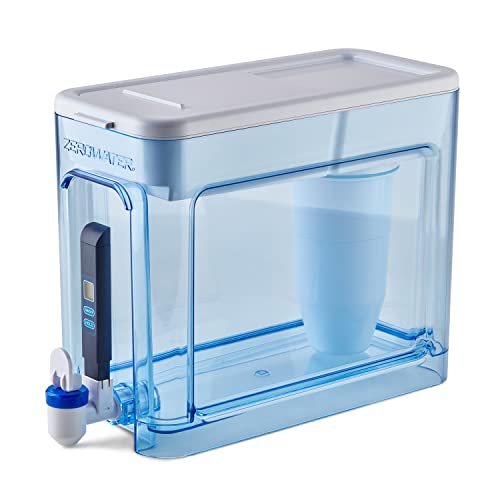
3. ZeroWater 32-Cup Water Filter Dispenser Removes PFOA/PFAS
The dispenser that reports your water’s dissolved-solids score right on the lid.
ZeroWater plays a different game to most filters on this list. Instead of a single carbon block, this 32-cup dispenser runs a 5-stage filter using ion exchange technology, which swaps one set of dissolved particles for another until almost nothing is left behind. The result is measured in TDS — total dissolved solids, essentially the sum of metals, minerals, salts and ions floating in your water. Tap water can read anywhere from a couple hundred to several hundred parts per million; this system is designed to bring that number close to zero. It comes with an integrated TDS meter, so you can check the reading before you pour, and the manufacturer recommends changing the filter when the meter hits 006.
That integration is why it earns its place here. No guessing about when a cartridge is spent — the meter tells you. The system is IAPMO certified to reduce PFOA/PFOS (the two most-discussed chemical families in household water), lead, chromium and mercury, and everything in it is BPA free. It holds 7.5 liters and comes as a full kit with the dispenser, one 5-stage ion exchange filter and a TDS meter. The most-praised aspects by a clear margin are the quality of the filtration and the water quality itself, followed by taste.
The catch here, and it is the thing owners flag most often, is that zero TDS means zero taste. Because the filter strips every mineral, the resulting water can taste oddly flat — buyers describe it as removing everything and leaving the taste a little strange. The other recurring note is filter speed and longevity: how often you replace depends entirely on how hard your incoming water is, and hard-water households go through cartridges fast, while soft-water users get far more mileage from each one. A few owners also find the spigot flimsy and the flow slow, so give the reservoir time to fill rather than forcing it.
For the hard-water household: if your tap water leaves white scale on your kettle or film on your ice maker, this dispenser reduces dissolved solids in a way a simple carbon filter simply cannot touch.
The taste admission: owners consistently note the water tastes flat or slightly strange because the minerals are gone — some add them back with a pinch of mineral drops in coffee.
Choose this if: your problem is scale, film and hard-water minerals, and you want to watch the reading drop to zero on the meter.
skip it if: you want water that tastes sweet and crisp straight from a pitcher — this one is a stripped-clean, glassy taste rather than spring-fresh.
4. Brita Large 10-Cup Water Filter Pitcher with BritaPlus Filter
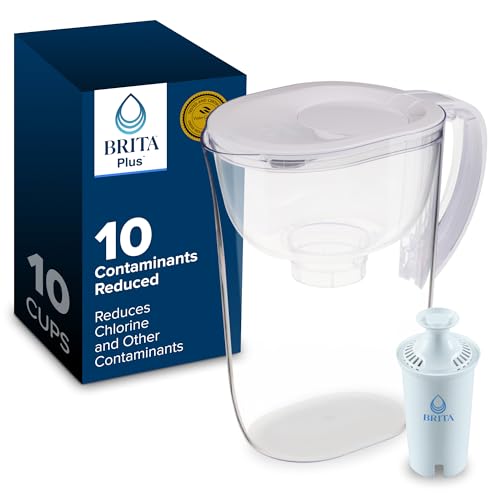
Ten cups of chilled, chlorine-reduced water that lives in your fridge door.
The Brita is the pick for people whose priority is simply drinking more cold water without thinking about it. It holds 10 cups (a little over two litres) and is designed to fit most fridge doors. The BritaPlus high-density filter traps twice as many contaminants as the standard Brita filter, capturing chlorine, mercury, cadmium, copper and zinc, while helping retain the beneficial minerals and electrolytes already in your water. That retention is a real difference from the ZeroWater above — one strips everything, this one leaves the good stuff in while pulling the chlorine out.
It carries WQA NSF/ANSI certification, which is the standard method independent labs use to verify a filter’s reduction claims, and each BritaPlus filter replaces up to 300 single-use 16.9 oz plastic bottles. The filter needs swapping every 40 gallons or roughly two months. A SmartLight indicator — a small light on the lid — tells you when it is time, so you don’t have to keep a mental calendar. The kit is a single BPA-free pitcher, and every filter found in the wider line fits this pitcher except the Stream model.
Owners rate this pitcher highly for day-to-day drinking: the recurring praise centres on quality, then water taste, then size. The honest caveat is durability. The plastic walls and base are thinner than earlier Brita models, and the most-discussed downside is that the pitcher can break if you slam it down while full — one owner’s fix was simply setting it on a mat. Treat it gently and drip-dry it upside down, and it holds up. If you have a large family and drink ten cups before lunch, you’ll be refilling it often; the 10-cup size suits one or two people comfortably.
What Earns the Space
- BritaPlus filter reduces chlorine, mercury, cadmium, copper and zinc
- Retains beneficial minerals and electrolytes rather than stripping them
- 10-cup capacity fits most fridge doors with a flip-top fill lid
- SmartLight indicator removes the guesswork from filter changes
- WQA NSF/ANSI certified and compatible with all Brita pitchers except Stream
What to Bear in Mind
- Thin plastic walls compared with older Brita models
- Every 40 gallons or about two months means a filter schedule to keep
- 10 cups is a short day’s supply for a large family
The unbeatable fit: one or two people who want a pitcher of cold, chlorine-free water in the fridge door with zero setup.
The caveat: it’s a hard-plastic pitcher designed for gentle handling — set it down softly and it will serve for years.
5. WINGSOL Under Sink Water Filter System with Chrome Faucet
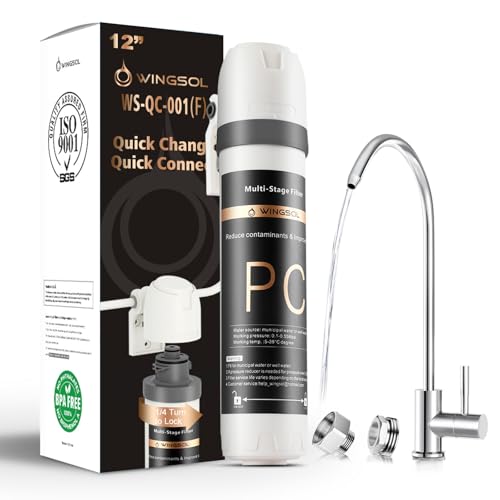
A whole under-sink setup plus its own dedicated chrome tap on your counter.
If you want filtered water from its own separate faucet — not sharing the tap you already have — this WINGSOL kit is the most complete package on the list. The box includes the filter system, the cartridge, the chrome faucet and every fitting and length of tubing you need to connect it to a standard cold-water line. Setup runs to about five minutes with the quick-connect fittings and the included 1/2″-3/8″ converters, no plumber required. The dedicated faucet has a 360-degree swivel spout and an extended thread stem that fits both steel and thick stone sinks.
The standout spec is the anti-clog pleated filter, rated for up to 8,000 gallons or 12 months. That pleated design resists blockages, which keeps water flowing evenly right up to the replacement point rather than dribbling near the end of its life. It carries NSF/ANSI 42 and 53 certification, which covers the two most common drinking-water standards for taste, odour, chlorine and health-related contaminants. The system is made from food-grade, BPA-free, lead-free materials and claims reduction of PFAS, PFOA/PFOS, chlorine, heavy metals and sediment, with a maximum flow rate of 1.5 gallons per minute at 60 psi.
Owners most often praise the crispness of the water and the compact undersink footprint. The main honest note is a plumbing one: the included three-way adapter has leaked for a handful of buyers, who replaced it with a different fitting. It is a minor fix, and everything else about the kit — the labeled open-close cartridge housing, the swivel faucet, the soft hose runs — earned solid reviews. Note the manufacturer’s own caution that this system does not lower TDS, because it deliberately retains the minerals dissolved in your water while it reduces the chemical contaminants.
What a dedicated faucet buys you: the flapping between unfiltered cold water and filtered water stops — the chrome swivel tap is filtered, everything else is normal, and children never have to work out which is which.
One hose to replace: the recurring gripe is the supplied three-way adapter, so budget a couple of dollars for a replacement fitting if your install is fussy.
The full-kit choice: anyone who wants the water filtered only at one dedicated faucet and would rather have all the fittings in the box.
The practical limit: needing a spare drill hole or existing filtered tap line for the chrome faucet, and the 2.76″ x 3.54″ x 12.2″ cabinet footprint.
6. Waterdrop AS13 Under Sink Water Filter System
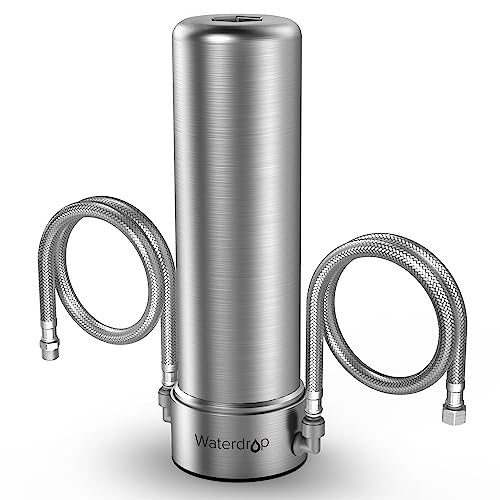
Six stages of filtration with a cartridge you replace in three seconds.
The AS13 is built for people who will cheerfully filter their water but resent quarterly maintenance chores. The 6-stage filter reduces PFAS, PFOA/PFOS, rust, lead, chlorine, heavy metals and sand, and it’s built around a plug-and-play design the maker advertises as a 3-second filter replacement with no drilling, no plumber and no wrench required. It runs off standard cold-water pipes with the included 3/8″-1/2″ adapters and is rated for up to 16,000 gallons or 12 months per cartridge, with a smart indicator reminding you when it is time.
Where this one earns trust is the construction. The housing is lead-free 304 stainless steel rather than plastic, and the components carry NSF/ANSI 372 certification, which covers lead-free compliance for drinking-water components. Waterdrop’s marketing material calls it leak, corrosion, collision and burst resistant, and the entire assembly weighs 7.28″ x 5.9″ x 15.35″ in the box — it slots into a small under-sink cabinet, including those with a large food disposal taking up room. The flow rate is listed at a maximum of 1 gallon per minute, and one buyer measured it filling a gallon in 56 seconds, closely matching that claim.
The honest trade-off owners describe is around the housing itself. Easy use gets mixed reports: installation is praised, the water tastes better than tap, and the quality of the build earns top marks, but a handful of people struggle to get the housing open for that first cartridge change. Waterdrop has sent a replacement wrench and a removal video to those who asked, and it’s a one-time learning curve. TDS is not reduced — the system is designed to keep your minerals while pulling out the chemical contaminants.
Why It Gets the Nod
- 3-second filter replacement advertised by the maker, no drilling required
- 304 stainless steel housing, lead-free and NSF/ANSI 372 certified components
- Rated up to 16,000 gallons or 12 months per cartridge
- Smart indicator reminds you when the filter is due
- Compact enough for cabinets with a food disposal already fitted
Where It Stumbles
- The housing can be stiff the first time you unscrew it — customer service walks you through it
- Flow may slow on very hard water over time
- Does not reduce TDS — minerals stay in your water by design
Designed for: anyone who wants steel construction and a cartridge change that happens faster than filling a kettle.
Not quite for: buyers who know their water is hard enough to slow the flow over time, and want a filter that drives TDS to zero.
7. Purewell 2.25G Gravity Water Filter System with Water Level Window
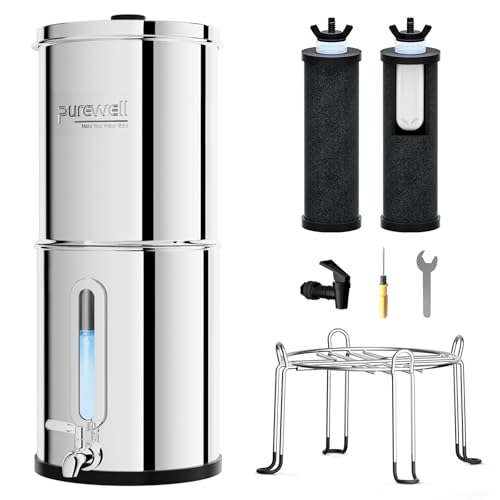
No plug, no plumbing, no pump — water moves through this one on gravity alone.
This is the pick for a cabin, a camper, a power-outage cupboard, or any kitchen where drilling a hole and running a line is not on the table. The Purewell is a two-chamber stainless steel system: pour tap water into the upper chamber, and gravity pulls it through the filter into the lower one, where a spigot dispenses it. Because there is no electricity involved, it works anywhere there’s a level surface — indoors or out. The body is polypropylene and stainless steel, it holds 2.25 gallons, and a transparent water level window lets you check how much remains without lifting the lid.
Filtration here is the tightest on the list before you reach the reverse osmosis units. The black carbon filter uses a 0.01μm hollow fiber UF membrane — that’s one hundredth of a micron, or one-hundredth of a millionth of a meter of pore size — plus a silver ion membrane and an activated carbon block to reduce chlorine, rust, sediment, organic matter and heavy metals. The manufacturer points out that many brands stop at a 0.2-micron pore size, so this one is materially finer. It still delivers an optimal flow rate of up to 4 gallons per hour despite the tiny pores, and the two included filters together are rated for up to 6,000 gallons, with each element lasting up to 3,000 gallons and replacement recommended every 6 months.
The trade-off is gravity — it is slower than a tap-fed or plumbed system by design, and a few owners note the flow is gentler than they expected, though it improves after the first few fills as the filters settle in. Assembly is straightforward and requires no tools, though the silicone washer instructions are a little vague. A handful of buyers report leakage, but the explanation most give is overfilling above the viewing window rather than a faulty seal. The water quality itself is excellent, and this is the unit that wins people over on taste — crisp, clean, chlorine-free.
The gravity advantage: the only filter on this list you can take camping, use in a power cut, or set up in an apartment where plumbing changes are off the table.
The pace you trade for that freedom: no pump means the water trickles rather than rushes, so fill the top chamber the night before if you need a full jug in the morning.
Worth the counter space for: off-grid homes, RVs, campers, and anyone who wants water filtration that survives a power cut.
Consider a tap-connected system instead if: you need a fast, high-volume supply and you have a live cold-water line to spare.
8. Waterdrop G5P500A Reverse Osmosis System, 8-Stage Filtration, Alkaline
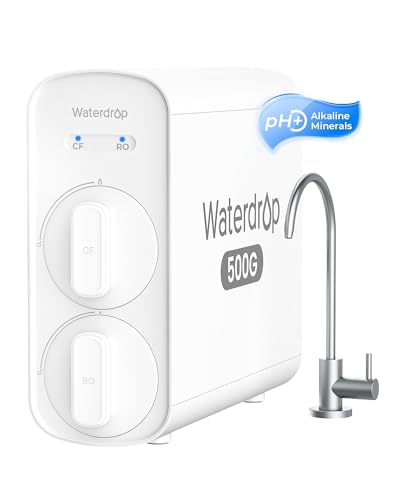
A tankless reverse-osmosis unit that filters dissolved solids out, not just chlorine.
The G5P500A is the heavyweight here — 21.4 pounds of stainless under-sink hardware running an 8-stage filtration process. That includes a 0.0001μm RO membrane — the tightest pore size on this list by a wide margin — plus an alkaline mineralization stage that puts calcium, magnesium, sodium and potassium back into the water after purification. It reduces PFOA, PFOS, chlorine, lead, fluoride and heavy metals, and it’s the one system here that actually lowers TDS, driving dissolved solids down rather than leaving them in. Customers most often praise its functionality, then its installation, then the taste.
The performance numbers are why it earns a premium position. It is rated at 500 GPD (gallons of clean water per day), which the maker equates to filling a 6-ounce cup in just 8 seconds, and it runs at a 2:1 pure-to-drain ratio — meaning for every two cups of clean water produced, one goes down the drain. Traditional RO systems often run closer to that same ratio in reverse, wasting more, so this one is the most water-efficient style of system here. The tankless design frees up as much as 70% of under-sink space versus an old tank-style RO unit, and it uses just two filters. Those are a 6-month pre-filter and a 24-month membrane, per the listing’s own installation components.
The honest warnings here are about installation and longevity. This unit requires drilling a hole in your countertop for the faucet, and several owners needed a plumber to handle the connections — the input fitting is 3/4″, which is wider than some homes’ supply lines. Owners also mention the pump noise increases after a while, though it starts quiet, and one owner has watched the smart faucet’s TDS display stick at a fixed 15-18 rather than track the actual reading. Replacement cartridges here come from Waterdrop directly; buyers who tried cheaper third-party filters found they fit poorly and dropped the pressure. It earns its rating through reliability and taste, but it’s not the plug-and-play pick — for that, look at the countertop option below.
The Premium Case
- 8-stage filtration with a 0.0001μm RO membrane — the tightest on this list
- Alkaline mineralization adds back calcium, magnesium, sodium and potassium
- 500 GPD rating fills a 6 oz cup in a claimed 8 seconds
- 2:1 pure-to-drain ratio keeps waste water down versus traditional RO
- Frees up to 70% of under-sink space over a tank-style RO unit
The Practical Notes
- Install requires either a countertop hole or careful alignment with your existing faucet tap
- Pump noise may increase over months of use, though it starts quiet
- Waterdrop-brand cartridges fit best — third-party filters can cause pressure drops
Built for: serious buyers who want dissolved solids driven out of their water and a faucet that pours clean, mineral-balanced water on demand.
Hard pass if: you can’t drill a hole in your counter, you have a non-standard supply fitting, or you don’t want to fit 21.4 pounds of gear under the sink.
9. Bluevua RO100ROPOT-Lite Countertop Reverse Osmosis Water Filter
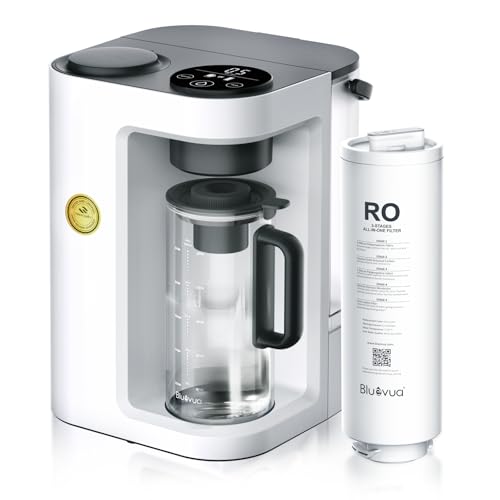
Reverse-osmosis purity without touching a single pipe under your sink.
For renters who want the water quality of a full RO system without the plumbing, this countertop unit is the one to consider. It needs no installation at all — plug it in, fill the reservoir, and a 7-stage process runs, including a 5-in-1 filter, UV light purification and a remineralization stage. The water pours into a high borosilicate glass carafe rather than a plastic jug, and the LED panel lets you pick your volume and watch the water quality reading in real time. It runs a 3:1 ratio of clean water to wastewater, and every cartridge is rated for a full year of service before you swap it with a 3-second twist.
What earns the pick is the remineralization step. Reverse osmosis alone strips water bare; the Bluevua puts minerals back, and owners consistently rate the taste as the headline strength. One owner with hard limestone-aquifer water noted the taste is crisp and clean, like from a good machine, and another described the mineral filter adding potassium, magnesium and calcium back into water that would otherwise read 0ppm. It holds 1,200 ml, is rated for one to two people, and is certified by WQA against NSF/ANSI/CAN 372 for lead-free materials and tested by SGS for water quality.
Be realistic about both the pace and the footprint before you buy. Flow is listed at a maximum of 0.26 litres per minute, which several owners describe as roughly drip-coffee speed — about four to five minutes to fill a carafe. The feed reservoir is not huge, so heavy drinkers refill it several times a day, and there is no automatic stop when the carafe is full, so you need to watch the level to avoid overflow. There are also reports of leakage during use. The yearly cartridge is a simple single-unit swap, which takes maintenance off the table for twelve months at a clip.
The renter’s RO: nothing gets drilled, nothing gets unscrewed from a supply line, and the water quality is genuinely RO-grade because the UV and the multilayer filter do the real work.
Where the pace bites: at roughly drip-coffee speed it is not the unit for a family that drinks three litres a day — plan a refill rhythm or size up.
Right for: apartment dwellers and small households who want RO-standard water from the counter with an annual, tool-free cartridge swap.
Wrong for: big families who will fight over refills, or anyone who needs tap-fast flow straight from the tap.
Understanding the Specs
Filter Pore Size
The pore size is the size of the gaps inside the filter material, measured in microns — one millionth of a metre. A smaller number means finer filtration. A 0.5-micron filter catches lead, chlorine and sediment. A 0.01-micron filter catches material thousands of times smaller still. And a reverse-osmosis membrane, rated at figures like 0.0001 microns, is fine enough to strip out dissolved minerals themselves. Look at your water source to decide: a city tap with a slight chlorine edge may only need a carbon block, while well water with heavy sediment benefits from a much finer unit.
Filter Capacity and Life
Two figures describe how long a cartridge lasts: the total gallons it can treat, and the months before it needs changing — usually whichever comes first. Gallons tell you the ceiling; months tell you the practical schedule. A faucet-mount filter rated at 100 gallons or 3 months is built for low-volume use, whereas a full under-sink unit may last 12 months or thousands of gallons. Whichever number hits first is your cue to replace, because the filter catches what it removes, and a full one stops working before it looks any different. On systems with a TDS meter or a smart indicator, trust the reading — it replaces guesswork entirely.
TDS and Mineral Retention
Total Dissolved Solids, or TDS, is a count of everything dissolved in your water, minerals included. Many filters leave your TDS reading broadly unchanged — they remove chemical contaminants and keep the mineral content. Reverse-osmosis systems and ion-exchange filters drive that reading down toward zero and can taste stripped or flat without a remineralization stage. Neither approach is always better: hard water with heavy scale responds well to lower TDS, while households that value the natural minerals may prefer to keep them. Read the label and pick the direction you actually want.
Certifications and Ratings
Certifications are how you tell a real filtering claim from a vague one. A filter that carries a WQA or IAPMO certification has its reduction claims verified by an independent lab against published standards, and NSF/ANSI 42 and 53 specifically cover taste, odour, chlorine and health-related contaminants. If the carton lists which contaminants are reduced and by which certifying body, you can compare one unit to another on a level footing. Where a claim is unverified, treat it as the maker’s own wording rather than a lab-tested fact.
FAQ
Will a faucet-mounted water filter fit my kitchen tap?
How often do I actually have to replace the filter cartridge?
Does a water filter remove minerals I actually want to keep?
Is a reverse-osmosis system really better than a carbon filter?
Can I install an under-sink water filter myself without a plumber?
What does the micron number on a water filter actually mean?
Will a pitcher filter make my water taste better than a faucet filter?
Do I need a TDS meter to know when to change my filter?
Can I use a countertop water filter in a rental without breaching the lease?
What is the difference between a 2.25-gallon gravity system and a reverse-osmosis countertop unit?
Final Thoughts: The Verdict
The best all-rounder is the SimPure V7 Under Sink Water Filter System — 20,000 gallons of rated filter life per cartridge, a 304 stainless steel housing, and a 12-month replacement schedule make it the set-and-forget choice for anyone with a cabinet to spare. If you rent, change addresses often, or simply cannot touch the plumbing, the Bluevua RO100ROPOT-Lite gives you reverse-osmosis water from the counter with a plug and a one-year cartridge. And for the family who just wants cold, chlorine-free water in the fridge door, the Brita 10-Cup Pitcher is the simplest piece of kit on this list — fill it, chill it, pour it.
Buy the filter that matches your water problem — lead, scale, chlorine taste, or dissolved solids — not the one with the loudest label. A household on treated city water with a faint chlorine tang and a tight counter rarely needs the same system as a well-water home fighting heavy sediment and scale. Check the certification, the cartridge schedule, and your cabinet or counter measurements before you order.
How We Picked
We do not accept paid placement. Every pick is matched to a real buyer and a real use-case; we do not hands-on test units.
Sources & Methodology
Specifications: manufacturer listings and product documentation. Review insights: verified customer reviews, as of September 2026. Pricing: not shown on this page (it changes often); check the current price via the retailer link.
As an Amazon Associate, Non Toxic Blog earns from qualifying purchases. This does not affect which products we feature.