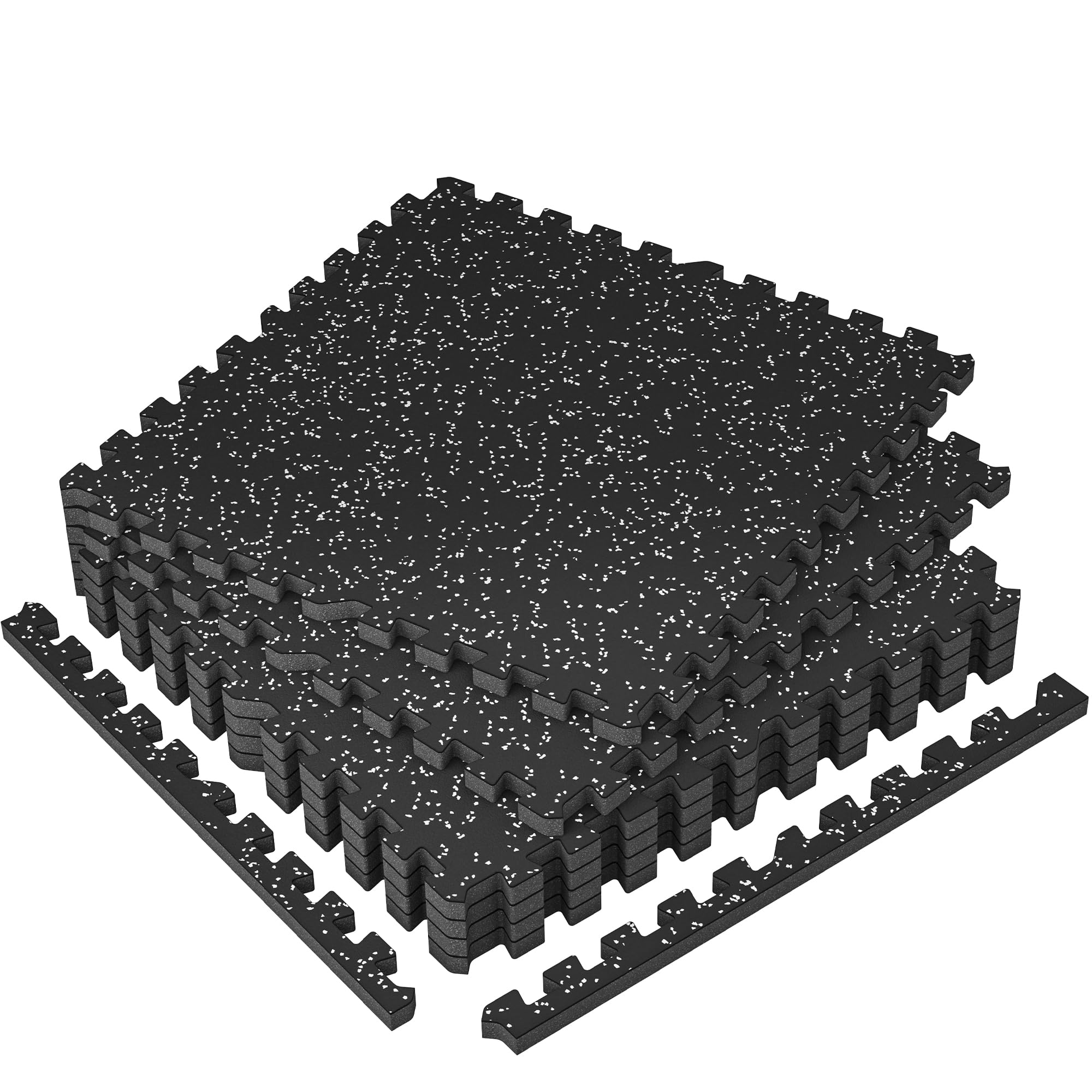
Specs are compiled from manufacturer listings and verified buyer reviews and can change over time — please confirm the key details on the product page before buying.
Barefoot on a garage slab, the shock runs straight up through your heels, and the fix is a full inch of foam under your feet. The FlooringInc 1″ Thick Foam Tiles take the top spot here because each tile is 36″ x 36″ at a true 1 inch thick — the largest tile and the deepest cushion on this shelf. One quick note before the picks: matching on this list is flexible, so not every option is the exact 1-inch tile you typed into the search bar — the nearest same-type size or layout on each listing does the same job. Everything below is a genuine one-inch option you can build a floor from.
I’m Mo Min — the founder and writer behind Non Toxic Blog. This guide is built by comparing the manufacturers’ published specifications and the patterns across verified customer reviews, so you get each pick’s real strengths and trade-offs instead of marketing spin.
Three things separate a floor you keep from one you rip up in a month: tile thickness, surface pattern, and how the pieces lock. This breakdown of the 1 inch interlocking mats covers coverage math, edge pieces, and the honest grip trade-offs of each build.
Our Picks at a Glance


How To Choose The Best 1 Inch Interlocking Mats
Nine out of ten buying mistakes on this shelf come from two numbers people never check: how thick the tile really is, and how many square feet one box covers. Get those right and the rest is preference.
Thickness Is The Whole Point
An inch of high-density EVA foam (a firm, springy foam that keeps its shape under weight) is what lets you drop to a knee without wincing. It is also what keeps a kettlebell from denting your concrete. If your floor is carpet or you only do yoga, three-quarter inch is fine and costs less. If tile, hardwood, or bare slab sits underneath you and weight comes down on it, buy the inch.
Square Footage, Not Tile Count
A box of six 24 x 24-inch tiles covers 24 square feet, because each tile is two feet by two feet — four square feet apiece. A box of twelve of the same tile doubles that to 48 square feet. Buy by the square footage you actually need and let the tile count follow, or you will order twice.
Surface Pattern And Grip
Smooth foam gets slick the moment sweat lands on it. A checkered, tatami, or steel-pattern surface breaks that film and gives your hands and feet something to bite into. Grip is the one spec owners argue about most on this shelf, and the pattern is usually the reason why.
Edges, Borders, And Finished Looks
Border strips (the tapered end pieces in the box) are what turn a jagged edge into a clean line. Some sets ship two detachable edge pieces per tile, some ship twelve in total. Count them before you plan a wall-to-wall layout.
Quick Comparison
| Model | Best For | Thickness | Tile Size | Coverage | Amazon |
|---|---|---|---|---|---|
| FlooringInc 1″ Thick Foam Tiles★ Best Overall | Combat sports and basement gyms | 1 inch | 36″ x 36″ | 2 tiles per box | Amazon |
| BalanceFrom Puzzle Exercise Mat 1″Best Value | Budget home gym starters | 1 inch | 24″ x 24″ | 24 sq ft (6 tiles) | Amazon |
| ProsourceFit Checkered Puzzle Mat | Checkered-surface traction | 1 inch | 24″ x 24″ | 24 sq ft (6 tiles) | Amazon |
| SUPERJARE Rubber Top Exercise Mat | Heavy lifting in shared spaces | 1 inch | 24″ x 24″ | 24 sq ft (6 tiles) | Amazon |
| Xspec 1″ Reversible Mat Tiles | Big rooms and double-sided color | 1 inch | 24″ x 24″ | 48 sq ft (12 tiles) | Amazon |
In‑Depth Reviews
1. FlooringInc 1″ Thick Foam Tiles, 3’x3′ Reversible Interlocking Tiles
Our pick — over 4.5★ from 650+ verified ratings; the strongest balance of quality and price.
Three-foot squares of inch-thick foam built for takedowns, rolls, and barefoot landings
Each tile measures 36 inches by 36 inches by 1 inch thick — a full three feet square. That size covers ground far faster than the two-foot squares most of this shelf ships with. Compare it to the BalanceFrom’s 24″ x 24″: the FlooringInc tile has a 50% larger footprint per tile. Fewer pieces, fewer seams, and a lot less time on your knees clicking squares together.
The material is closed-cell EVA foam, which means the cells are sealed rather than open like a sponge, so sweat wipes off the surface instead of soaking in — a quick spray mop handles cleanup after a session. Owners training kung fu on concrete report the tiles hold a stance without sinking yet still cushion joints and tailbone. Buyers report these closed-cell tiles lasting more than five years of regular use, and the reversible design doubles that by flipping to a fresh face.
Buyers praise the build quality most, with the cushioning a close second — those are the two things owners bring up most often by a wide margin. Anti-fatigue padding is the headline use, but the same tiles serve as a music room cushion barrier, a basement playroom floor, and a P90x platform across 260 square feet of concrete.
Why It Takes The Top Spot
- A full 1 inch holds its shape under weight — the comparison sheet lists 1 inch against the BalanceFrom’s 0.75 inches, a 33% gap
- 36″ x 36″ tiles cover ground fast, which matters when you are fitting out a whole basement
- Closed-cell EVA wipes clean and handles sweat without soaking it up
- Flips over for a second working life
- Two detachable edge pieces per tile and puzzle-style install
The Honest Trade-Offs
- Smooth-topped, so it can run slick at first — owners lay down non-slip pads or use a wall-to-wall setting instead
- Not bulletproof against punctures or high heels, and cat claws can punch holes
- Corner pieces can work loose over time
- Some report a faint oily discoloration and roughly 2-3mm of thickness variance between tiles
Reach for this if: you are outfitting a garage, dojo, or basement where big squares and a true inch of foam cut install time and absorb real impacts — it is the top-rated build on this shelf at 4.7.
Look elsewhere if: you only need a small yoga corner, since three-foot tiles are more floor than a single mat requires.
2. BalanceFrom Puzzle Exercise Mat 1″ Thick, EVA Interlocking Foam Floor
The six-tile starter box that turns a bare corner into a workout floor in half an hour
Six tiles, each 24 inches by 24 inches, cover 24 square feet, and twelve end borders ship in the box to finish the edges. The foam is high-density EVA, and both the top and bottom are non-slip, so it stays put under a 260-pound stationary bike and holds through side-to-side and back-and-forth movement.
At 6 pounds, this is the lightest box in the group — light enough to carry upstairs, stack behind a loveseat, and store in the original box when the room needs to be a room again. Assembly runs under 30 minutes for a standard setup. Flip the tiles for a grey face up or a blue face up, whichever suits the room.
The recurring gripe is socks. Slick socks on the smooth foam will slide, and the pieces can separate under heavy shear if you do not press the seams down firmly. There is a faint chemical smell from the start that fades by day one. One honest caveat on the spec sheet: the tile is listed at 1 inch, yet the thickness specification line reads 0.75 inches. If a full inch is your hard requirement, check the listing carefully.
Where it earns its keep: the double-sided non-slip surface and the 2-year warranty make this the safest first purchase on the shelf. It holds up outdoors too — one owner reports it on a patio for about two years, and at 28°F water on the tiles stayed liquid while the cement underneath froze.
Best for: renters and small-space owners who want a storable floor without committing to a permanent install.
Think twice if: you need a guaranteed full inch, because the spec sheet lists this tile at 0.75 inches even though the listing says 1 inch.
3. ProsourceFit Exercise Puzzle Mat 1-inch, Checkered EVA Foam Floor Tiles

A checkered face that gives sweaty hands and bare feet something to grab
The checkered texture is why this one beats the BalanceFrom above for sweaty work. Six tiles at 24 x 24 inches cover 24 square feet, all rated 1 inch thick, and that pattern breaks up the sweat film that turns smooth foam into a skating rink. If your routine involves hard changes of direction or you train with damp hands, the texture is the feature you are paying for.
These tip the scale at 10 pounds for the set, the heaviest of the two-foot-square boxes here. Heavier usually means denser, and the wording on the listing backs that up: the maker says the EVA shrugs off heavy stressors and pops back to shape. Owners use these as garage floor mats, kids play mats, and full basement gym floors interchangeably.
The grip is where opinions split. Some owners find the checkered face grippy; others describe a slippery or oily feel, especially when new. Treat that as a break-in thing — the surface settles once it has been walked on for a while. The other recurring note is that a dark checkered face shows dust and footprints quickly, so a lighter color or a regular vacuum keeps it looking sharp.
What Buyers Praise
- Functionality and build quality are the two things owners talk about most, both landing firmly positive
- Checkered surface adds traction that smooth tiles lack
- 1-inch thickness rated as ample padding for floor exercises
- Trim pieces included for clean edges
- Owners rate it a step up from horse stall mats for a basement gym
Worth Knowing Before You Buy
- Grip is the one split verdict — some find it tacky, some find it slick when new
- Dark checkered finish shows dust easily
- Slight smell on opening that fades
The case for it: a textured, inch-thick tile at a mid-range price — a smart choice when smooth foam has slid out from under you before, at a solid 4.6 rating.
The catch: if you want dead-simple low-maintenance color, the checkered face needs more vacuuming than a solid tile to stay looking new.
4. We Sell Mats 1 Inch Thick Martial Arts EVA Foam Exercise Mat, Tatami Pattern
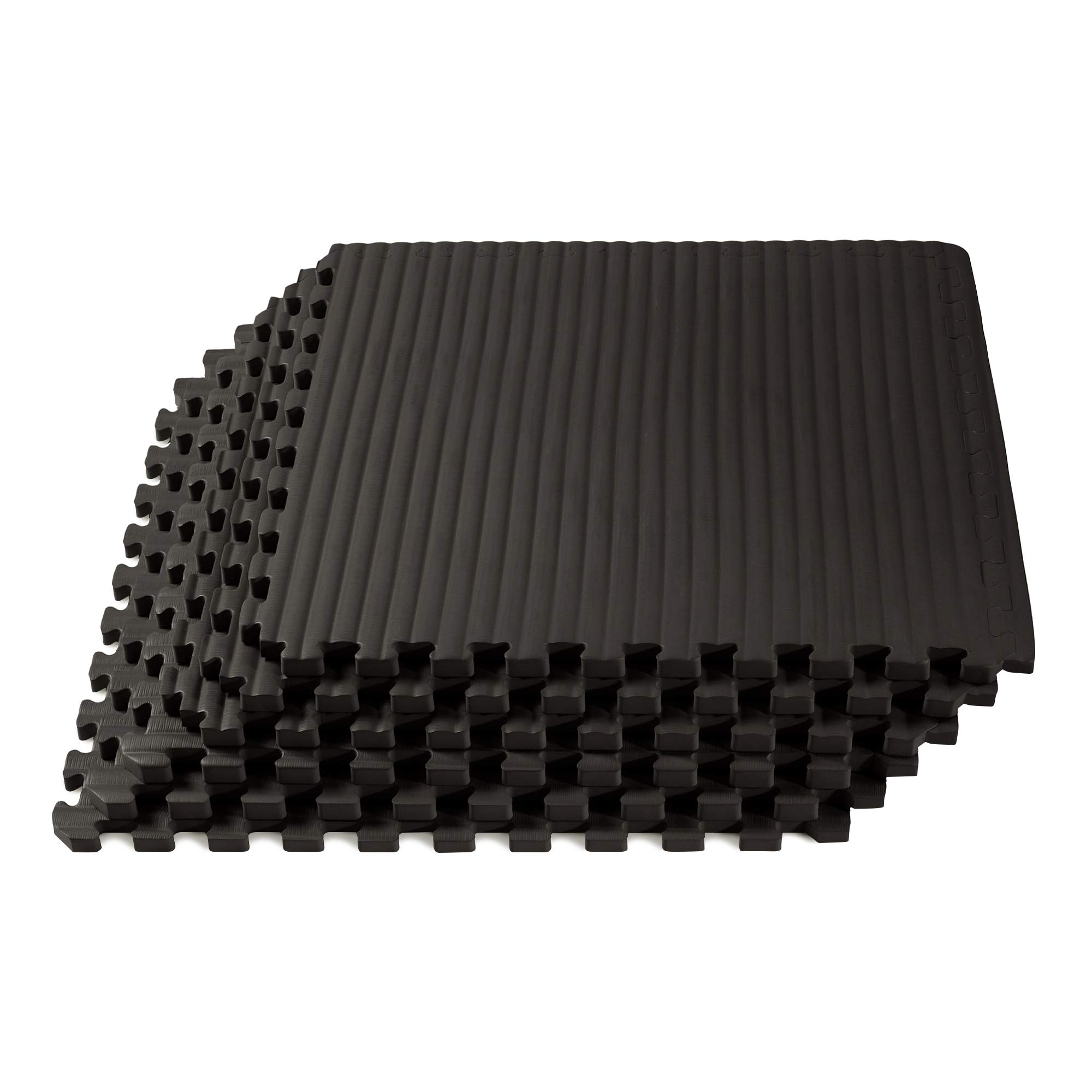
Tatami-textured tiles that hold a stance without letting hands or feet slide out
A tatami-textured surface — the woven-looking finish borrowed from traditional martial arts floors — is what sets this six-tile set apart. Each tile is 24 x 24 inches and one inch thick, and that texture grips a bare foot mid-pose and stops a sweaty palm from skating during a plank hold. For jiu jitsu, rolling, and heavy-bag work on 300 square feet, owners set this floor up and tear it down in 10 to 15 minutes.
The foam is high-density EVA and the cushioning does double duty. Under a barbell it absorbs impact, and in a kitchen it works as an anti-fatigue surface for long stretches of standing — a stool leaves deep pressure marks that recover completely once removed. The company cautions that its interlocking design is style-specific: these tiles lock only with tiles from the same model, not with another brand’s set.
The honest split here is firmness. Some owners find the one-inch foam nice and strong; others say it is too hard for ground activities and long sitting, and it is not on anyone’s list for a baby’s crawling floor. For takedowns and throws, some owners note they have not tested this for that level of impact and suspect a softer surface is needed. If your training is standing work, kettlebells, and traditional stances, that firmness is exactly what you want.
Pick this for: martial arts practice areas, kata space, and any spot where you stand for hours and want some give underfoot.
Skip this one if: you want a plush surface for a toddler to tumble on, because the one-inch foam here is on the firm side by design.