Specs are compiled from manufacturer listings and verified buyer reviews and can change over time — please confirm the key details on the product page before buying.
If you are shopping for a tent that genuinely sleeps twelve, the thing that decides whether you love it or hate it is not the label on the box — it is floor area, center height, and how the rainfly handles a real storm. A tent advertised as a 12 person tent can mean anything from twelve bodies packed shoulder-to-shoulder to a roomy cabin with two separate sleeping rooms and space left over for gear. The picks below sort that out for you, and every one of them is built around straight walls and a cabin shape that lets adults actually stand up and move around.
I’m Mo Min — the founder and writer behind Non Toxic Blog. This guide is built by comparing the manufacturers’ published specifications and the patterns across verified customer reviews, so you get each pick’s real strengths and trade-offs instead of marketing spin.
Big family camping usually fails for one boring reason: not enough floor space once the air beds go down. That is why this breakdown leans on measured floor area, peak height, and how each cabin holds up in wind and rain — the three things that separate a comfortable 12 Person Tent from one your group outgrows on night one.
Our Picks at a Glance


How To Choose The Best 12 Person Tent
Shopping for a tent this big is really a math problem plus a weather problem. The math is floor area versus how many sleeping pads you actually own. The weather problem is whether the rainfly, seams, and fabric coating will hold when the forecast flips at 2 a.m. Get those two right and everything else — pockets, dividers, awnings — is comfort on top.
Floor Area Is The Real Capacity Number
A “12 person” rating is a marketing maximum, not a comfort number. The spec that matters is floor area in square feet. A 176 square feet floor holds four queen air beds and still leaves walk space, while a 141 square feet floor takes four full air mattresses with far less leftover room. If you plan to bring cots, a camp table, or a dog crate, shop the bigger number every time — the sleeping count on the box will not tell you that.
Center Height And Straight Walls
Center height is how tall the peak of the tent rises, measured at the middle. Straight-wall cabins keep that height out toward the edges, so you can stand up near your bed instead of only in the exact center. A 72-inch center height clears most adults standing; a 7-foot-plus peak clears almost everyone with room to spare. If anyone in your group is tall, this is the spec to check before anything else.
Waterproof Ratings Explained
Fabric waterproofing is measured in millimeters — written like 1200mm or PU1500mm. The number describes how much water pressure the coating resists before it soaks through. Higher is more protective. Look for a fully taped rainfly and sealed seams alongside that number, because a great coating with leaky stitching still gets you wet. A rainfly that stakes out taut and sheds water off the sides matters more than any single figure.
Pole Frame Or Air Beam
Traditional pole tents use color-coded fiberglass or steel poles you thread and snap together — more pieces, more setup time, but you can replace a broken pole. Air-beam tents replace the poles with inflatable PVC columns you fill with an included hand pump. Fewer parts to lose and faster to pitch, but you are relying on those columns holding pressure all night. Both work; it depends on whether you would rather carry a pump or a pole bag.
Quick Comparison
| Model | Best For | Floor Area | Center Height | Rooms | Amazon |
|---|---|---|---|---|---|
| CORE Tent for Family Camping 12 Person★ Best Overall | Big families who want room to walk | 176 square feet | 86 inches | 2 (divider included) | Amazon |
| KTT Extra Large Tent 12-14 PersonBudget Champion | Groups who want four door options | 141 square feet | 6.58 feet | 2 | Amazon |
| Castle Unicorn 8–12 Person Cabin TentMost Standing Room | Standing tall and storing gear | 151 square feet | 7.1 feet | 2 + porch | Amazon |
| CAMPROS CP 12 Person 3-Room Tent | Long trips needing three zones | 180 square feet | 72 inches | 3 | Amazon |
| KTT Extra Large Tent 10-12-14 Person (Style-B) | The biggest footprint in the pole group | 176 square feet | 7.4 feet | 2 | Amazon |
| Inflatable 8-12 Person Tent with Rainfly & Stove Jack | Cold-weather camping with a stove | 15.75 ft x 11.81 ft | 7.2 feet | 2 | Amazon |
| ABORON Inflatable 12 Person Tent | Minute-fast pitching for big groups | 220 in x 118 in | 82.7 inches | 2 | Amazon |
In‑Depth Reviews
1. CORE Tent for Family Camping | 10/11/12 Person Large Multi Room Cabin Tent
Our pick — over 4.5★ from 850+ verified ratings; the strongest balance of quality and price.
The largest floor in this lineup, with headroom tall enough for real walking around.
Start with the number that makes this the winner: 176 square feet of floor across 16 feet by 11 feet. That is the biggest interior here, and it is 25% more floor area than the 141 square feet you get from the KTT 8-10-12-14 Person (A).
What wins people over is the combination of that straight-wall cabin shape with an appearance owners clearly love — owners praise its appearance more than any other feature. The interior sleeps four queen air beds comfortably, or six people with gear stowed, right up to the full 12 without any. Setup lands in the 5-minute range for people who have done it before, and closer to 30 minutes for two first-timers following the color-coded poles.
Water protection is where this tent quietly separates itself from the cheaper cabins. It uses H20 Block Technology with 1200mm fabric, a fully taped rainfly, sealed seams, and fully zipped windows, plus guylines and steel stakes for stability. As buyers report: “12-person (11x16ft) tent: leakproof in 70% rain/torrential downpour, no water.”
Here is the honest trade-off. This tent is heavy, and nobody is carrying it anywhere but a car or a truck bed — every long-term owner says the same thing, so plan on vehicle-based camping. The durability feedback is genuinely mixed, with some owners reporting broken poles after rough trips, and a few mention only two storage pockets is thin for a group this size. Swap in stronger stakes and it holds up season after season.
Where this tent earns top billing
- 176 square feet of floor — 25% more than the 141 sq ft KTT (A)
- 86-inch center height clears tall campers with a foot to spare
- H20 Block fabric at 1200mm with taped rainfly and sealed seams
- Room divider turns one big space into two private ones
What to plan around
- Heavy enough that car camping is the only realistic use
- Some owners mention snapped poles and only two storage pockets
- Setup runs about 30 minutes for two first-timers
Reach for this if: you want the roomiest floor here and you pitch next to your vehicle every trip.
Think twice if: you need something you can carry any distance to a backcountry site.
2. KTT Extra Large Tent 8-10-12-14 Person (A), 2 Rooms, 3 Doors, 3 Windows
Every opening zips shut — mesh roof vents, doors, windows — so you control the airflow fully.
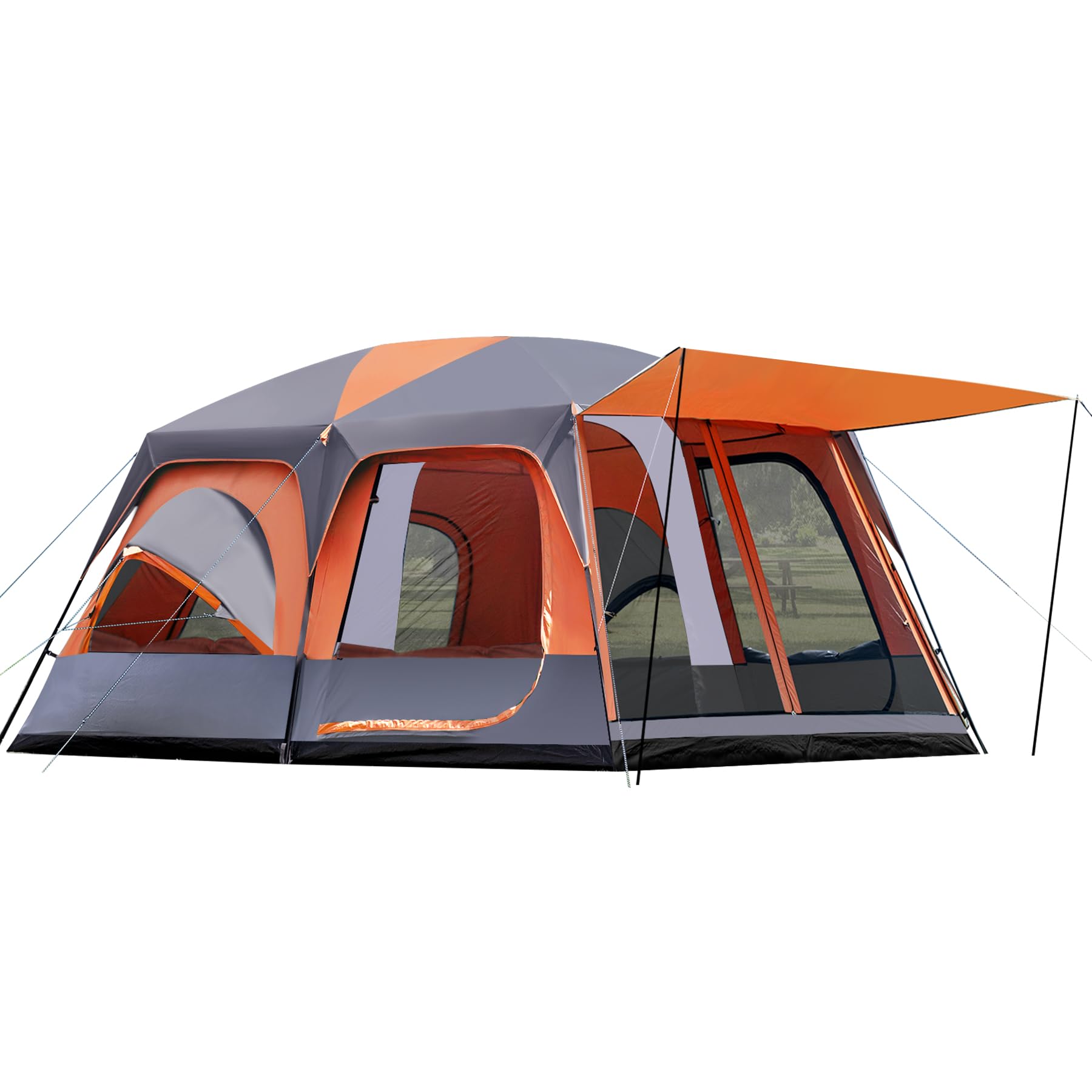
Most cabin tents leave their roof vents permanently open to mesh. This one does not, and that single detail changes what the tent can do. All openings, including the roof vents, have zippered covers, so you can seal it completely against wind-blown rain or run a portable air conditioner through it in summer heat. It shares the 14.1-foot by 10-foot, 6.58-foot-tall, 141-square-foot body with the other two KTT cabins, but four windows and a fully closable shell give it the best ventilation control of the trio.
Owners get real use out of the configuration options: four doors across three sides, two back windows, and a room divider that suits two teenagers who want their own space. The rain cover over the mesh top is removable, so you can strip it off for stargazing on clear nights. Two door-curtain poles turn the entry into a genuine awning, which KTT notes adds cost but also adds a shaded place for the family to sit.
Be honest about the weather rating before you buy. KTT classifies this as a 3-season tent suitable for sunny and light rain only, and it warns against strong wind, heavy rain, and heavy snow. Owners who camped through a thunderstorm did stay dry, but a wind-displaced pole produced a leak in one case, and rain pooling on the fly is a recurring theme — stake the fly taut with the provided rope and it holds far better. Setup takes about 15 minutes on paper, closer to 30 for two people the first time, and the instructions are thin.
Design detail that matters: the blackout-style dark blue fabric is the underrated feature here — one owner ran it on a July trip and found the dark material ideal for sleeping in past sunrise, while cautioning that the same color runs hot in full summer sun.
Pick this one for: humid trips where air control matters, or if you want to run a portable AC inside a sealed cabin.
skip it if: you expect it to shrug off a heavy multi-day downpour without extra staking and prep.
3. Castle Unicorn 8–12 Person Cabin Tent with Porch
A 7.1-foot peak and a real front porch for the tallest campers in the group.
If a 6-foot-4 camper has ever made you shop for peak height first, this is your tent. The 7.1-foot height is the tallest peak in this whole lineup, and it clears a 6-foot-4 adult with room above their head — one tall owner calls the height “a must.” Floor area runs 151 square feet across a 15.1-foot by 10-foot footprint, comfortably taking four full-size air mattresses or 10 to 12 sleeping bags, with the maker recommending 8 to 10 people for genuinely comfortable trips with gear.
The build is sturdier than the price tier suggests. The fabric is 150D Oxford with a PU1500mm waterproof coating — a higher water-pressure rating than the PU1000mm tents in this group — paired with reinforced fiberglass poles and corrosion-resistant joints, plus a wear-resistant PE floor. A central double-layer mesh door rolls up for one open space or zips down to make two private rooms. The front porch, held up by two included poles, gives you a shaded area for gear or a couple of camp chairs, and it rolls up with cordlocks when you break camp.
Weigh the instructions honestly. They are the single loudest complaint about this tent, described as confusing and poorly translated, and several owners needed a video to work it out. The good news is that after one pitch it becomes straightforward, and the taller campers who figure it out tend to keep it: one owner reports a 45-minute first assembly but “very spacious” once standing. The porch support is also reported as not staying up well — plan on re-staking it.
What surprises owners: the combo of a 7.1-foot peak, 151 square feet of floor, and PU1500mm waterproofing beats the cheaper cabins on paper — it out-specs the 141 sq ft, 6.58 ft, PU-standard KTT tents on both floor area and coating strength.
Who it beats: anyone shopping for the tallest cabin they can get without stepping up to the pricey inflatables.
Have patience for: a rough first setup, since the instructions are the weak link here.
4. CAMPROS CP 12 Person 3-Room Family Tent
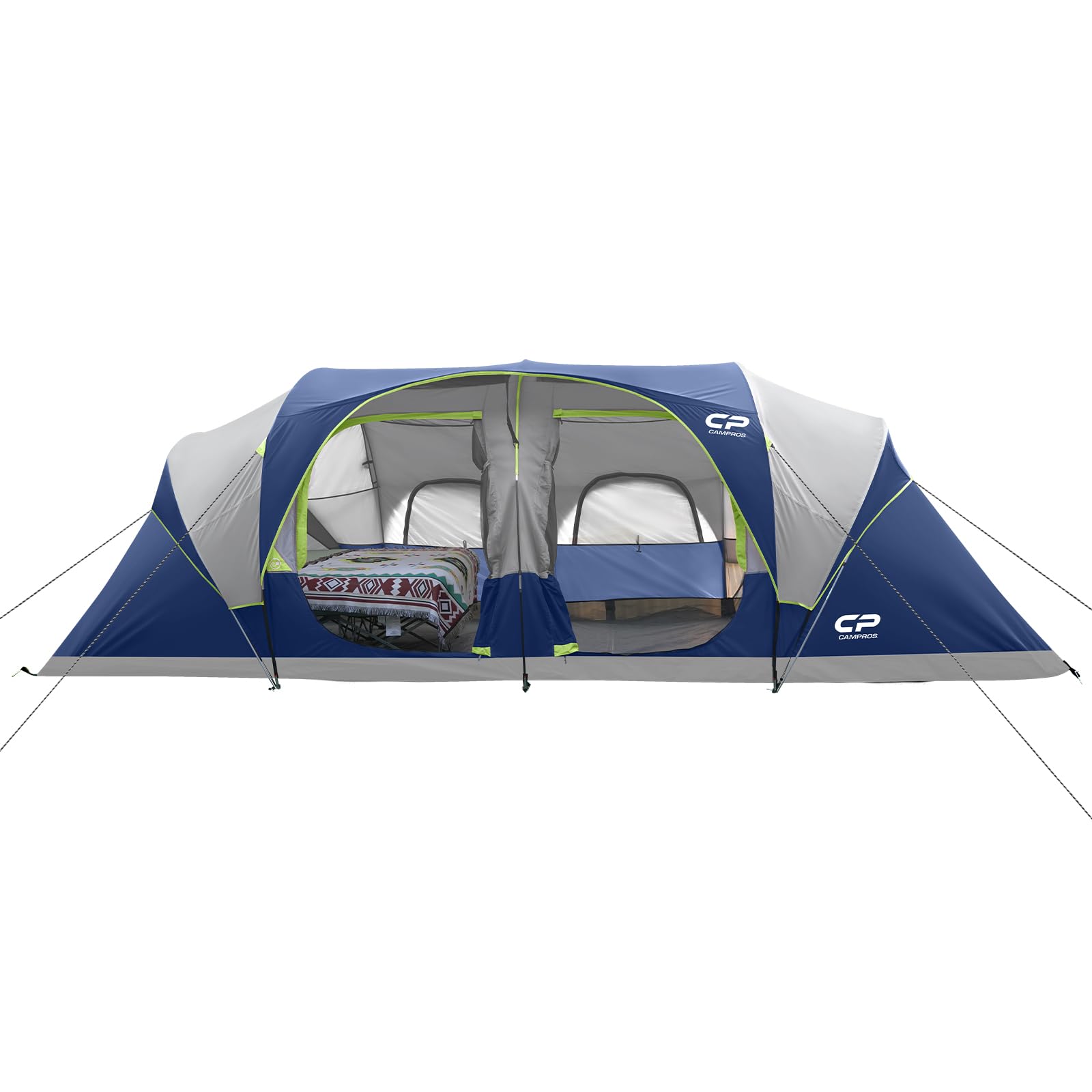
Three removable curtains turn one long cabin into three separate living zones.
Nobody else in this lineup gives you three rooms. Two removable curtains split the 20-foot by 9-foot interior into three private spaces, and the same curtains double as projector screens if you fancy a movie night at camp. The 180 square feet of floor is the largest here after the CORE’s 176 and the Style-B’s 176, and it swallows three queen or five full air mattresses. At 72 inches of center height, most adults stand comfortably, though tall campers should note this is a lower peak than the CORE or the Castle Unicorn.
Setup is the killer feature at 10 minutes with color-coded poles and no tools. Shoppers say the “quick setup” consistently, with two adults pitching it easily, and plenty leave the top cover off to boost airflow. A large mesh roof, mesh door, and windows keep the air moving to cut condensation, and the waterproof 185T polyester with PU1000mm, sealed seams, and rain strips handles rain. The appearance gets the most positive ink across the review pages — owners praise its appearance more than any other feature.
The weak points are the plumbing of the details. The floor is reported as thin, so a ground tarp is a smart add, and the included L-stakes bend; several owners swapped in stronger stakes. Zipper quality draws the most mixed-to-negative feedback, with front-door zippers described as finicky and flaps that catch, and the carry bag runs small once the tent is rolled up. A few buyers report poles breaking after seasons of use.
Why the crowd is on board: with this many owners behind it, the CAMPROS is the safest bet in the group — it sleeps a large group in three separate zones without leaks, which is exactly what a 12-person cabin tent should do.
The dependable choice: three rooms and the easiest pitch here make this the tent most likely to satisfy a crowd.
The floor-level caveat: add a ground tarp and stronger stakes, and this tent lasts multiple seasons.
5. KTT Extra Large Tent 10-12-14 Person (Style-B), 2 Rooms, 3 Doors
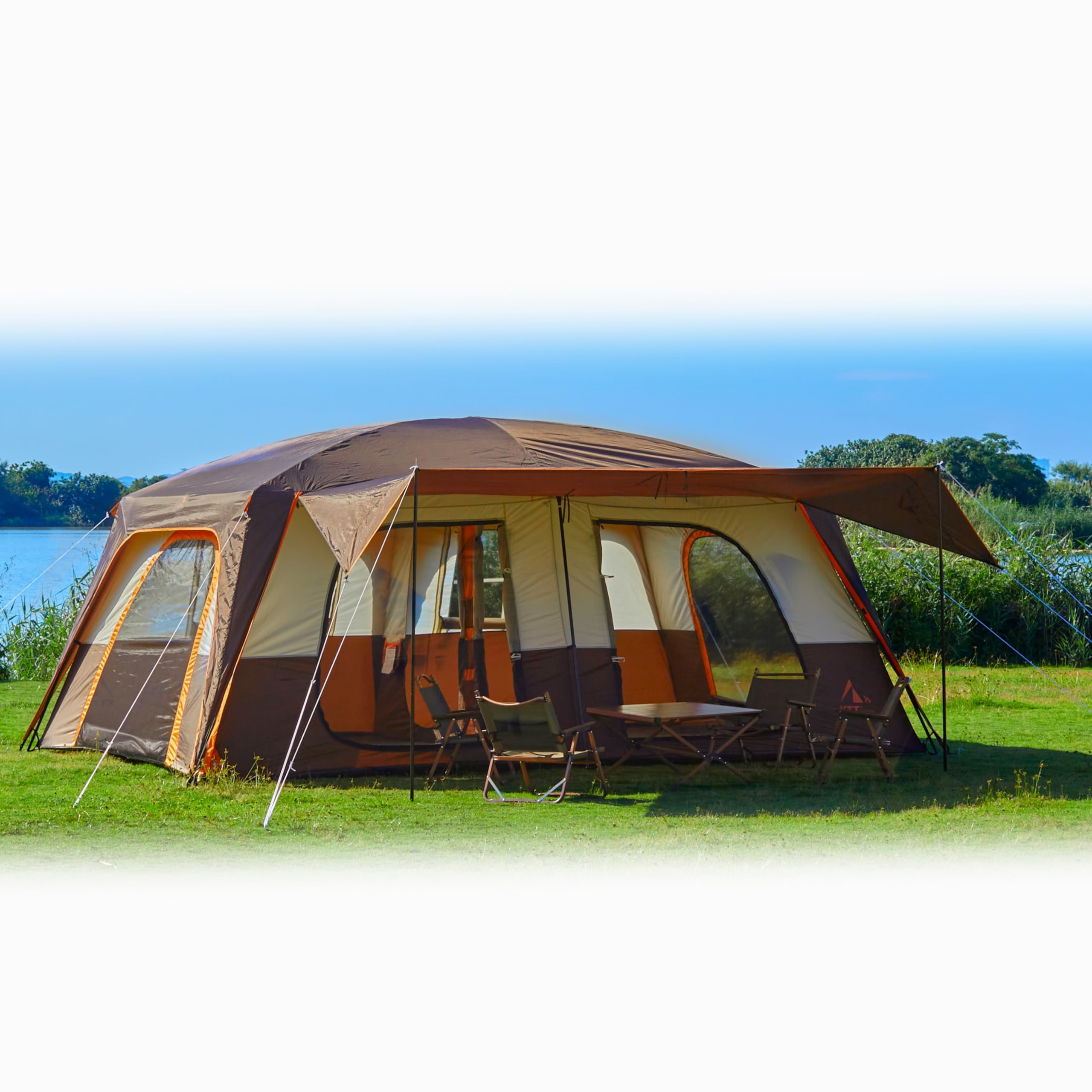
The KTT with real space: 176 square feet and a 7.4-foot peak — its biggest cabin.
The Style-B breaks away from the smaller KTT cabins completely. Where the other KTT tents run 14.1 feet by 10 feet at 6.58 feet tall, this one measures 16 feet by 11 feet with a 7.4-foot height — the same 176 square feet of floor as the CORE, and a taller peak than the CAMPROS. That is 25% more floor area and 14% more floor length than the KTT 8-10-12-14 Person (A), and it takes 4 full air mattresses or two queen beds placed butt-to-butt with room to walk between them. The 40-pound carry weight tells you it is a car-camping tent, not a hiking one.
Inside you get one large rear window, two top windows, 3 doors, 3 mesh windows, eight top corner hooks and a middle hook for hanging gear. Two door-curtain poles form an awning, and the included stakes and 4 repair patches cover setup and small fixes. Owners describe sturdy poles and a setup easy enough for one person after the first time. As owners mention, “Ive had mine just over a year and its held up great after 7 or 8 uses.” The room divider also zips rather than clips, which owners prefer for a cleaner split.
Two things to know before you buy. Like the other KTT cabins, this is a 3-season tent the maker rates for sunny and light rain only — not for strong wind, heavy rain, or snow. And the instruction sheet is a recurring frustration, with several owners reporting it missing or terrible and calling the first setup a learning process. The zipper flap catches occasionally too. Seal the seams and keep it out of heavy weather, and its 176 square feet of floor space is tough to top.
Versus the other KTTs: this is the one to pick if you want KTT build quality but need actual room — 176 square feet and 7.4 feet of height versus the 141 square feet and 6.58 feet of the cheaper KTT cabins.
Land on this pick if: you want a KTT cabin with the footprint and height to match its “12-14 person” label.
Know before you order: fair-weather rated, and the instructions may not help you — watch a video first.
6. Inflatable 8-12 Person Camping Tent with Rainfly, Hand Pump & Stove Jack
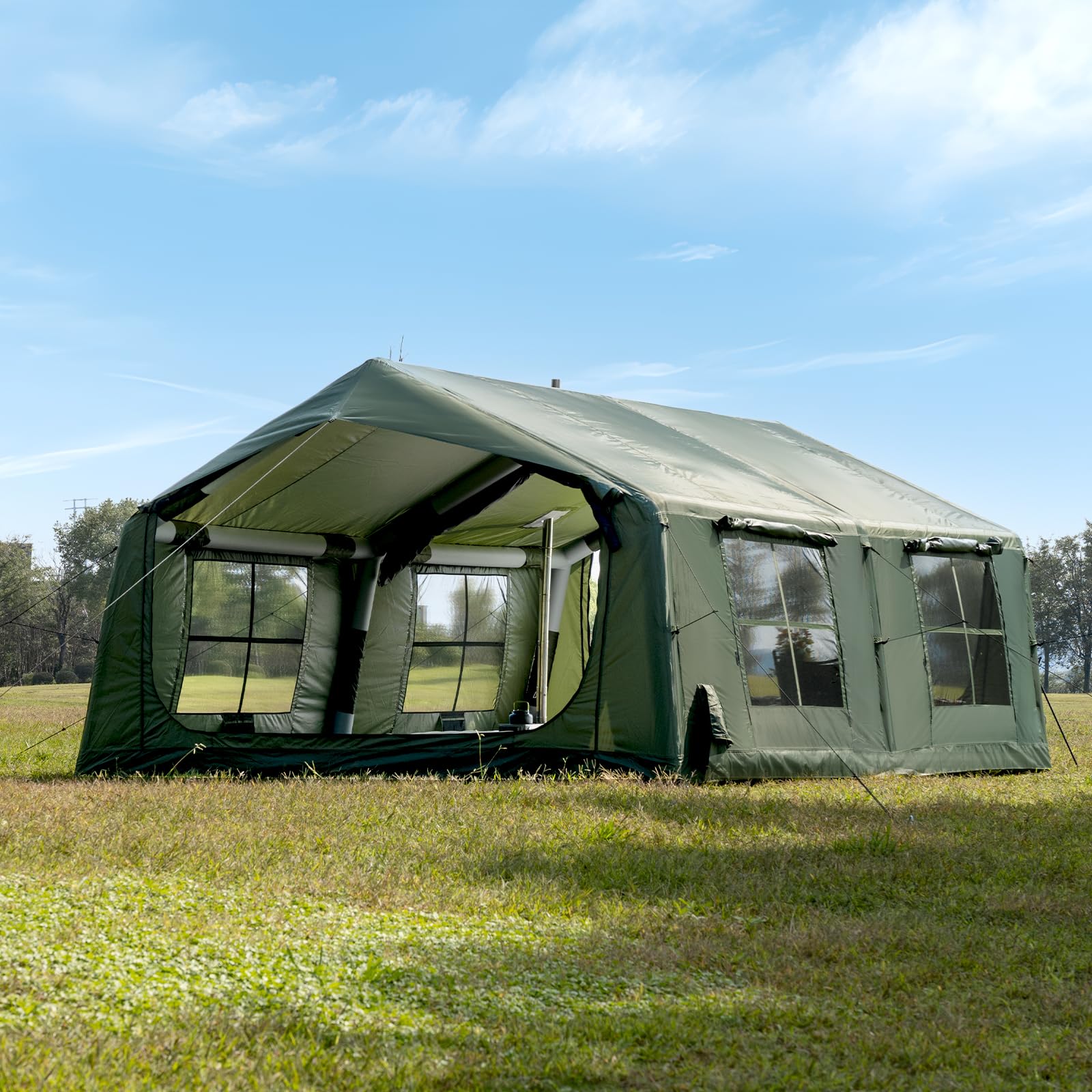
A chimney port for a stove, an air-beam frame, and no poles to lose in the dark.
No other tent in this lineup has a chimney window. That single feature — a dedicated port for an outdoor stove — is what makes this the cold-weather pick, letting you heat the tent on a freezing night while keeping the warmth in. The 15.75-foot by 11.81-foot footprint with a 7.2-foot height sleeps up to 12 with room to stand, and it runs on an integrated PVC air column instead of poles. Pull out the included hand pump and it inflates in about 5 to 10 minutes, even for a first-timer.
Customers note the air beam stays solid. One family spent 5 days in it through rain, wind, and heat and found it “stayed inflated perfectly,” with room left over for a king bed, a queen, and luggage. The air tubes hold up to the job of supporting fans and lights, and the door curtain opens fully to both sides so you can carry gear in without crawling. An automatic safety valve releases pressure when needed, and a repair kit comes with it for the PVC columns.
The honest note is about setup rhythm and floor protection. Because the frame is air rather than poles, a couple of owners recommend two people for the full job — one running the electric pump, one on the manual — and it is a bulky unit to wrestle across a campsite. The floor is not a tarp-grade bathtub, so lay a ground cover if you camp on damp grass, and note the exterior windows zip from the outside only on this one. Keep at least one window cracked whenever a stove is running.
The reason to choose it: the stove jack is a genuine differentiator — if you camp in shoulder-season cold, this is the only tent here that lets you run heat inside.
Your pick if: you camp in cold weather and want a stove inside without cutting a vent yourself.
The fair warning: bring a ground cover for the thin floor and a second person for the pump, and this inflatable holds up.
7. ABORON Inflatable Tent, Easy Setup 12 Person Blow Up Tent with Hand Pump
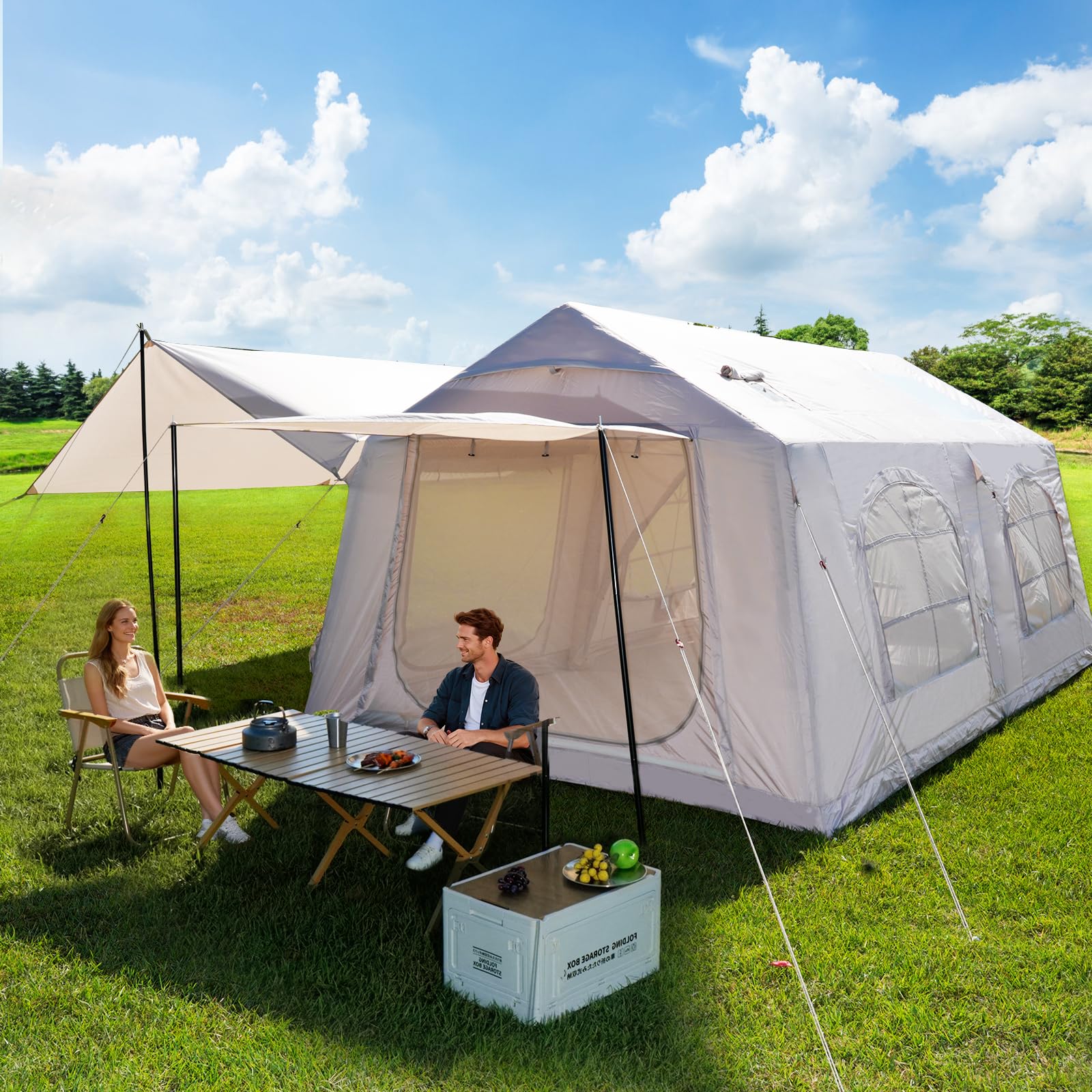
The strongest waterproof coating here — PU3000mm — on a frame that inflates in minutes.
Look at the coating number first: PU3000mm waterproofing is the highest rating in this entire group, well above the PU1500mm on the Castle Unicorn and PU1000mm on the CAMPROS. That is Oxford fabric built to shrug off rain, backed by reinforced stakes and an air-beam frame that holds in wind. Add UV protection and a beige shell that stays cooler in sun, and this is the pick for campers who camp in real weather and want fewer knobs to fiddle with.
The frame is the air-beam kind — no pole bag, no threading poles through sleeves. Inflate it and the tent stands. A removable divider splits the 220-inch by 118-inch, 82.7-inch-tall interior into two private sleeping rooms or one big open space, and the included awning provides shaded space for cooking or storing gear. Reviewers point out the setup is genuinely easy even solo, the frame is well-sealed, and a portable A/C vents cleanly through the large entrance. It holds a 6-foot-tall camper standing with room to spare.
Where this one demands honesty is on the floor and the feel of the fabric. Water has been reported seeping through the thin bottom in low spots, which a ground cover fixes, and the Oxford fabric feels more plastic-like than canvas with a light color that shows stains. Windows open from the inside on some reviews but from the outside on others, and the included carry bag is tight. Inflating fully takes a couple of minutes but two people make it smoother.
The standout stat: with PU3000mm waterproofing, this is the most weather-proofed shell in the lineup — a full tier above the PU1500mm and PU1000mm tents here.
Best for you if: you want a real rain-ready shell with the fastest, pole-free pitch and space for the whole crew.
The one to plan for: ground cover protects the thin floor from seepage in low spots.
Understanding the Specs
Floor Area and Why It Beats the Sleeping Label
The most reliable way to compare cabin tents is floor area in square feet, not sleeping-person count. A 180-square-foot floor and a 141-square-foot floor both call themselves 12-person tents, but the bigger one fits three queen air beds with walking room while the smaller one gets tight once four full mattresses go down. Square feet is also what tells you whether cots, a camp table, or a dog crate will fit on top of your beds. Always convert the length and width to feet and multiply them to check the real number before you buy.
Straight Walls and Center Height
Straight walls keep the tent’s height out at the edges, so you stand up near the walls instead of only in the center. That means a 72-inch center height on a straight-wall cabin feels much taller than the same peak on a dome tent, and a 7-foot-plus peak clears a tall camper with room above their head. If anyone in your group is over 6 feet, treat center height and wall shape as the first filter on your shortlist, ahead of room count and pocket placement.
FAQ
How many people actually fit comfortably in a 12 person tent?
Do I need to put a tarp under a large cabin tent?
What does PU1000mm or PU1500mm waterproofing mean?
Is an inflatable air-beam tent better than a pole tent?
How long does setup take on a tent this size?
Can I use a portable air conditioner in a 12 person tent?
Are these tents safe to use in heavy rain and wind?
Do I need two people to set up a 12 person tent?
How do I stop rain pooling on the rainfly and leaking?
What is the point of a stove jack in a camping tent?
Final Thoughts: The Verdict
For most families buying a 12 person tent, the winner is the CORE Tent for Family Camping because it pairs the largest floor in this lineup — 176 square feet — with an 86-inch center height and H20 Block fabric over a taped rainfly, so you get both room and weather protection. If you prioritize the easiest pitch and three private rooms, grab the CAMPROS CP 12 Person with its 10-minute color-coded setup. And for winter camping where you want heat inside, the Inflatable 8-12 Person Tent with Stove Jack is the one to reach for, since it is the only pick here with a dedicated chimney port. Whichever you choose, buy a ground cover and a set of better stakes — a ground cover and better stakes are the two cheapest ways to extend a tent’s life.
How We Picked
We do not accept paid placement. Every pick is matched to a real buyer and a real use-case; we do not hands-on test units.
Sources & Methodology
Specifications: manufacturer listings and product documentation. Review insights: verified customer reviews, as of September 2026. Pricing: not shown on this page (it changes often); check the current price via the retailer link.
As an Amazon Associate, Non Toxic Blog earns from qualifying purchases. This does not affect which products we feature.