Specs are compiled from manufacturer listings and verified buyer reviews and can change over time — please confirm the key details on the product page before buying.
Your copper tube arrives, you cut it, you slide on the fitting, and it wobbles — because “1-1/2 inch” on a listing can mean the outside of the tube or the inside of the waterway, and those are two different pipes. That OD-versus-nominal mismatch causes more failed joints than bad soldering does. Match the outside diameter to your fitting and the rest of the install goes smoothly.
I’m Mo Min — the founder and writer behind Non Toxic Blog. This guide is built by comparing the manufacturers’ published specifications and the patterns across verified customer reviews, so you get each pick’s real strengths and trade-offs instead of marketing spin.
Every pick below is copper tube made to the 1-1/2 inch nominal size, with a real stated outside diameter, real length, and real wall type. What separates them is length, wall thickness, and how clean the cut arrives — so here is how to tell which one your job actually needs, with four solid 1 1/2-inch copper tube options compared side by side.
Our Picks at a Glance

How To Choose The Best 1 1/2-Inch Copper Tube
Two copper tubes can both say “1-1/2 inch” on the label and still refuse to join. The label alone will not tell you which one you have. Below are the four things that actually decide whether the piece in your hand fits the fitting in your other hand.
Nominal size versus outside diameter
Nominal size is a naming shorthand, not a measurement. A 1-1/2 inch tube typically measures somewhere around an inch and a half across the outside, and the wall thickness eats into the inside. A pipe with a 1.625 inch outside diameter and a 1.505 inch inside diameter carries water through a channel well under the name on the box. So read the outside diameter (OD) number before you buy anything. If your fitting is sized to OD, that is the number that has to line up.
Wall type: M, L, and what the wall actually does
Type M is the thinner, lighter wall, so it cuts fast with a standard wheel cutter — that is why it shows up so often in residential water lines. Type L carries a heavier wall for more strength and pressure tolerance, and it takes more effort to cut. Neither is “better” in the abstract — it depends on your pressure, your code, and if you want to spend five more minutes cutting.
Length and cut-end quality
Short pieces suit repairs, craft work, and tight spots where a full stick would just be waste. Longer sticks suit runs across a room or a full replacement. Look for wording like “cut to length and deburred” — that means the cut edge has already been cleaned, so it slides into a fitting without snagging. A pipe that arrives capped and shiny is easier to trust than one loose in the box.
Certification and what it lets you do
An ASTM B88 seal on the listing tells you the tube was made to a published standard for copper water tube. That standard covers wall dimensions and material. If you are running drinking water or gas, check the listing for potable-safe language and confirm your local code allows the wall type you picked — the pipe can be perfectly good and still fail an inspection.
Quick Comparison
| Model | Best For | Length | Wall Type | Outside Diameter | Amazon |
|---|---|---|---|---|---|
| Tynulox 1-1/2″ OD 99.9% Copper Tube★ Best Overall | Short cut-to-fit jobs and craft work | 12 inches (300mm) | 1.5 mm nominal wall | 1.5 inches | Amazon |
| 1-1/2 Inch Type L Copper Pipe (18 in) | Sweat-solder repairs and press fittings | 18 inches | Type L | 1.625 inches | Amazon |
| 1-1/2 Inch Type M Copper Pipe (24 in) | Residential water lines you cut yourself | 24 inches | Type M | 1.625 inches | Amazon |
| ICS Industries 1-1/2″ Type L Hard Copper | Full runs and hard-temper structural work | 60 inches | Type L, hard temper | 1.63 inches | Amazon |
In‑Depth Reviews
1. Tynulox 1-1/2″ OD 99.9% Copper Tube, 1.5mm Wall
Our pick — over 4★ from 300+ verified ratings; the strongest balance of quality and price.
A 12-inch smooth 99.9% copper tube with a 1-1/2″ OD and 1-3/8″ ID, rated 4.2 stars by 300+ buyers.
Some copper jobs need only a foot of clean, bright metal you can cut down yourself — not a stick long enough to cross a basement. That is exactly what this Tynulox tube is: a single 300mm (12-inch) piece with a 1-1/2″ outside diameter and a 1-3/8″ inside diameter, so the water channel is roughly an inch and three-eighths across. The wall is 0.06″ (1.5mm) of what the listing states as 99.9% copper, the material that gives it heat transfer and electrical conductivity. Both matter when you build a recirculating fountain or wrap a custom heat-exchanger coil — the listed use cases are refrigeration, freezers, air conditioners, plus craft and jewellery work.
What wins people over is the finish. The surface is smooth and seam-free with a full metallic gleam, and for a jeweller or a model-maker that smoothness is the product — you polish less when the tube arrives already polished. It helps that the tube is soft enough to cut with ordinary tools, so you can trim to the length your project needs instead of shopping for the exact size. The fits that get talked up most online — custom model lamps and a stainless-look replacement with a light Brillo pad pass on the outside — are craft and hobby uses, not plumbing connections. Those are hobby and craft uses, not plumbing connections.
The trade-off here is not small. This is a nominal-size part, and buyers have run into that directly. One owner’s words carry the point: “I purchased this listed as 1-1/2 inch but the first one I received was much smaller than a standard 1-1/2 inch coupler.” Returned it, tried another, same result. The lesson from that feedback is bigger than bad luck — this tube is sized to the outer wall of the metal, not to a household plumbing ID, so standard 1-1/2 inch plumbing fittings are a gamble you should not take. Buy it for craft, fountain, refrigeration, and decoration. Buy it for a plumbing repair and you are rolling dice on whether your coupler matches.
What buyers keep coming back for
- 99.9% copper, which means strong heat transfer and electrical conductivity — the reason fountain and refrigeration projects pick it.
- Smooth, seam-free surface with full metallic gleam — already polished enough to work straight into jewellery or model work.
- Cut-to-length friendly — trim to size with ordinary tools, no special equipment needed.
- Sized 1-1/2″ OD with a 1-3/8″ ID and a 1.5mm wall — the outer diameter is stated up front, so you can check your fitting before you order.
The catch to plan around
- It is sized to the outside of the metal, not the water channel — so standard household plumbing fittings often do not match.
- One stick only — if your project needs a longer run, you are ordering again or joining pieces.
Reach for this if: your job is a fountain coil, refrigeration line, model lamp, or jewellery project where you cut to fit and need clean 99.9% copper.
Measure the fitting first: the 1-1/2″ here is a nominal label over a 1.5-inch outside diameter — confirm your connector before checkout, or shop the longer ASTM B88 pipes below instead.
2. 1-1/2 Inch Type L Copper Pipe, 18-Inch Stick
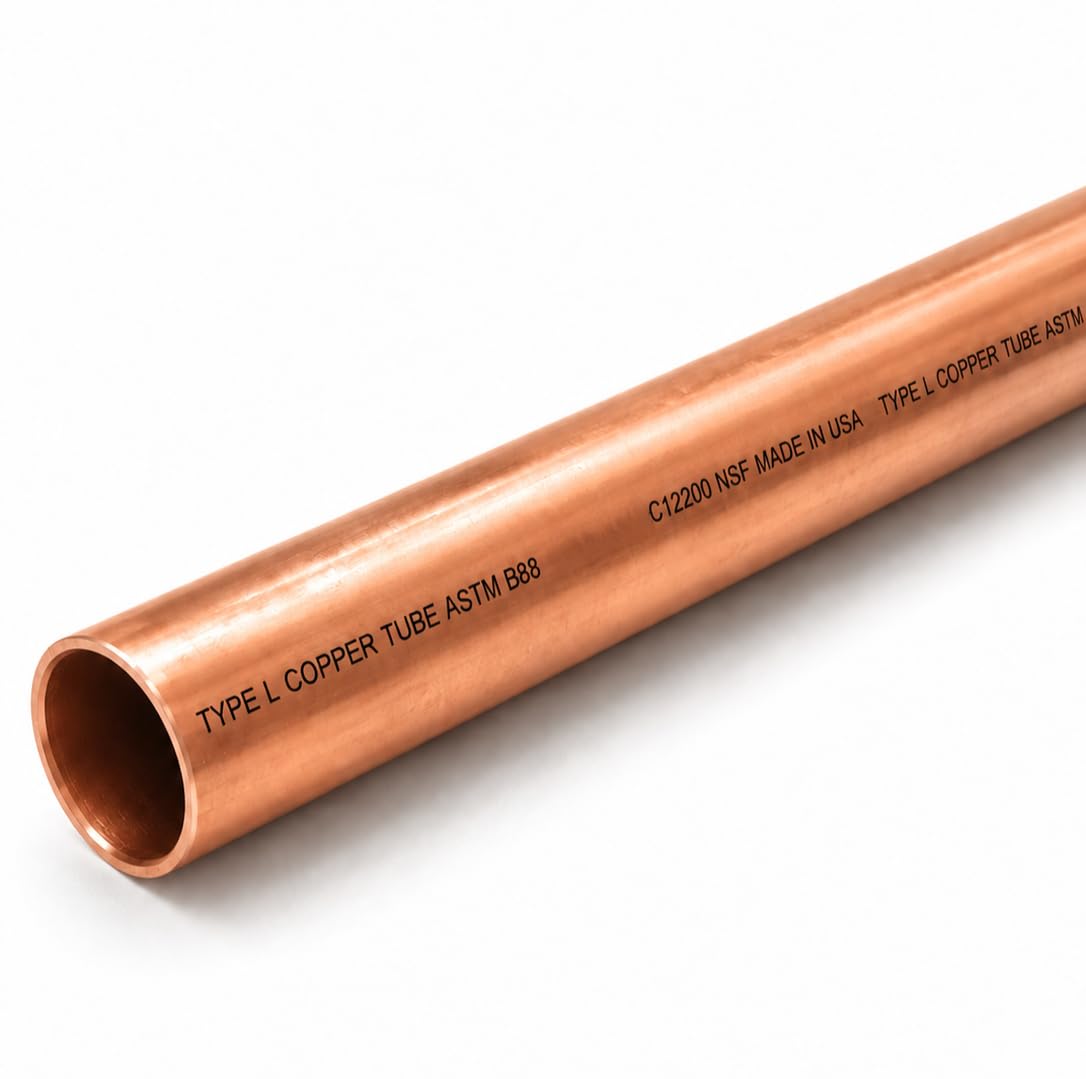
Heavier wall, real 1.625-inch OD, and eighteen inches — built for the joint you have to torch.
If you are soldering copper into an existing pressurized line, you want the thicker wall and the standard outside diameter. This stick delivers both: Type L copper with a 1.625″ outside diameter and a 1.505″ inside diameter, rated to 750 psi and certified to ASTM B88. It is made in the USA or Mexico to that standard, and the listed temperature ceiling is 400 degrees F depending on size and pressure. For a hot-water heater connection or a chilled-water repair, that combination is what gets you through inspection without a second trip to the hardware store.
Length is where it separates from the 24-inch Type M pipe below — eighteen inches versus twenty-four, and you cannot stretch copper. The flip side is wall thickness, and that is where owners land. This one is heavy. On the review pages you will find trike owners and refrigeration techs talking about how much stiffer and more substantial Type L feels in the hand, and whether they should have gone with standard thickness instead. The heavier wall is real: it takes more cutting effort and adds weight to the run. The compensation is compatibility — this fits press systems, compression fittings, and flare fittings, so you are not limited to one joining method.
One recurring complaint in the feedback is size mismatch on the smaller-diameter versions of this listing line — buyers hunting a 3/4″ OD piece found the part would not marry up with standard 3/4″ HVAC tube. On the 1-1/2 inch size, the stated outside diameter is 1.625 inches, and that is the number to check against your fitting. Type L is also the sturdier choice for anything with pressure behind it. If you are cutting a repair into a live water system, the extra 0.06 inch of wall compared with Type M is not vanity — it is margin.
Where it earns its keep: Type L wall thickness plus a 1.625″ OD and 750 psi rating makes this the stick to buy when the joint has to hold under pressure. Buyers report it joining two SharkBite connectors without drama, which is about as clean a verdict as a repair part gets.
Who it suits: anyone doing a solder or press repair on a real water line where the fitting has to be standard and the pressure has to hold.
Consider the longer option if: your run is over eighteen inches — the size stated on this stick is the size you get, and there is no stretching Type L to cover a gap.
3. 1-1/2 Inch Type M Copper Pipe, 24-Inch Stick
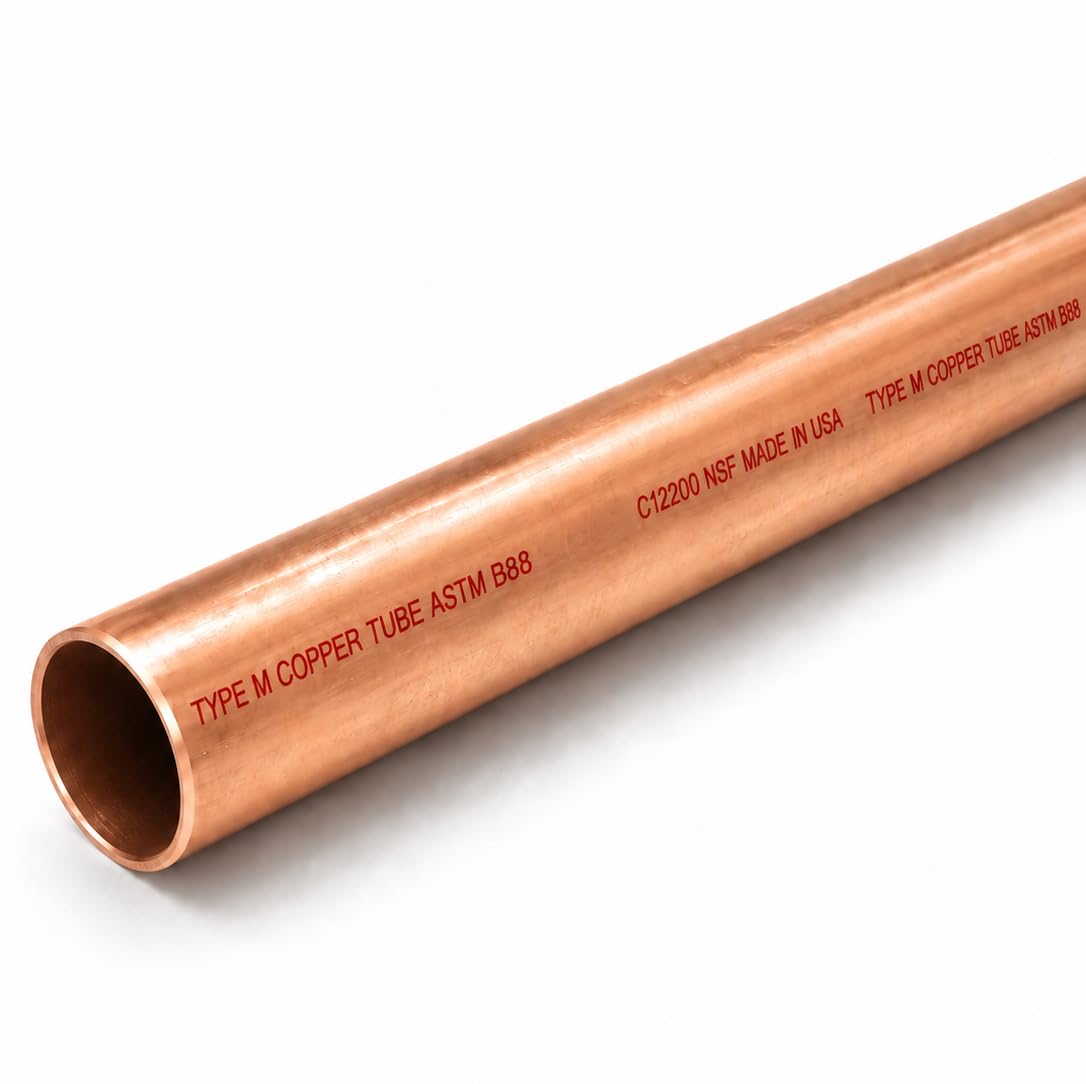
The lighter, thinner wall that cuts in seconds and stretches a full two feet.
Type M is the wall most residential water lines are built from, and the reason is simple: it cuts fast. This stick is 24 inches long with a 1.625″ outside diameter and a 1.527″ inside diameter, rated to 750 psi and certified to ASTM B88. It works with solder and sweat fittings, press-fit systems, and compression or flare fittings, and it is listed as safe for drinking water, air, natural gas, and non-corrosive liquids. The listing also notes it is approved for above-ground water distribution in most residential applications — with the standard caveat that you verify your local code first. That verification step is not optional. A pass on a pressure rating does not automatically mean a pass on your inspection.
The honest phrase in the feedback is “lighter and thinner.” That is the Type M trade: less metal, more cutability. What owners notice in practice is the ease — this is a pipe you can cut with a standard wheel cutter and be done, no wrestling a heavier Type L wall through the tool. That makes it a natural pick for a DIY water line where the run is not enormous and the pressure is residential-grade. The 24-inch length also clears the 18-inch Type L stick above, which matters if the pipe you are replacing is closer to two feet than eighteen inches. Not all Type M is created equal in presentation. An occasional piece arrives discolored or spotted rather than bright like the listing photo, which is why you inspect on arrival.
Where this pipe has quietly won over a lot of buyers is a very specific job: joining two SharkBite connectors on a hot water heater. The listing’s own feedback includes a buyer who could not find the piece at a hardware store and used it for exactly that. The reason it works so well for that task is the 24-inch cut with standard outside diameter — push-fit connectors want a clean, correctly sized end, and this one arrives deburred and ready, as the listing states. The 1.527″ ID also means a bit more water volume than the 1.505″ ID on the Type L stick, which is a small but real difference if you are chasing flow.
The 24-inch advantage: two extra inches over the Type L stick above is not a rounding error when you are joining SharkBite connectors (push-to-connect fittings that snap onto the pipe) on a hot water heater — it is the difference between reaching both ends and coming up short.
Best fit: DIY water-line work, hot-water-heater connections, and anyone who wants the lighter wall because their cutting tool is basic.
Check first: thinner wall means less margin under high pressure and more discipline on the cutting wheel — if your system runs hot and hard, price the Type L stick above against it before deciding.
4. ICS Industries 1-1/2″ Type L Hard Copper, 5 Ft

Five feet of hard-drawn Type L from a US mill — the one you buy when the job is a whole run, not a patch.
Length is the whole story here. This ICS Industries stick runs 60 inches — five feet of Type L copper with a 1-5/8″ (1.63-inch) outside diameter, hard-drawn temper (a stiff, springy state that resists bending), and C12200 copper alloy certified to ASTM B88 (the published standard for copper water tube). That combination matters in two ways. The hard temper means it holds a straight line across a long span without sagging, which is exactly what you want when the pipe is doing structural work — like the column in a reflux still, a use case that shows up in the feedback. And the length means one piece can cover a run that would otherwise be three or four shorter joints, which is both less soldering and fewer potential weeps down the road. It is made in the USA by ICS Industries, with manufacturing credited to Wieland Copper Products.
On the review pages, buyers call it brand-new and shiny, note it shipped well packaged, and describe using it to replace a damaged length in a church kitchen ceiling after frozen pipes. One buyer compared the cost against online metal retailers and said it came out well ahead. That last point is where the long stick earns its keep — it is more money up front than the 12-inch or 18-inch pieces, but it is also five times the length, and copper is priced by the pound. If you need a full run, this is the one that does not leave you ordering a second piece to finish the job.
The honest caveat is shipping speed — a long, heavy stick moves slower than a small piece of tube, and the feedback reflects it. There is also a dimensional note to check before you commit: this ICS stick states a 1.63-inch outside diameter, while the other two ASTM B88 pipes here list 1.625 inches. That is very close, but copper fittings want exact sizing, so confirm which OD spec your fitting is cut for. A separate point worth flagging: a buyer who ordered 1-1/4 Type L hard copper left a five-star review noting the order was a mistake on their end and the product was fine. If your job is not 1-1/2 inch, do not order this size — measure first.
The five-foot case: 60 inches of C12200 copper in hard temper, made in the USA — that is enough stick to complete a residential or industrial run without joints in the middle of it.
Pick this for: full-length runs, hard-temper structural use, and anyone who would rather buy one long piece than three short ones.
Wait for it if: your job is a small repair that would waste four of those five feet — the shorter pipes above are the smarter spend for patch work.
Understanding the Specs
Nominal size versus outside diameter
Nominal size is what the label says. Outside diameter (OD) is what the metal actually measures. A 1-1/2 inch copper tube typically lists an outside diameter around 1.5 to 1.63 inches, and that split is the single biggest source of failed connections in this category — the reviews across these listings keep circling back to it. Read the OD first, measure your fitting, then buy. If the listing states 1.625″ OD, your coupler has to be set up for 1.625″, not for the ideal of “one and a half.”
Wall type: M versus L
Type M is the standard, thinner wall — lighter, easier to cut, and common in residential water. Type L is the medium wall — heavier, sturdier, and the safer call for higher pressure or anything where straightness under load matters. Both are made to published standards, both handle typical residential fluid duty, and the choice usually depends on your code, your pressure, and how much cutting effort you are willing to spend. The wall does not change the nominal size — a 1-1/2 inch Type L and a 1-1/2 inch Type M both sit around the same outer diameter, but the inner channel differs and the stiffness differs.
FAQ
What does 1-1/2 inch copper tube actually measure?
Will a 1-1/2 inch copper tube fit standard plumbing fittings?
Is Type L better than Type M for household water lines?
Can I cut 1-1/2 inch copper tube myself?
Do these copper tubes work with SharkBite connectors?
Is Type M copper pipe safe for drinking water?
How long does copper tube last, and does it corrode?
Can I use this tube for gas or HVAC lines?
What is the difference between 12-inch, 18-inch, 24-inch, and 5-foot copper tube?
How should I store and handle copper tube before installation?
Final Thoughts: The Verdict
The top pick for craft and hobby work is the Tynulox 1-1/2″ OD 99.9% Copper Tube — 4.2 stars from over 300 buyers, 99.9% copper, and a polished smooth finish suited to fountains, model lamps, and jewellery work. Just verify your fitting against the stated 1.5-inch outside diameter before you buy, because that is the number that decides whether this tube or an ASTM B88 pipe is your pick.
For pressure work, the 24-inch Type M stick is the easy one to reach for — lighter wall, cuts with a standard wheel, and long enough to join two SharkBite connectors on a hot water heater. If you want the heavier Type L wall behind your joint, the 18-inch Type L pipe is your move. And if you are running a full length and would rather not leave a joint in the middle, the ICS Industries 5-foot Type L puts five feet of US-made hard-temper copper in your hands in a single piece — the value is in the length, not the cost per inch.
How We Picked
We do not accept paid placement. Every pick is matched to a real buyer and a real use-case; we do not hands-on test units.
Sources & Methodology
Specifications: manufacturer listings and product documentation. Review insights: verified customer reviews, as of September 2026. Pricing: not shown on this page (it changes often); check the current price via the retailer link.
As an Amazon Associate, Non Toxic Blog earns from qualifying purchases. This does not affect which products we feature.