Specs are compiled from manufacturer listings and verified buyer reviews and can change over time — please confirm the key details on the product page before buying.
You uncoil a 1/2-inch copper pipe, start bending, and the tube collapses into a kink that ruins the whole run. This guide separates the soft, workable coils from the thin-walled frustration, so your next HVAC or refrigeration repair actually holds a bend.
I’m Mo Min — the founder and writer behind Non Toxic Blog. This guide is built by comparing the manufacturers’ published specifications and the patterns across verified customer reviews, so you get each pick’s real strengths and trade-offs instead of marketing spin.
The 1/2-inch copper pipe options below are measured on wall thickness, bendability, and how they survive shipping without dents.
Our Picks at a Glance

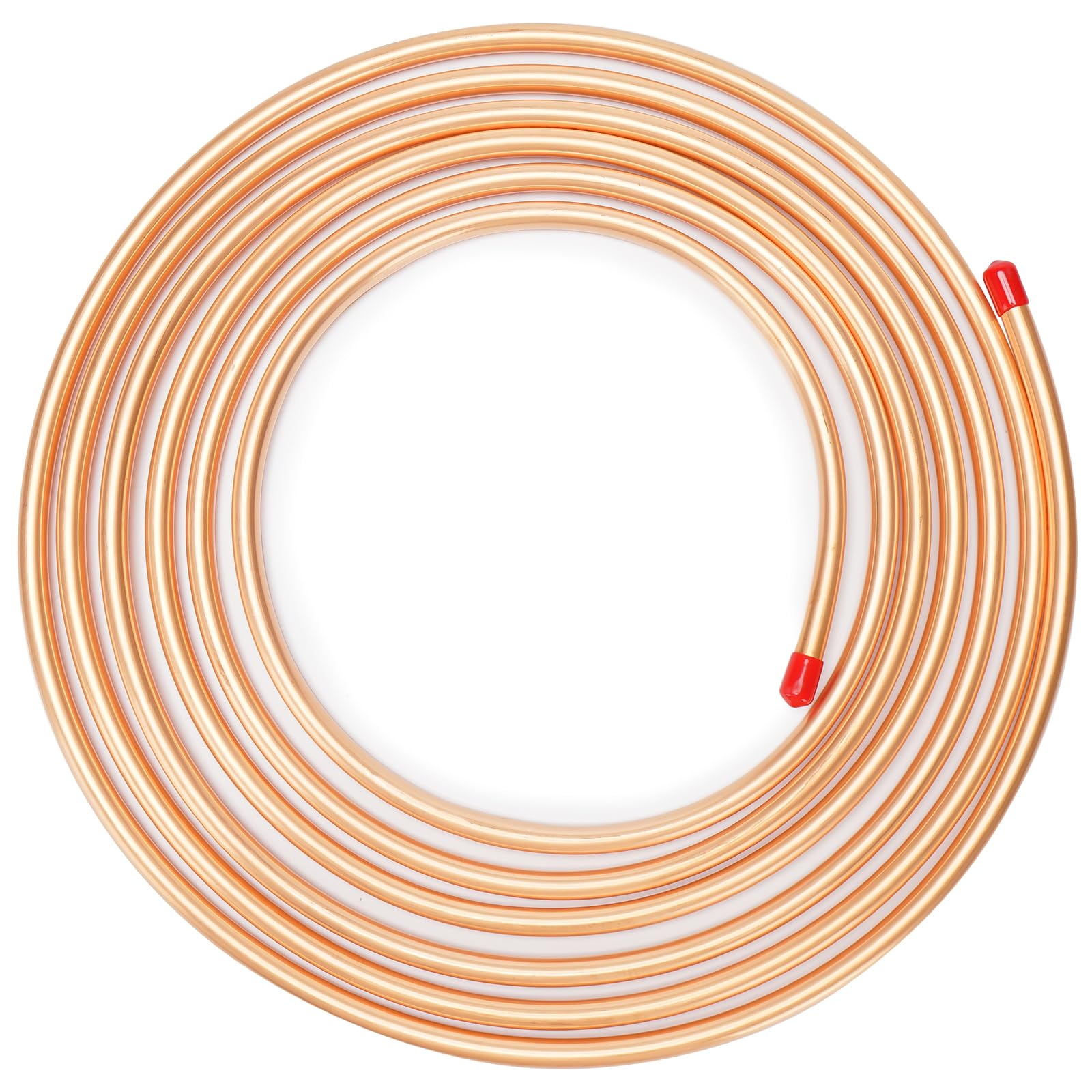
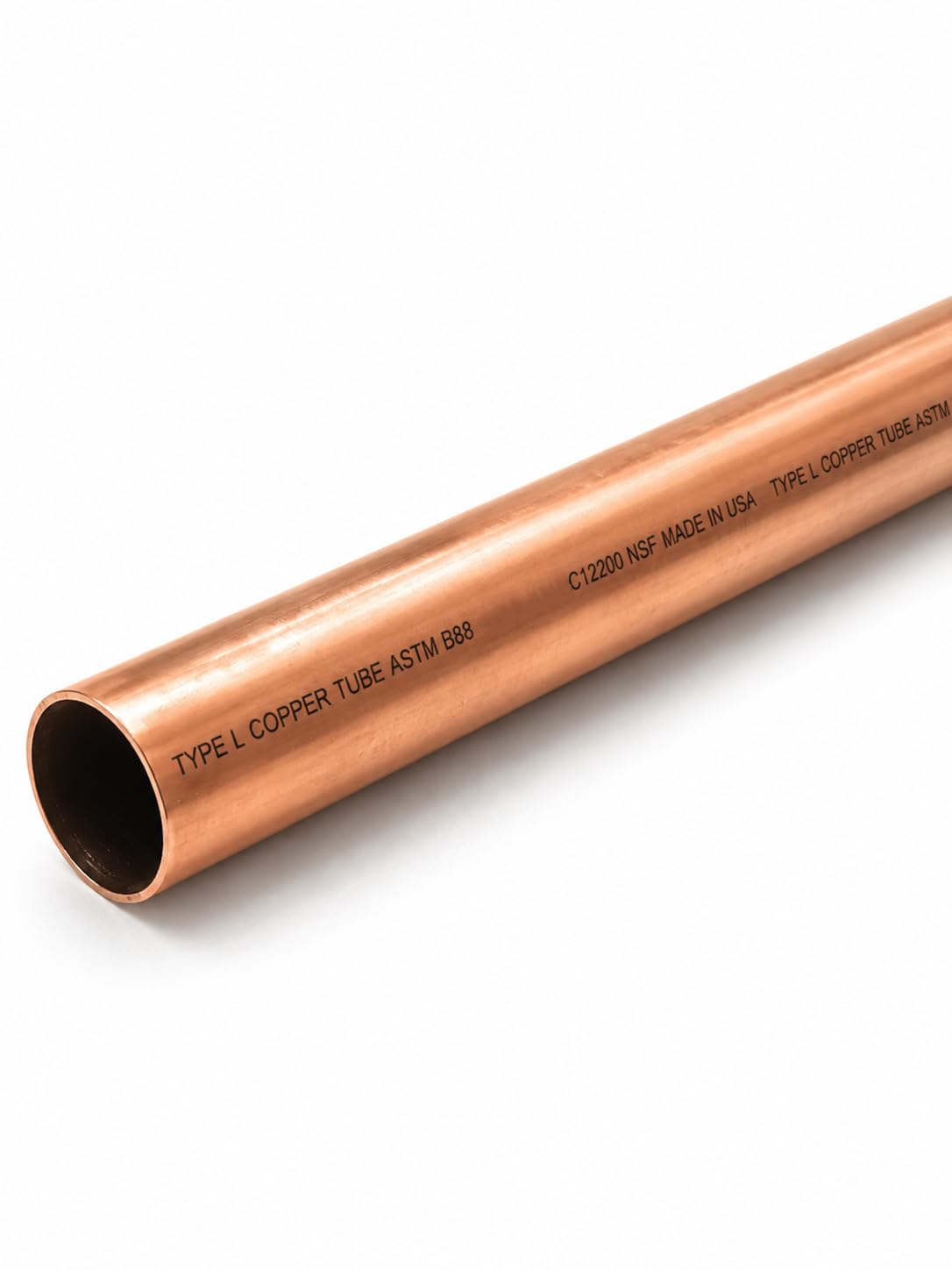
How To Choose The Best 1/2-Inch Copper Pipe
Before you add a coil to your cart, figure out whether you’re repairing a refrigeration line, extending a water supply, or building a craft piece. Each job needs a different temper, thickness, and straightness — and choosing wrong means a pipe that kinks, leaks, or simply won’t fit the fittings you already own.
Soft coil tubing vs. hard straight pipe
Soft coil tubing, often marked ASTM B280, is annealed so you can bend it around corners by hand or with a bender. It is the standard for air conditioners and refrigerators, where lines must snake through tight spaces. Hard straight pipe, made to ASTM B88, keeps a rigid line for water supply and hydronic heating, so it won’t deform under pressure.
Wall thickness is the silent deal-maker
A 0.028-inch wall bends easier but dents more in shipping and needs a careful touch with a bender to avoid collapsing. A thicker 0.032-inch wall holds its shape better under repeated handling, but it takes more force to shape. The trade-off shows up in the real-world complaint pattern: thin walls that wrinkle in a bender are the most common reason a coil disappoints.
Quick Comparison
| Model | Best For | Wall Thickness | Length | Temper | Amazon |
|---|---|---|---|---|---|
| BELLA BAYS Copper Tubing★ Best Overall | Bendable HVAC & DIY runs | 0.028 in / 0.7 mm | 5 ft | Soft Coil | Amazon |
| YuJingKey Copper PipeFlexible Fixer | Quick flexible repairs | — | 5 ft | Soft Coil | Amazon |
| 1-1/2 Inch Type L Copper PipePress-Fit Ready | Press-fit water lines | Heavy-wall | 4 in | Rigid | Amazon |
| XIFOWE Copper Tube | Antenna & electrical builds | 0.03125 in | 5 ft | Soft Coil | Amazon |
| VENTRAL Copper Pipe Type M | Straight rigid plumbing | — | 36 in | Hard | Amazon |
| GOORY Copper Tubing | Longer custom HVAC runs | 0.028 in / 0.7 mm | 10 ft | Soft Coil | Amazon |
| Yaocom Copper Tube | Fountain & pump recirculation | 0.7 mm | 10 ft | Soft Coil | Amazon |
| Sadnyy Flexible Copper Tube | Crafts & model building | 0.0197 in | 25 ft | Soft Coil | Amazon |
| ICS Industries Copper Coil | Long continuous refrigeration lines | 0.032 in | 50 ft | Soft Coil | Amazon |
In-Depth Reviews
1. BELLA BAYS Copper Tubing
Our pick — over 4.5★ from 450+ verified ratings; the strongest balance of quality and price.
The 5-foot coil that unrolls beautifully instead of work-hardening into a fight.
What wins people over here is the quality — the most-discussed aspect, with roughly 46 owners calling it out. This is C12200 T2 pure copper at 99.9% purity, with a wall thickness of 0.028 in / 0.7 mm, which keeps it flexible enough to shape by hand while still feeling solid in the hand. The 5-foot length is short enough to store flat in a drawer but long enough for a single appliance connection.
One of the smartest design choices is the loose coil. The winding diameter is a generous 12-14 inches, which means the metal isn’t stressed into a tight spiral during shipping. Buyers report that it “unwound beautifully” — that loose winding prevents the work hardening that makes cheaper coils stiff and brittle. It also arrives sealed against oxidation, thanks to a nitrogen-charged treatment that keeps the inner surface clean for soldering.
There is a real trade-off to respect: the walls are thin, so owners mention you will need a bender to keep the tubing from collapsing on sharp angles. For straight runs and gentle curves, this is a joy; for a 90-degree kink without a tool, it will crush.
Why it wins
- Loose 12-14″ coil unwinds without work-hardening
- Nitrogen-charged to resist internal oxidation
- Bends cleanly for fuel lines and water runs
The honest limit
- Thin 0.028″ wall needs a bender for tight bends
- Rolls can arrive with minor dents, usable but not pristine
Reach for it if: you need a soft, bendable 5-foot line for a fridge, AC, or water connection and want a coil that comes off the roll smoothly.
Look elsewhere if: you’re making many tight 90-degree bends without a bender — the thin wall won’t survive repeated crushing.
2. YuJingKey Copper Pipe
A 5-foot soft coil that shines in odd jobs like reaching wasp nests between deck boards.
This coil is made from C12200 grade copper meeting the ASTM-B280 specification, which is the same refrigeration-grade standard as the top pick but with a simpler, no-frills approach. It arrived wound in a tight 4-inch coil with plastic caps fitted to the ends to keep dust and bugs out of the bore — a small detail that keeps the inside clean for soldering.
The flexibility is the defining trait here. One owner used it to slip water upward between deck board spaces to dislodge paper wasp nests, soldering it to a brass hose end first. The tube follows contours and corners at almost any angle, which is exactly what you want when a line has to route around obstacles rather than through them.
The trade-off is finish quality: the ends were reported as poorly cut on one unit, though the 1.25-inch diameter stayed consistent along the length. If the cut ends bother you, a quick ream with a deburring tool cleans them right up.
Best for quick fixes: this is the coil for the improvised repair — a fountain recirculation line, a spray extension, or a short fuel run — where bending ease matters more than a flawless factory edge.
3. 1-1/2 Inch Type L Copper Pipe
A rigid, heavy-wall stub that connects two SharkBite fittings without a single solder joint.
This is the odd one out in the list, and it serves a completely different job. It is a Type L copper pipe with a 1.5-inch outside diameter, made to ASTM B88 — the plumbing standard, not the refrigeration standard. The heavy-wall construction is built for pressurized water, hydronic heating, and gas distribution, and it handles continuous service up to 400 degrees F depending on size and pressure.
Where this pipe earns its keep is with press-fit and sweat connections. It is precision-cut and deburred for a clean fit, and it works with common solder/sweat fittings as well as press-fit systems like Viega ProPress and Nibco Press. Customers note using it to extend stubs on a hot water coil and connect two SharkBites with “absolutely no leaks.”
The catch is sizing confusion. This is not a 3/4-inch OD pipe, and one buyer flagged that it does not match normal 3/4 OD copper HVAC tubing — it is a true 1.5-inch OD pipe, so double-check the 1.625-inch OD / 1.505-inch ID before ordering.
The head-to-head: unlike the soft coils above that bend to follow contours, this rigid stub stays perfectly straight — the right choice when stability under water pressure beats flexibility.
4. XIFOWE Copper Tube
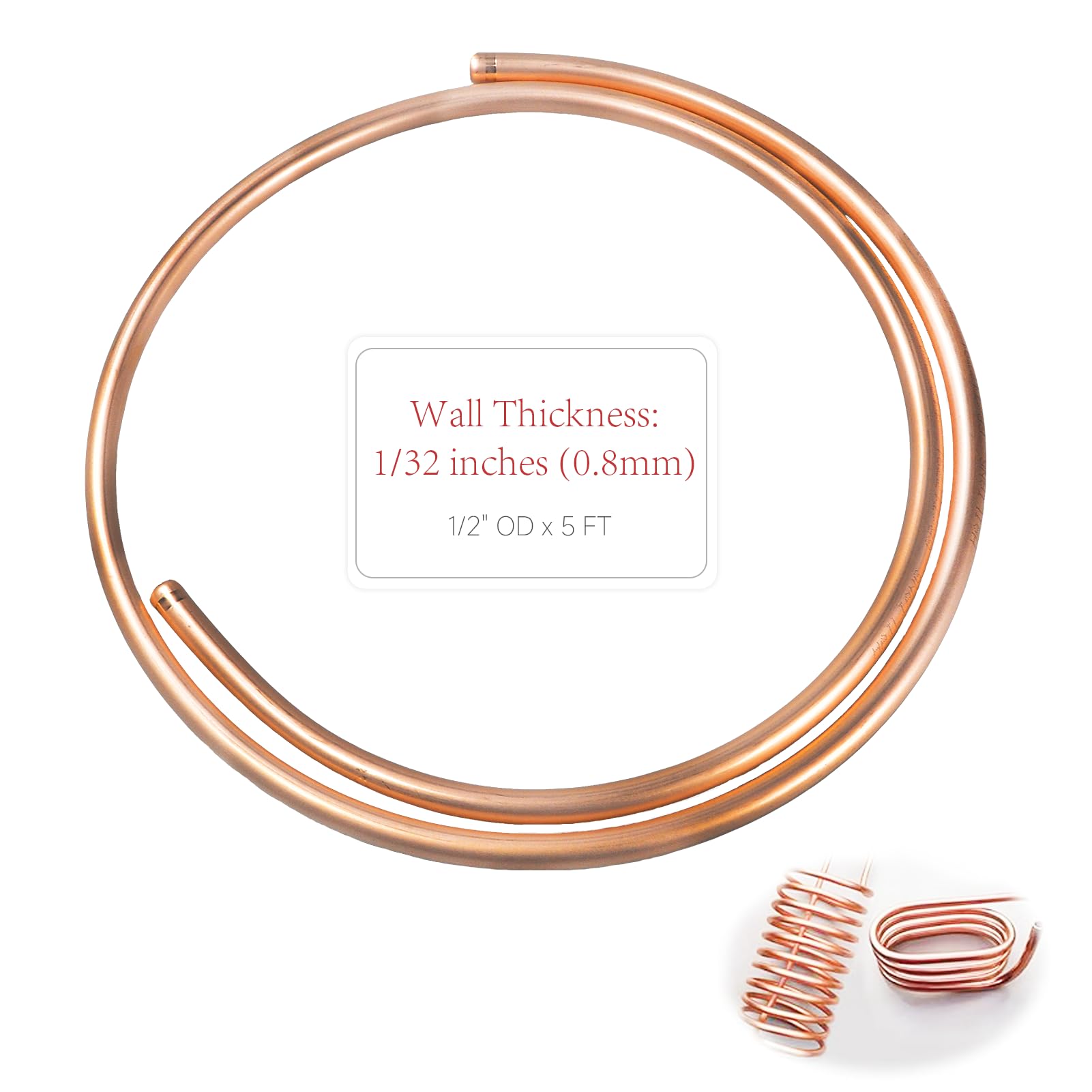
The 5-foot soft coil that ham radio builders rely on for clean 6-meter and VHF antennas.
This coil resists crushing better than the BELLA BAYS and GOORY coils because its wall is 0.03125 inches thick, versus their 0.028 inches. It’s still soft copper, made with a smooth surface from continuous casting and rolling, and it complies with the ASTM-B280 standard (the refrigeration-grade spec) for refrigeration work.
Quality is the most-praised aspect, with roughly 31 owners calling it out, followed closely by functionality. The real-world use cases are surprisingly creative: ham radio operators build their own 6-meter and VHF antennas from this tubing, and it works well for that because the smooth surface and easy bending let you form clean elements. It is also sturdy enough for high-pressure applications, though one owner noted it demanded care on a convoluted bend.
The honest caveat is value: a handful of buyers feel the price runs high for a 5-foot length, and a few report the claimed measurements aren’t perfectly accurate. If you need precise ID for a tight fit, measure before you commit.
What stands out
- Slightly thicker 0.03125″ wall resists crushing
- smooth surface works for antenna elements
- Meets ASTM-B280 for refrigeration use
What to check
- Some buyers call the price high for 5 ft
- Measurement accuracy questioned by a few owners
Grab this for: a craft, antenna, or DIY project where a slightly sturdier coil holds its shape without kinking.
Think twice if: you need guaranteed precise ID dimensions — a few units missed the mark.
5. VENTRAL Copper Pipe Type M
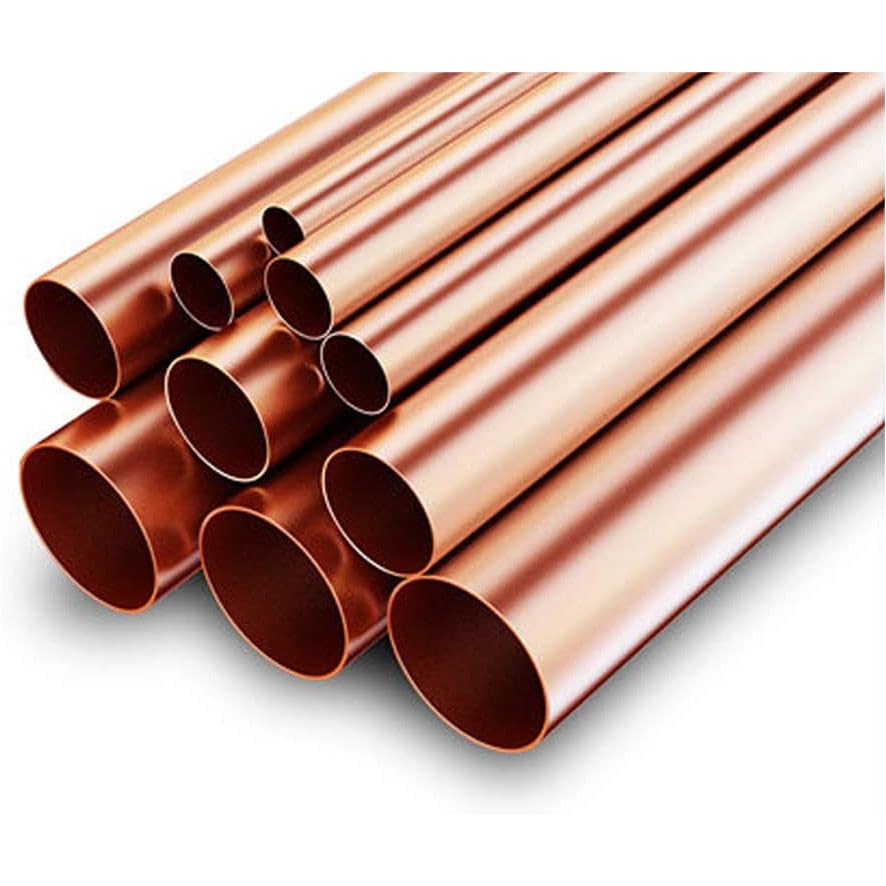
A 36-inch rigid segment made in the USA that arrives padded against dents and ready for cold water lines.
This is the hard-temper opposite of the soft coils — a straight, rigid pipe with a 0.625-inch outside diameter in Type M weight, which is the thinner of the two common plumbing weights yet still rated for water supply work. It is designed for irrigation, underground sprinkler systems, drainage, pools, spas, and cold water supply lines, and it is proudly made and designed in the USA.
The standout shipping detail is the extra padding. Reviewers point out it arrived “with no dents or defects,” which is genuinely rare for copper pipe that travels through the mail. The straight hard-temper construction means it won’t bend accidentally in handling, so it stays true for a clean run.
The recurring gripe is packaging expectations: the ad photo shows several pipes in a pile, but you receive a single 36-inch pipe. One buyer was surprised by that, so manage your expectations on quantity before ordering.
Best for pure rigidity: if you need a straight, unbending stub for a water line and want the confidence of US manufacturing, this is the pick — just remember it’s one pipe per order, not a bundle.
6. GOORY Copper Tubing
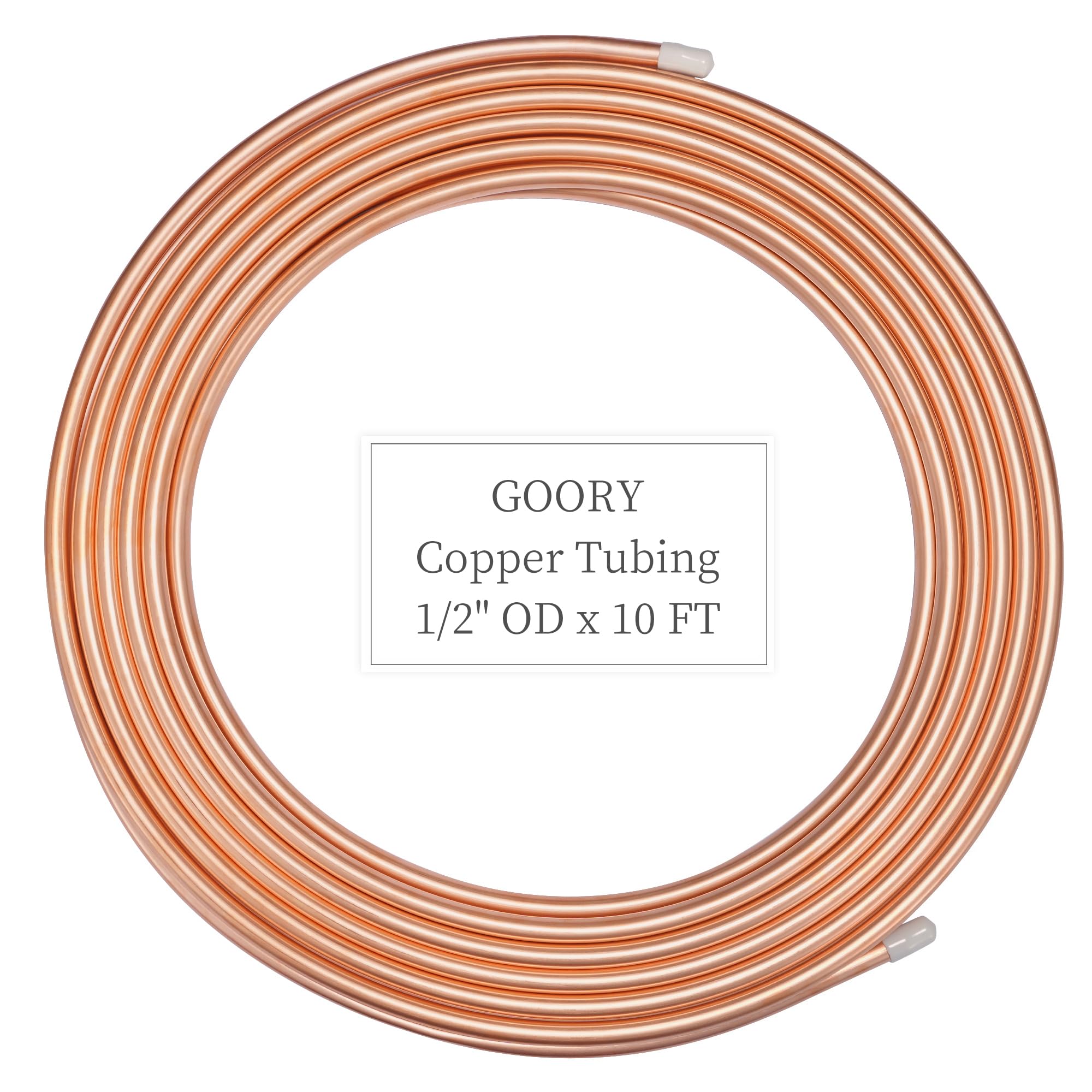
A 10-foot C12200 coil that gives you twice the run of the 5-footers without a splice.
Functionality is the most-praised aspect here, with roughly 30 owners singling it out, and the reason is simple: at 10 feet, this coil is long enough for custom runs and repairs that a short 5-foot piece can’t cover in one clean line. It meets the ASTM-B280 standard for refrigeration and is filled with nitrogen during production to eliminate impurities and resist internal oxidation.
The wall thickness matches the top pick at 0.028 inch / 0.7 mm, so it bends easily with a manual or ratcheting tool and works with both sweating and flared fittings. It fits a wide range of jobs — HVAC systems, refrigerator lines, and even craft projects like jewelry and architectural models — which is why buyers call it ideal for custom runs.
The honest downside is kink resistance, which owners rate as mixed: the soft wall that makes it easy to bend also means it can kink if you’re aggressive with it. A few units arrive with dents or crushed ends from shipping, so inspect the coil before you start flaring.
The payoff
- 10 ft covers long runs without a splice joint
- Nitrogen-filled to resist oxidation
- Bends and flares cleanly with standard tools
The catch
- Kinks easily if you bend without a tool
- Occasional dents or crushed ends in transit
Choose this when: you need a full 10-foot continuous run for a custom HVAC line and can work gently with a bender to avoid kinks.
skip it if: you’re making many tight bends — the soft wall demands a careful hand.
7. Yaocom Copper Tube

A 10-foot soft coil that quietly replaced a recirculating pump line in a fountain with zero waste.
This coil measures 12.7 mm / 0.5 inches OD with a 0.7 mm wall thickness and a 3-meter / 10-foot length, and it is built from quality copper with a smooth, smooth surface. The impressive elasticity is the defining feature — you can form it into elbows and joints without breaking, bending it at nearly any angle for your specific purpose.
Real buyers have used it to replace a tube for a recirculating pump in a fountain, and it “worked perfectly,” with just the right amount of material and very little waste. It also serves as a radiator line. The copper surface will oxidize and discolor over time, which is normal for the material — a quick sandpaper polish brings the shine back.
The weak point is wall strength: one buyer found it too thin, noting it “wrinkles up in bender” and had to buy sturdier refrigeration tube instead. If your bend is a gentle curve, this is fine; if it’s a sharp engineered bend, the thin wall will fight you.
Best for gentle routing: this coil shines when the line makes wide, sweeping curves — like a fountain pump loop — rather than tight mechanical bends that demand a thicker wall.
8. Sadnyy Flexible Copper Tube

A 25-foot reel of thin-walled copper that artists and model builders swear by for fine work.
At 0.5 inches OD with a 0.0197-inch wall, this is the thinnest-walled tubing on the list, and that thinness is precisely why it works for delicate applications. The 25-foot length is the second-longest here, giving you plenty of material to experiment with, and the soft copper bends at any angle for elbows and joints.
The creative use cases are the story here. Buyers use it in artwork, as a ground connection for amateur radio antennas, and even to build a small-scale live steam locomotive — where the thin wall and easy bending let them form accurate miniature lines. It arrives well-packed to avoid kinks, which matters at this wall thickness.
The limitation is structural: this is not a pipe for pressurized water or refrigerant lines. It is for crafts, hobbies, architectural models, and electrical conductivity projects where a delicate line is the goal, not a pressure vessel.
Why makers love it
- 25 ft of material for large projects
- Bends at any angle for fine detail work
- Arrives kink-free thanks to careful packing
Where it stops
- 0.0197″ wall is too thin for pressure use
- Not rated for refrigeration or water supply
Reach for it if: your project is creative — art, antennas, or models — and you need a long, pliable line that shapes easily.
Look elsewhere if: you’re running a pressurized line; the walls are simply too thin to hold up.
9. ICS Industries Copper Coil
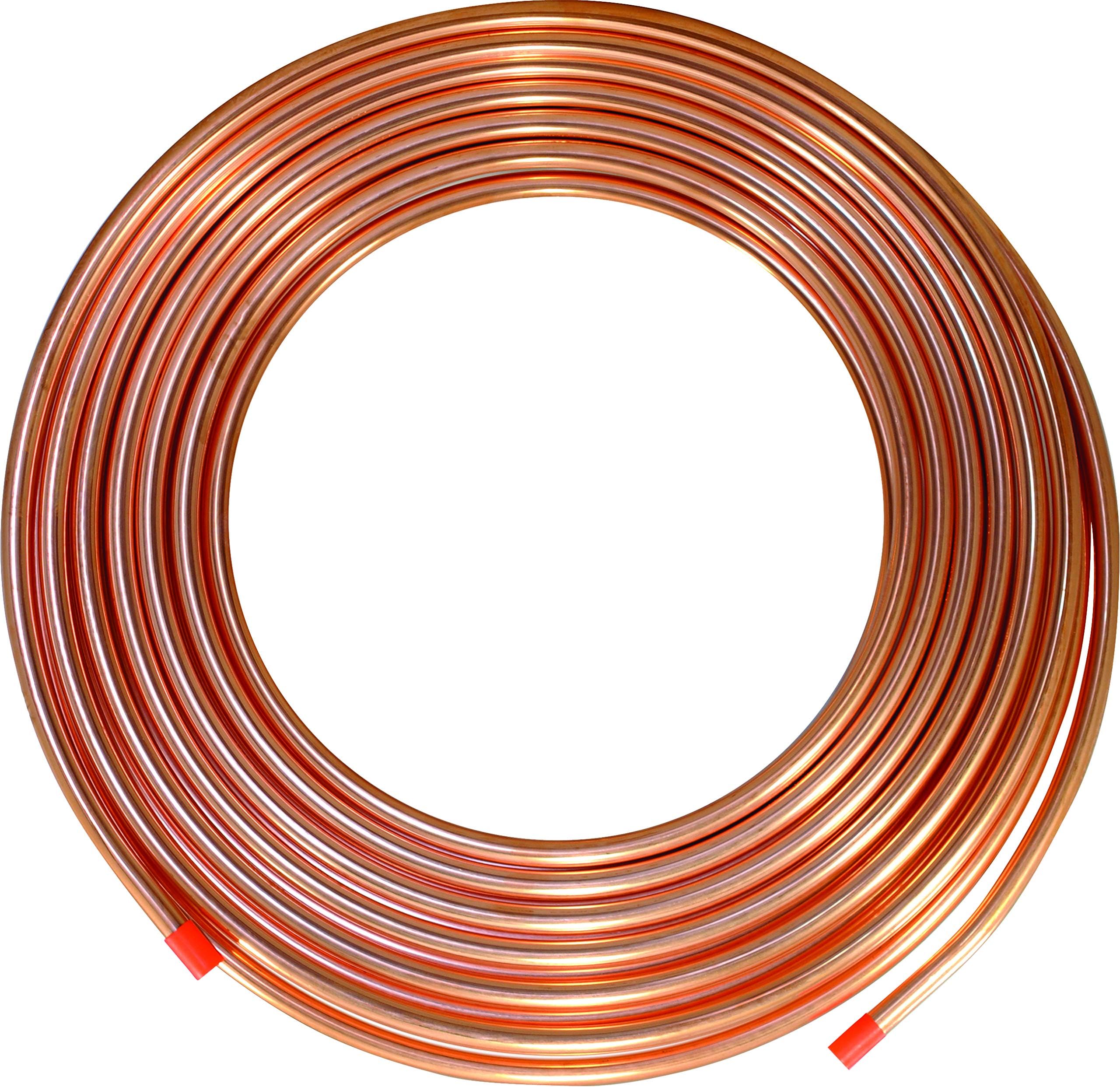
A 50-foot smooth coil with the thickest wall in this lineup — built for serious refrigeration runs.
This is the workhorse of the group: a 50-foot continuous length of C12200 smooth copper with a 0.032-inch wall thickness, which is thicker than the 0.028-inch walls on the standard coils. That extra thickness is the difference between a line that survives repeated handling and one that dents on the first bump, and it’s why this coil holds up so well in real installations.
It meets the ASTM B-280 standard for air conditioning and refrigeration, and it arrives sealed and capped to keep the bore clean. Buyers have used it for natural gas post-regulator lines and as an HVAC liquid line, reporting that it brazes easily with no leaks, no kinks, and no oxidation. The ends are plugged to keep debris out during shipping.
The wall thickness is a double-edged sword: it’s sturdy, but it needs more care to bend. The review pages sum it up: thin-walled enough to demand a slow, careful hand with a bender, and safest with larger-radius bends to avoid kinking. This is a pro-grade reel that rewards patience.
The strength
- 50 ft of continuous, smooth line
- Thicker 0.032″ wall resists dents and crushing
- Brazes easily with no leaks per owners
The demand
- Thick wall needs slow, careful bending
- Large-radius bends are safest to avoid kinks
Pick this for: a full 50-foot refrigeration or gas line where you want the thickest protection and don’t mind a careful bend.
Pass on it if: you need a quick, easy-to-shape short section — the thick wall slows you down.
Understanding the Specs
Outside Diameter (OD) vs. Nominal Size
For soft copper tubing, the OD listed (like 0.5 inches) is the actual outside measurement — not the nominal pipe size. This matters when you’re matching fittings: a flared or compression fitting grabs the OD, so a true 0.5-inch OD needs a 1/2-inch fitting. The 1-1/2 Inch Type L pipe on this list is a different animal entirely, with a real 1.5-inch OD for heavy plumbing, so always confirm the OD before you order fittings.
Wall Thickness and Kink Resistance
Wall thickness is the quiet spec that decides how the tube behaves. A 0.028-inch wall (0.7 mm) bends easily but dents easily too; a 0.032-inch wall is sturdier but demands more force to shape. Thinner walls like the 0.0197-inch on the craft reel are for non-pressure projects. If you’re making tight bends, a thicker wall with a proper bender gives you a cleaner result without crushing.
ASTM B280 vs. ASTM B88
ASTM B280 is the standard for refrigeration-grade soft copper — the kind used in AC lines and refrigerators, made to bend and hold a flare. ASTM B88 is the plumbing standard for rigid water-supply pipe, built to hold pressure in hot and cold water lines. The soft coils in this guide are B280; the rigid Type L pipe is B88.
Soft Coil vs. Hard Temper
Soft coil tubing is annealed, meaning it’s heat-treated to be bendable by hand or with a basic tool. It comes rolled up and stays flexible, which is perfect for snaking through tight spaces. Hard-temper pipe is drawn straight and stays rigid, which is what you want for a clean, unbending water line. Choosing the wrong one means fighting the material the whole install.
FAQ
Will a 1/2-inch OD soft coil fit standard 1/2-inch flare fittings?
How do I keep a soft coil from kinking when I bend it?
What is the difference between Type L and Type M copper pipe?
Can I use refrigeration-grade soft copper for potable drinking water lines?
How long does a 50-foot coil last compared to a 5-foot section?
Why does my copper tubing arrive with dents?
Is soft coil copper better than hard straight pipe for a refrigerator line?
What does 99.9% C12200 copper actually mean for my project?
Can I solder soft coil copper to a brass fitting?
Which coil is best for building a hobby antenna or craft project?
Final Thoughts: The Verdict
For the majority of shoppers, the 1/2-inch copper pipe winner is the BELLA BAYS Copper Tubing because it pairs a clean, loose coil with the nitrogen-sealed protection that keeps the inside ready to solder. If you need a long 50-foot run for a real refrigeration job, grab the ICS Industries Copper Coil for its thicker 0.032-inch wall. And for a budget-friendly quick fix that bends around obstacles, the YuJingKey Copper Pipe is the one to reach for.
How We Picked
We do not accept paid placement. Every pick is matched to a real buyer and a real use-case; we do not hands-on test units.
Sources & Methodology
Specifications: manufacturer listings and product documentation. Review insights: verified customer reviews, as of August 2026. Pricing: not shown on this page (it changes often); check the current price via the retailer link.
As an Amazon Associate, Non Toxic Blog earns from qualifying purchases. This does not affect which products we feature.