Specs are compiled from manufacturer listings and verified buyer reviews and can change over time — please confirm the key details on the product page before buying.
Most leopard gecko keepers get talked into a ten-gallon tank and then discover the hard part is not the gallon number at all. It is whether your gecko can actually burrow, whether the heat reaches the floor, and whether the lid stays where you put it. Get those three things right and a ten-gallon setup is a genuinely good home for a juvenile leopard gecko or a single adult. Get them wrong and you are chasing an escapee around the carpet at midnight.
I’m Mo Min — the founder and writer behind Non Toxic Blog. This guide is built by comparing the manufacturers’ published specifications and the patterns across verified customer reviews, so you get each pick’s real strengths and trade-offs instead of marketing spin.
Below, every tank is compared on the numbers that actually change your setup: floor footprint, usable height for substrate, lid security, and what arrives in the box. The 10 Gallon Leopard Gecko Tank you pick should match the gecko you have today, not a hypothetical one.
Our Picks at a Glance

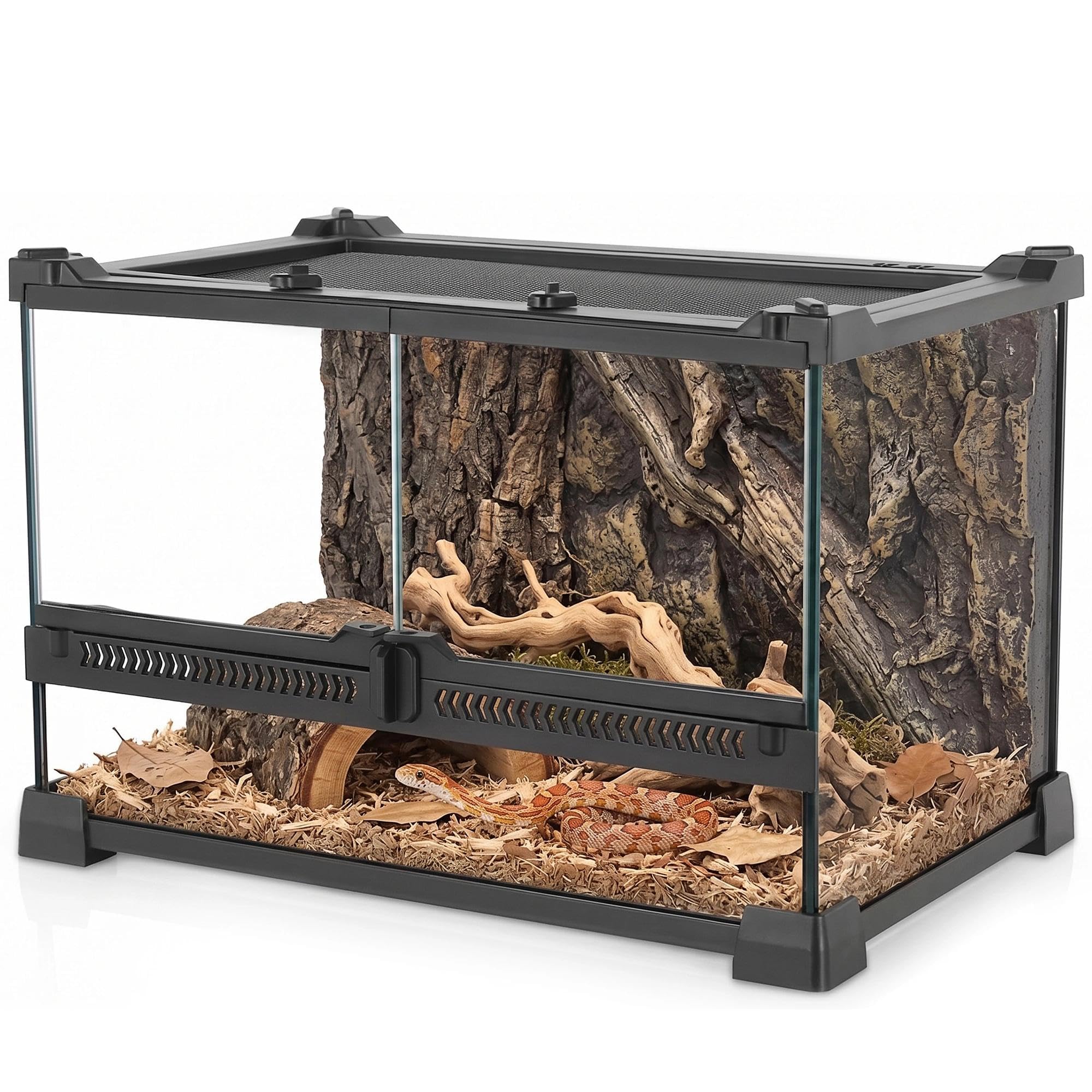
How To Choose The Best 10 Gallon Leopard Gecko Tank
A leopard gecko is a ground-dwelling lizard that likes a warm end, a cool end, and a hide it can dig into. Your tank has to deliver all three inside a small footprint, and that is where most ten-gallon enclosures either help you or fight you. Here is what to weigh before you commit.
Floor Space Beats Height For A Ground Dweller
Leopard geckos walk, they do not climb, so a wide low tank serves them better than a tall narrow one. A 20-inch by 10-inch floor gives your gecko room for a warm hide, a cool hide, and a water dish without crowding. A 12-inch by 12-inch floor is tighter than it sounds once you place two hides. Taller enclosures do suit arboreal species like crested geckos, so check which animal you are actually housing. Keep the dimensions straight: the first two numbers are floor length and depth, the third is height.
How Tall The Base Is Decides How Deep Your Gecko Can Dig
Leopard geckos burrow, and that natural behavior needs a couple of inches of loose substrate to work. An enclosure with an 11-inch or 18-inch overall height gives you that digging room. A tank that is only 8 inches tall leaves you with a shallow layer before you hit the lid. If your gecko is a digger, this one number shapes the whole setup.
Lid Security Matters More Than You Think
A screen or mesh top across the whole tank lets heat and UVB light through from an overhead dome, which is how most keepers warm a leopard gecko. The trade-off is fit. If the top sits loose or the door gaps run wide, small geckos and feeder insects find the way out. Look for a top that locks down firmly and door edges that close flush.
Assembly, Cleaning, And Cable Routing
Some ten-gallon tanks ship fully assembled and ready to use. Others arrive flat-packed with panels, screws, and a screwdriver. Both work, but a tank you have to build takes an afternoon and a second pair of hands. Pre-drilled cable holes are worth having, because they let you run a thermostat probe or heat mat cord without pinching a wire under the frame.
Quick Comparison
| Model | Best For | Footprint (L x W) | Height | Material | Amazon |
|---|---|---|---|---|---|
| Reptile Growth Reptile Terrarium★ Best Overall | First-time gecko keeper who wants a ready-to-use front-opening tank | 20″ x 10″ | 11″ | Polycarbonate | Amazon |
| NEPTONION Double-Door Glass VivariumStackable Pick | Stacking several small enclosures on one shelf | 12″ x 12″ | 8″ | Tempered Glass | Amazon |
| REPTI ZOO Glass Natural Cages Terrarium | Keepers who want clean glass and a sliding screen top | 20″ x 12″ | 10″ | Glass | Amazon |
| TCooSo Acrylic Reptile Enclosure | Tool-free setup in a tall, drop-in display footprint | 18″ x 12″ | 12″ | Acrylic | Amazon |
| Zilla Tropical Starter Habitat Kit | Buyers who want light, mat, and gauge in one box | 23.75″ x 14.5″ | 17.75″ | Glass | Amazon |
| Zilla Desert Starter Habitat Kit | Baby leopard gecko keepers starting from nothing | 23.75″ x 14.5″ | 17.75″ | Glass | Amazon |
| REPTI ZOO Amphibian Habitat Tank | Juvenile crested or gargoyle gecko keepers wanting a vertical tank | 12″ x 12″ | 18″ | Glass | Amazon |
In‑Depth Reviews
1. Reptile Growth Reptile Terrarium, 10 Gallon Reptile Tank 20″ x 10″ x 11″
Our pick — over 4.5★ from 250+ verified ratings; the strongest balance of quality and price.
The widest floor here and an 11-inch height that finally lets a leopard gecko dig properly.
Start with the number that settles the burrowing question: an 11-inch overall height. Pair that with a 20-inch by 10-inch floor and you get a tank where two hides and a water dish fit with room left over for a real substrate layer. Leopard geckos dig. This enclosure lets them.
The body is polycarbonate rather than glass, and the maker rates the surface at better than 98% brightness with a stated temperature range of -20 °C to 120 °C. In plain terms: it stays clear instead of yellowing, and it does not mind a heat mat or a basking lamp above it. The base is water tight and holds water, so a shallow drip tray or a moist hide setup will not seep onto your shelf.
What wins people over is the build quality, and by a distance. Owners buying their second and third unit say the same thing about the front-facing hinged port — you push it open with a finger, it closes on a magnet and a spring, and you drop in a feeder without lifting the lid at all. Anyone who has tried to tong-feed through a mesh top knows what that is worth. Stack that against the NEPTONION vivarium above, which is only 8 inches tall and weighs 2.93 kg, and this one is 3.33 kg of sturdier build with three more inches of working height.
Where It Earns Its Place
- 20″ x 10″ floor and 11″ height give a real substrate layer for a digging gecko
- Magnetic spring feeding port opens with one light push and self-closes to block escapes
- Polycarbonate base is water tight and rated for -20 °C to 120 °C
- Full metal screen top passes UVB, infrared, and dome lighting through
- Arrives assembled — no screws, no screwdriver
What To Keep In Mind
- The lid fit divides keepers — some find it very secure, others say it does not seat tightly
- Keepers of scorpions and tarantulas advise caution around the mesh lid
- Three inches of height is generous for a digger but modest if you want a tall decor stack
The pick for: a first leopard gecko, or anyone upgrading a cramped starter tank who wants room for a proper warm hide and cool hide.
The honest catch: check how the lid sits on your unit before you add a climbing reptile — most buyers find it solid, but it is the one part owners disagree about.
2. NEPTONION 12″ x 8″ x 8″ Double-Door Glass Terrestrial Vivarium
Built to sit in a stack, with a raised base that leaves room for a heat mat underneath.
This one answers a different problem: how to keep more than one animal on a single shelf. The interlocking stack design lets you align several tanks vertically, and the safety-tested top-load rating is 33.49 lb on the Double-door 12″ x 8″ x 8″ model. That figure matters because heavy hardscape, wet substrate, and water features all add load. Stay under it with lightweight decor and the stack holds.
Tempered glass on the body and heat-resistant aluminum alloy in the frame means the enclosure tolerates overhead heat and UVB from the ventilated metal mesh top. Tempered glass breaks into blunt chunks rather than shards, so a bumped tank is a safer failure than ordinary glass. The raised bottom frame lifts the tank off the shelf so a heat mat slides underneath without squeezing the surface flat. Pre-drilled cable routing holes keep thermostat and mat cords tidy instead of pinched under a corner.
What owners praise most is the finish — the doors look like they will not hold firmly closed, and they genuinely do, with little to no play a small critter could squeeze through. That said, this is the one enclosure on this list where the escape risk is real for the wrong animal. Buyers who keep isopods and hissers report that glass door gaps let them through, and one buyer’s plain summary is that the top frame is easily pushed up by climbing reptiles. Treat 8 inches of height as a floor-space tank, not a climbing tank.
Where it fits: keepers running a rack of small terrestrial setups who want consistent alignment and a short 12″ x 12″ footprint that fits a counter go-back.
Who should look elsewhere: if your pet climbs or is tiny enough to slip a door gap, this is not the enclosure for it.
Worth it if: you are stacking two or three small vivariums and want them locked in line with heat mats tucked beneath.
Think twice if: your animal climbs, or you are housing anything small enough to walk out through a door gap.
3. REPTI ZOO 10 Gallon Reptile Tank Glass Natural Cages Terrarium 20″ x 12″ x 10″

Two feet wide, twelve inches deep, and a sliding screen top that lifts and pulls clean off.
If floor area is your priority, this is the roomiest footprint in the group: 20 inches long by 12 inches wide, which is 67% more floor than the NEPTONION’s 12-inch by 8-inch base. For a leopard gecko that walks rather than climbs, that extra ground is where the value sits — more room for a warm hide, a cool hide, and a clear walking lane between them.
The full screen top has a feeding hole cut into it, so you can drop in a feeder without pulling the whole lid, and the mesh lets UVB light and infrared heat through from a dome above. Assembly is quick and the parts arrive numbered with the screws, screwdriver, and gloves included. A transparent PVC tray sits under the substrate to catch spills and makes cleanup a lift-and-rinse job rather than a scrub.
Owners like the glass itself — it arrives packed carefully and the panels come out clean and clear. The recurring gripe is the bottom: it does not hold water, which matters if you keep a moist substrate or a water feature at the cool end. A towel or drip tray underneath solves it, and plenty of keepers run that way. The sliding top also divides opinion; most find it easy to slide off, though some note it takes a nudge to slide back in.
Why it leads on space: a 20″ x 12″ glass floor with a 10″ height is the most generous walking area here, and the sliding top makes daily feeding a two-second job.
The one workaround: plan on a drip tray under the base if your setup runs damp.
Go for it if: you want maximum floor for the money and a top you can slide off one-handed.
skip it if: you keep a wetter substrate and do not want to add a tray underneath.
4. TCooSo Reptile Enclosure 10 Gallon Acrylic Tank 18″ x 12″ x 12″

Toughened acrylic, no tools, and a lid that comes off in your hand for daily feeding.
This one is built around easy access. A large front door swings open for decorating and cleaning, and a top door lifts off so you can drop in a feeder without disturbing your gecko at all. The lock is rotatable, doors are secured with rivets, and the whole thing goes together by peeling protective film and clicking parts — no screwdriver involved. First-time keepers notice the difference immediately.
Acrylic rather than glass is the design call here, and it pays off in clarity. The walls stay crisp for a 360-degree view of your pet, and a full 12 inches of height gives you room to build a background or a stacked decor feature. Vents are placed around the enclosure for airflow while keeping escapes blocked.
One thing to know before you buy: acrylic scratches more easily than glass, so use a soft cloth and skip abrasive pads. Buyers report the same thing reviewers did about smaller spiders — the enclosure suits a full-size jumping spider or a tarantula above an inch, and might not be a match for a sling. Some buyers of small slings say a gap where the front door slides proved a way out. Adults do fine; hatchlings need a check.
The pull: tool-free assembly, a front door plus a top door, and a locked enclosure that still opens in a second when you need it to.
Know before you buy: acrylic is clearer than glass but more scratch-prone, so keep it away from rough decor edges.
Best for: keepers who want a sealed, stylish display tank and zero assembly fuss.
Look elsewhere if: you are housing a very small sling and want zero risk of any gap.
5. Zilla 10 Gallon Terrarium, Reptile Starter Habitat Kit with Light

A ten-gallon glass tank that turns up with the light, mat, and gauge already in the box.
The reason to pick this over a bare enclosure is what is already inside the packaging. You get a 10-gallon glass terrarium with a fresh-air screen cover, a 5.5-inch reflective dome light fixture, a white spot bulb, a small heat mat, a green terrarium liner, and a humidity and temperature gauge. For someone setting up their first tropical tank, that is the difference between one order and five.
The screen cover sits across the top to keep your animal in while letting air move through. The included gauge lets you watch both humidity and temperature at a glance, which is useful on a small enclosure where conditions can swing fast. The kit is pitched at tropical dwellers, and the glass build and reinforced packaging make it a solid object rather than a flimsy starter.
Set expectations on the electronics. The lamps and the thermometer are the weak link in the box, and the pattern of complaints lands squarely on those two parts rather than on the glass. Treat the bulb, the fixture, and the gauge as starter items you will upgrade and the value read changes — the tank itself is the durable piece. Owners also point out the lid clips do not stay in place well.
Value read: a glass tank plus light, mat, liner, and gauge in one order is a fast way to go from empty shelf to running habitat.
Plan around: replacing the bulb and gauge after the first few weeks.
Pick this if: you want one box that gets a new tropical setup running today.
pass on it if: you already own a dome fixture and a heat mat and only need the glass.
6. Zilla 10 Gallon Reptile Starter Habitat Kit, Leopard Gecko Tank

The desert version of the Zilla kit — a full setup aimed squarely at a leopard gecko’s needs.
Where the Zilla tropical kit covers humid-loving animals, this one is tuned for a dry, hot setup: a glass 10-gallon terrarium, a screen cover, two reflective domes, a white spot bulb for basking, and a black incandescent bulb for nighttime heat. A desert reptile does not need tropical humidity, so a heat-forward kit with a day bulb and a night bulb makes more sense than the tropical version for this species.
You also get a humidity and temperature gauge for monitoring conditions, an odor-fighting terrarium liner that acts as a low-maintenance, non-abrasive substrate, and reinforced packaging so it survives the trip. The glass terrarium is the find here — well-constructed, clean to look through, and easy to assemble on arrival.
The lighting is the thing to plan around. Buy replacement bulbs up front and the kit behaves. There is also a practical note worth knowing: one buyer found the desert setup worked well for a leopard gecko once a hiding cave was added with a moist paper towel for shedding, and that the white light was harsh on the gecko’s eyes at night — the night bulb got used instead.
What Earns The Kit Its Spot
- Desert-specific kit with day and night bulbs built for a heat-loving reptile
- Well-constructed glass tank that assembles easily and looks clean
- Odor-fighting liner is a low-fuss substrate alternative
- Gauge included for watching temperature and humidity
What To Budget For
- Bulbs can fail within days of arrival — buy spares up front
- No hideouts, decor, or feeding bowls included
- A young gecko will outgrow the kit and need a larger enclosure
Reach for this if: you are starting a baby leopard gecko setup and want the glass, the domes, both bulbs, and a liner in one order.
Look elsewhere if: you already own lighting and heat gear and just need the tank itself.
7. REPTI ZOO Amphibian Habitat Tank 10 Gallon Vertical 12″ x 12″ x 18″

Eighteen inches of glass with a deep base — built up, not out, for climbing species.
The proportions tell you who this is for. A 12-inch by 12-inch footprint with 18 inches of height is a vertical tank, which suits juvenile crested geckos, juvenile gargoyle geckos, day geckos, green tree frogs, and green anoles — climbers, not ground dwellers. If your animal lives on the ground, this is the wrong shape. If it lives up, the extra height is the whole point.
The base is water tight and takes up to a 6.3-inch water level, so a small water feature or an amphibian setup holds more water than an ordinary ten-gallon. A full screen top with thin mesh wire lets more UVB and infrared heat through than a tight-mesh lid, which matters for species that need overhead light from above. The flat-packed design comes with a manual, and the enclosure is glass with reinforced packaging around it.
The build catches flak in two places: the instructions and the base seal. Assembly is doable — one buyer suggests that if a piece will not line up, you have likely got it upside down or sideways, and the corner posts carry subtle top and bottom arrows. Read those marks carefully. On the base, most units hold water without trouble, but a few have developed leaks, especially around a built water feature. If you plan to fill the base, run a water test and seal the seams before you set it up.
The niche it owns: a genuinely tall ten-gallon glass enclosure with a deep water-holding base for arboreal species.
Set-up watch: water-test the base and double-check part orientation before you fill it.
Perfect for: a juvenile crested gecko, tree frog, or green anole that needs height and a bit of water at the bottom.
Wrong tool if: your pet is a ground dweller like a leopard gecko — this shape gives them height they will never use.
Understanding the Specs
Footprint: Length x Depth
The first two numbers in any enclosure listing describe the floor, and the floor is what a leopard gecko cares about. A 20″ x 10″ base gives a walking animal real room for two hides and a water dish; a 12″ x 12″ base is tighter once you place them. Always read these as floor area, not as “how big the tank is.”
Height And Substrate Depth
The third number is height, and for a burrowing gecko it sets how deep your substrate can go. An 11″ or 18″ enclosure leaves real digging room; an 8″ enclosure caps it well before a proper burrow forms. If your pet digs, height is a functional spec, not a display one.
Lid Type: Screen, Mesh, Or Solid
A screen or mesh top lets overhead heat, UVB, and infrared light pass through from a dome fixture — the standard way to warm a leopard gecko. The trade-off is fit. A lid that seats firmly blocks escapes; a loose lid or wide door gap is a way out. Check both the lid and the edge of any door.
Glass, Tempered Glass, And Polycarbonate
Glass stays clearest over time but chips at the edges. Tempered glass is treated to break into blunt pieces rather than shards. Polycarbonate is lighter and impact-resistant but can scratch. Acrylic is the lightest and clearest of all but scuffs easiest, so keep rough decor away from those walls.
Opening Style: Front Door, Top Door, Or Feeding Port
A front-opening door makes cleaning and decorating easier without reaching over your pet. A top door suits a quick feed. A hinged feeding port on the front lets you drop in a feeder without opening the enclosure at all — the least disruptive option for a nervous animal.
Stacking And Load Ratings
Some vivariums interlock so several stack in a column, which saves shelf space. When manufacturers publish a top-load rating, treat it as a hard ceiling on everything you stack above, including substrate, hardscape, and water features. Lighter decor buys you margin.
FAQ
Is a 10 gallon tank big enough for a leopard gecko?
Do leopard geckos need height or floor space?
Why does the tank height matter for burrowing behavior?
Is a screen or mesh lid better for a leopard gecko tank?
What should I check if my gecko keeps escaping?
Can I use a 10 gallon tank for a crested gecko instead?
What do I need besides the tank to set up a leopard gecko enclosure?
Are acrylic or glass tanks better for small reptile enclosures?
Do I need a drip tray under a 10 gallon reptile tank?
How do I know if a tank will hold a heat mat underneath?
Final Thoughts: The Verdict
For most keepers, the 10 gallon leopard gecko tank that gets the balance right is the Reptile Growth Reptile Terrarium, because its 20″ x 10″ footprint and 11″ height give a burrowing gecko both the floor and the substrate depth to settle in properly, and it arrives assembled. If you want the most walking area in this class, look at the REPTI ZOO Glass Natural Cages Terrarium with its 20″ x 12″ floor and sliding screen top. And if you want to skip the shopping list entirely, the Zilla Leopard Gecko Starter Kit puts the tank, cover, domes, bulbs, and gauge in one box — just plan on replacing the bulbs early.
The Reptile Growth tank earns its 4.7-star rating from hundreds of owners largely on the strength of its magnetic front feeding port. Whatever you choose, lock in the 20″ x 10″ footprint and 11″ height first — hides, substrate, and heat gradient all follow from those two numbers.
How We Picked
We do not accept paid placement. Every pick is matched to a real buyer and a real use-case; we do not hands-on test units.
Sources & Methodology
Specifications: manufacturer listings and product documentation. Review insights: verified customer reviews, as of September 2026. Pricing: not shown on this page (it changes often); check the current price via the retailer link.
As an Amazon Associate, Non Toxic Blog earns from qualifying purchases. This does not affect which products we feature.