10 Best 100 Wool Rugs | Shedding, Pile & Real Wool

Specs are compiled from manufacturer listings and verified buyer reviews and can change over time — please confirm the key details on the product page before buying.

You want a rug that stays soft under bare feet and still looks good after years of foot traffic. The material decides that, and only a rug woven entirely from wool gives you both. Blends with polyester or viscose can look the part in photos, but they flatten, pill, and lose their bounce far sooner. Every pick below is a true 100 wool rug, meaning the pile is all wool rather than a wool-blend compromise. The list starts with the one that comes out ahead on owner satisfaction and works down through the sizes and styles that fit different rooms.

I’m Mo Min — the founder and writer behind Non Toxic Blog. This guide is built by comparing the manufacturers’ published specifications and the patterns across verified customer reviews, so you get each pick’s real strengths and trade-offs instead of marketing spin.

Read on for the 100 wool rugs that hold their shape, feel dense underfoot, and earn a place in a real home.

Our Picks at a Glance
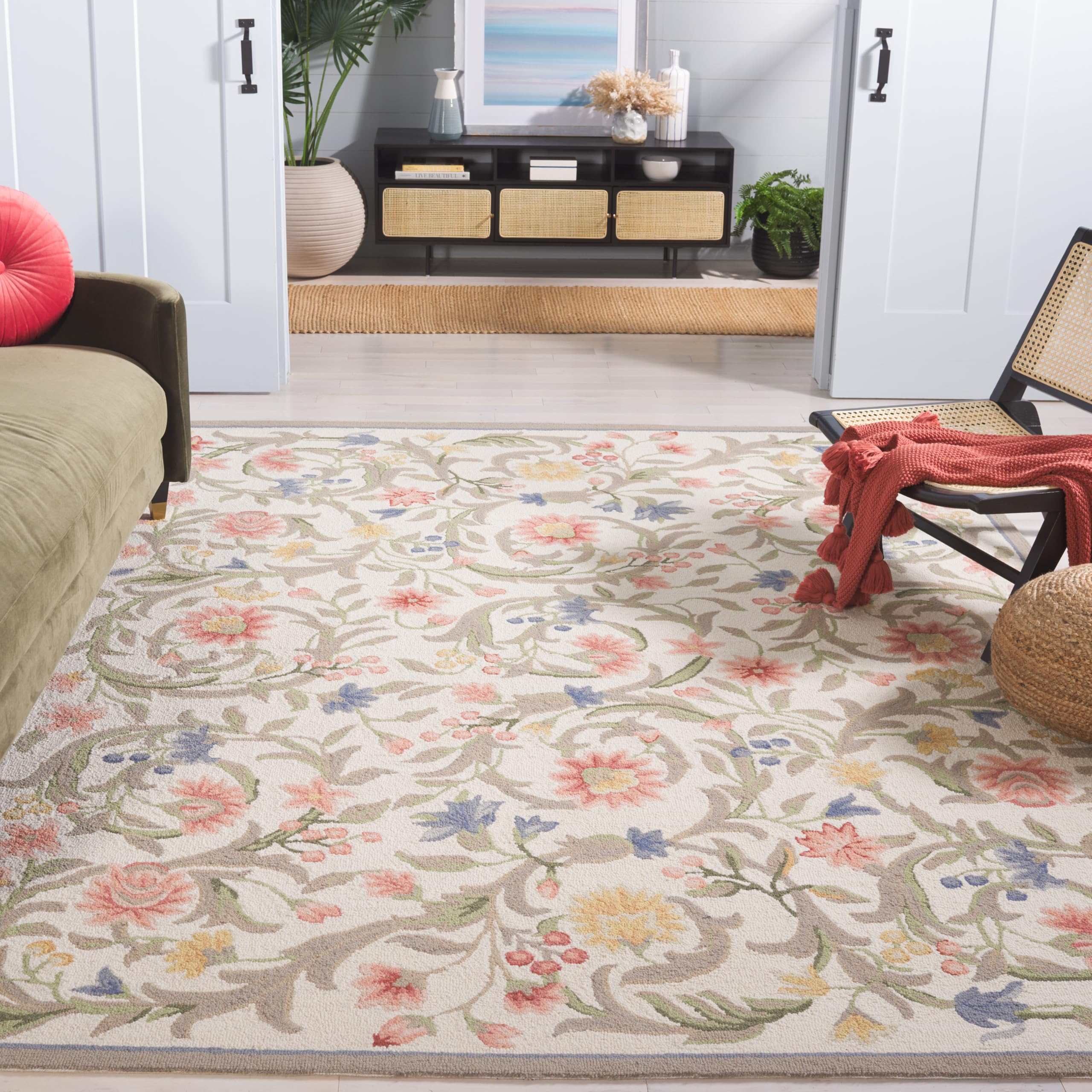
SAFAVIEH Chelsea Wool Area Rug 9'x12', Traditional Ivory HK248A
Best OverallSAFAVIEH Chelsea Wool Area Rug 9’x12′, Traditional Ivory HK248A4.6★736 ratingsA 9’x12′ wool rug that lays flat fast and swallows a whole seating area. For a large living or dining room, this is the pick that owners keep coming back to — 4.6 stars across 700+ ratings, and the crowd favorite on the whole list.Check Price on Amazon
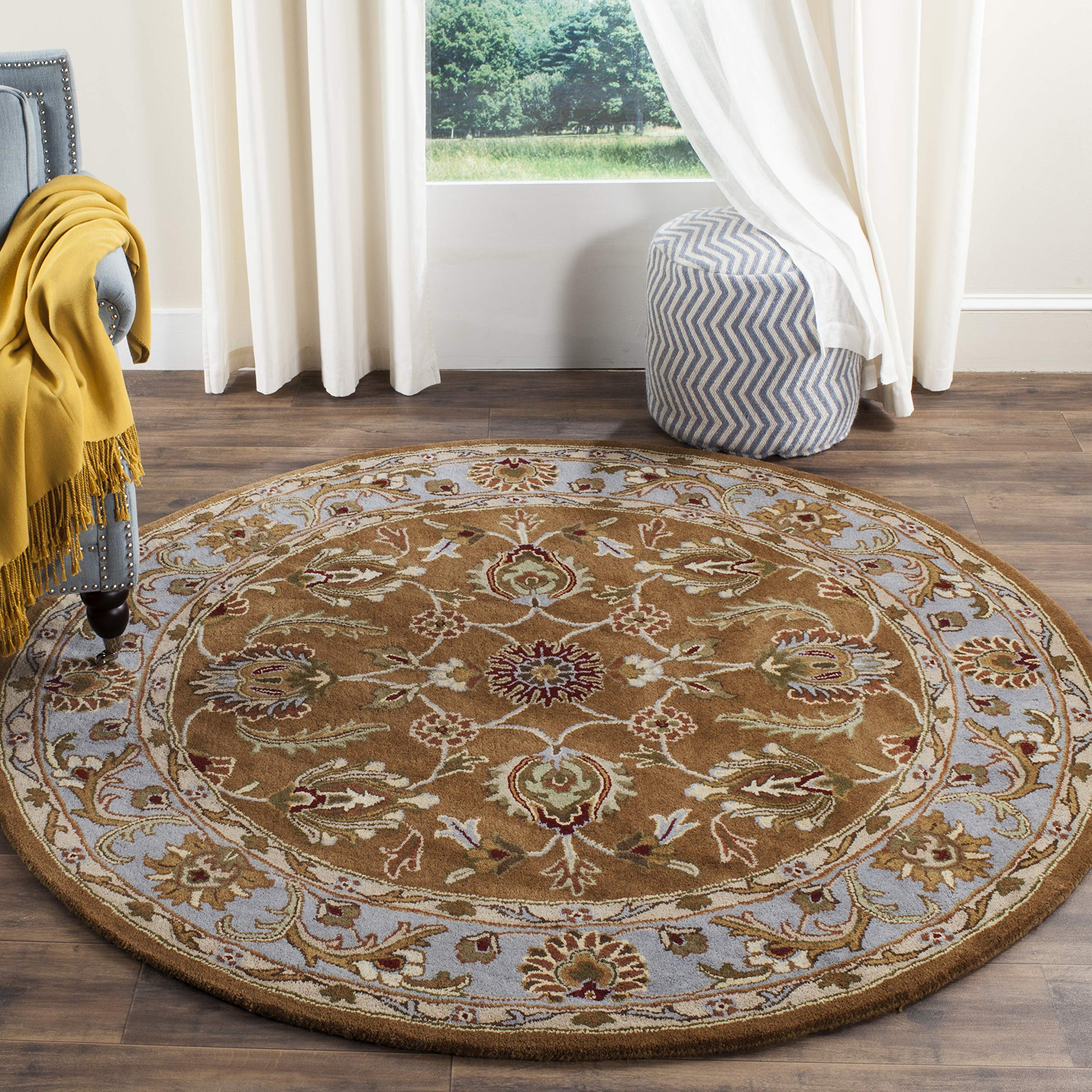
SAFAVIEH Heritage Collection 6' Round Brown / Blue HG812A Handmade Traditional Oriental Premium Wool Area Rug
Bold Round StatementSAFAVIEH Heritage Collection 6′ Round Brown / Blue HG812A Handmade Traditional Oriental Premium Wool Area Rug4.2★568 ratingsA thick, plush round rug that turns an empty corner into a focal point. Round wool rugs are hard to find in any size worth having, and this hand-tufted 6-footer solves that for a mid-sized room.Check Price on Amazon
SAFAVIEH Blossom Wool Area Rug 8'x10', Traditional Green & Multi BLM402B
Best Rich ColorSAFAVIEH Blossom Wool Area Rug 8’x10′, Traditional Green & Multi BLM402B4.5★980 ratingsAn 8’x10′ wool rug with rich Persian floral color and serious density. Color is the thing here.Check Price on Amazon

How To Choose The Best 100 Wool Rugs

Buying a 100 wool rug is different from picking a synthetic one, because the wool itself is doing all the work. Wool fibers have a natural crimp that lets them spring back after furniture presses them down, so the rug keeps its surface instead of developing a flat, crushed patch. That same crimp is why you pay more for wool than for polypropylene, and it is why a wool rug can outlast a cheaper synthetic several times over. The trick is knowing which spec on the listing tells you whether you are getting that real wool performance or just a wool-blend compromise dressed up in nice photography.

Material: all wool versus a wool blend

A true 100 wool rug has a pile made entirely from wool, with no polyester, viscose, or other synthetic fiber mixed in. If a listing only says “wool blend” or names a synthetic fiber alongside wool, the pile is partially man-made, and that changes how the rug wears. Synthetic fibers tend to mat down faster under a sofa leg or a desk chair, and they do not recover the way pure wool does. Check the material line on the spec sheet — it should read wool and nothing else.

Pile height and what it means for your room

Pile height is the thickness of the rug’s surface, measured from the backing to the top of the wool fibers. A low pile around 3/8 inch sits firm and lets doors swing freely over it, which suits dining rooms and hallways. A taller pile — half an inch or more — gives you a plush, cushioned feel underfoot, which is what most people picture when they think of a cozy wool rug. The trade-off is that a taller pile can catch under a low-hanging door and needs more careful vacuuming.

Hand-tufted versus hand-loomed construction

How the wool is held together decides how the rug feels underfoot. Hand-tufted rugs push yarn through a backing with a tool and then secure it with latex (a flexible glue that locks the yarn in place), giving you a dense, even surface. Hand-loomed rugs are woven on a frame, which can produce a flatter, more tightly controlled weave. Both are handmade and both are durable, but a hand-tufted rug usually has a slightly softer, taller feel while a hand-loomed rug tends to sit flatter and firmer. Neither is automatically better — it depends on if you want cushioning or a low, flat profile.

Backing, padding, and floor protection

The backing is the layer on the underside of the rug, and it decides how well the rug grips your floor. A cotton backing is common on handmade wool rugs and works best paired with a separate rug pad to stop sliding on hardwood. Backings that include natural latex or rubber can add grip on their own, though a pad still helps both the rug and the floor underneath. A pad also cushions the wool, which helps it resist crushing over time.

Quick Comparison

Model Best For Pile Height Construction Backing Amazon
SAFAVIEH Chelsea Wool Area Rug 9’x12′, Traditional Ivory HK248A★ Best Overall High-traffic living and dining rooms 0.25 inches Hand-hooked Cotton Amazon
SAFAVIEH Blossom Wool Area Rug 8’x10′, Traditional Green & Multi BLM402BBest Rich Color Bedrooms and dining rooms with rich color 5/8 inch Hand-tufted Wool Amazon
Hand Tufted Traditional Wool Area Rugs by Allen Home – 8′ x 10′ – Allie Brown Muted traditional rooms and big spaces 0.4 inches Hand-tufted Wool Amazon

In‑Depth Reviews

★ Best Overall

1. SAFAVIEH Chelsea Wool Area Rug 9’x12′, Traditional Ivory HK248A

Our pick — over 4.5★ from 700+ verified ratings; the strongest balance of quality and price.

Hand-Hooked Cotton Backing0.25-Inch Pile

A 9’x12′ wool rug that lays flat fast and swallows a whole seating area.

For a large living or dining room, this is the pick that owners keep coming back to — 4.6 stars across 700+ ratings, and the crowd favorite on the whole list. The 144″L x 108″W footprint covers the kind of open floor plan where a smaller rug floats awkwardly in the middle. Hand-hooked construction into a looped pile gives it a firm, textural surface rather than a deep fluffy one. That firmness is exactly why furniture legs do not sink in and leave divots.

The pile measures 0.25 inches, which is the flattest on this slate. That matters if you have a door that swings over the rug or a dining chair you slide in and out daily. It sits lower than the SAFAVIEH Heritage round rug, whose pile is 1 inch — four times the thickness — so if you want that sink-in plushness, the Heritage is the better fit. Here you trade cushioning for a surface that never catches under a door.

What wins people over is the build quality and the tonal floral ivory pattern, which reads as a soft, muted background rather than a loud centerpiece. The ivory is dense enough that a desk chair with casters rolls cleanly without grinding into the carpet beneath it. A pair of owners with large dogs noted the wool does not hold onto odor the way some fibers do. Buyers report “This is a beautiful wool rug. I wanted it in a shape (oval) and size ( 3′ x 5′) that isn’t easy to find..The colors are vibrant and it is thick rug which is a nice feel under your feet. Highly recommend.”

What earns it the top spot

  • Dense 0.25-inch looped pile resists crushing under furniture and desk chairs.
  • Lays flat quickly — owners note it relaxes without packaging creases.
  • Timeless tonal floral in ivory that works as a neutral backdrop.

Worth knowing before you buy

  • At 62 pounds it takes two people to move and position.
  • The flat pile is firm, not plush — size the room before ordering.
  • Some wool shedding is expected in the first weeks.

Settle on this if: you have a big open room, daily foot traffic, and want a rug that stays flat and firm for the long haul.

Think twice if: you are after a deep, sink-in carpet feel — a taller pile suits that better.

Bold Round Statement

2. SAFAVIEH Heritage Collection 6′ Round Brown / Blue HG812A Handmade Traditional Oriental Premium Wool Area Rug

Hand-Tufted Premium Wool1-Inch Pile

A thick, plush round rug that turns an empty corner into a focal point.

Round wool rugs are hard to find in any size worth having, and this hand-tufted 6-footer solves that for a mid-sized room. It measures 72″L x 72″W — a true circle — versus the 144″x108″ rectangle of the Chelsea above, so it fits under a round dining table or anchors a reading nook rather than a whole seating area. At 1 inch thick it is the plushest surface in this group, and that depth is what buyers rave about.

Here is the honest catch: this same thickness that makes it luxury-feeling underfoot is not a zero-maintenaare the two highest points here, and the density of the pile keeps the structure from flopping. Thick and soft is not just the marketing line; it is what owners keep writing in their own words.

Shedding is the honest caveat, and it is significant for some owners — a few describe needing daily vacuuming to keep up. That is the trade-off of an ultra-plush wool tuft. If you can live with a few weeks of regular cleanup in exchange for a genuinely unusual shape that anchors a room, this is a striking choice, and the cotton backing with natural latex keeps the structure holding its form.

What buyers gravitate to

  • Irregular 72″ x 48″ shape fits curved sectionals no rectangle can.
  • 1-inch hand-tufted wool pile with a dense, cushioned feel.
  • Botanical pattern that reads as a statement, not a filler.

Where it asks for commitment

  • Shedding is heavy for some owners — daily vacuuming reported.
  • Color can run greener than the listing photos suggest.
  • Cotton backing needs a pad to stay put on hard floors.

Choose this when: you have a curved or unusual seating arrangement and want a plush wool rug that traces its lines instead of fighting them.

Weigh the upkeep first if: you want the least possible shedding — this ultra-plush tuft will demand regular vacuuming for a while.

Traditional Red Anchor

3. SAFAVIEH Antiquity Collection 6′ x 9′ Red / Red AT52E

Hand-Tufted Premium WoolKasadan Panel Design

dges

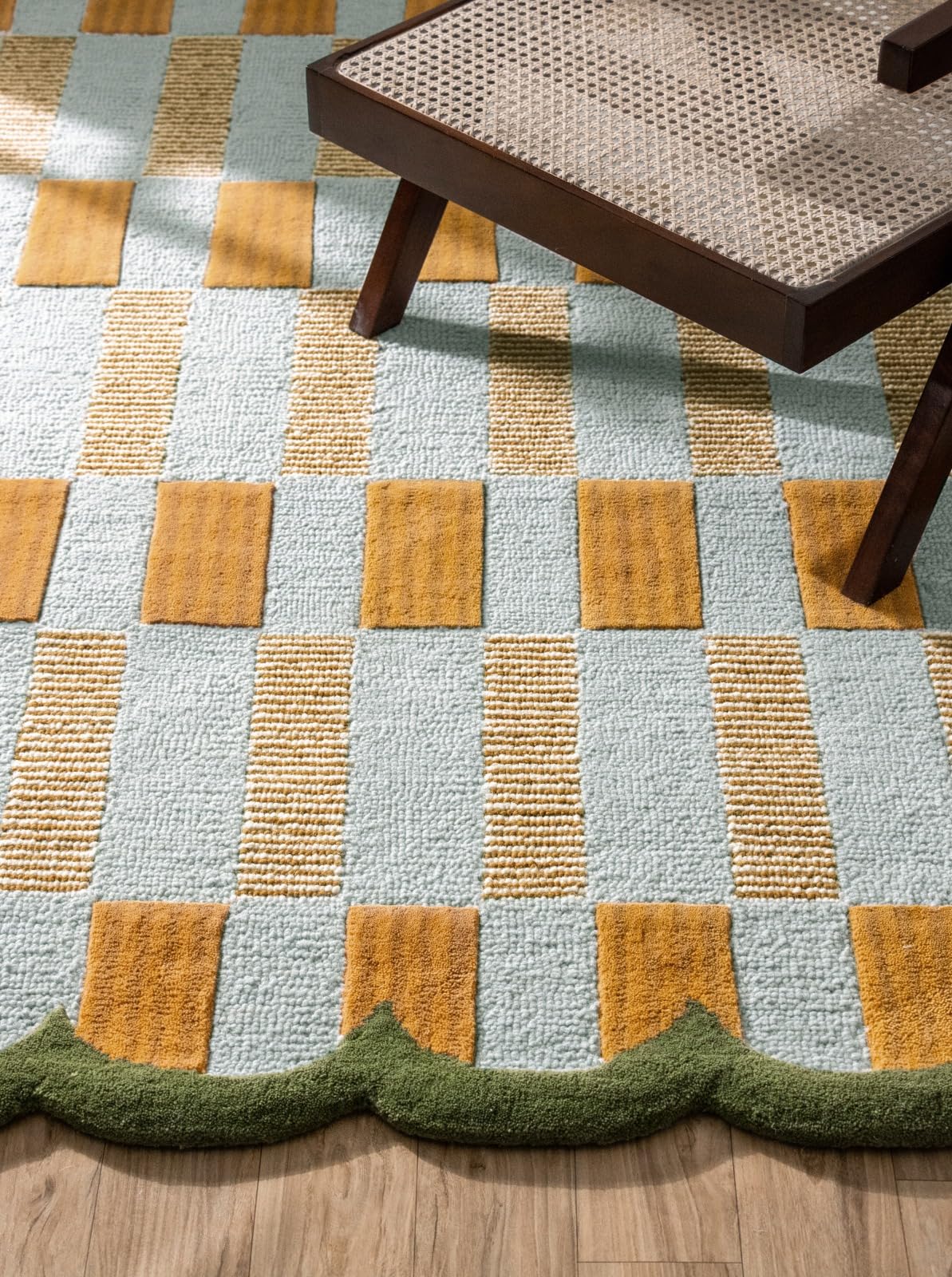
A checkered wool rug with scalloped edges that brings real personality to a room.

Most wool rugs go traditional or muted — this one goes playful. A light blue base with mustard yellow and beige plaid blocks, capped off with an olive green scalloped edge, gives you a focal point that brightens a nursery, playroom, or reading corner. The 84″L x 60″W footprint anchors a mid-sized space, and the hand-tufted 10-15 mm pile makes it soft enough to sit on comfortably.

Because the whole rug is pure wool rather than a blend, the pile holds its density over time instead of matting, and owners consistently describe the quality as high-ended. It gets so many compliments in nurseries that it becomes the room’s talking point. Value and softness round out what buyers rate highest, and the cushioning is enough that some owners say a pad is optional rather than necessary.

Two things to know. First, like any hand-tufted wool, it sheds for the first month or two while the loose fibers work free — that is normal and settles with vacuuming. Second, a few owners note an off-gassing smell when it first arrives; airing it out for a few days generally resolves it. Neither is unusual for a plush wool tuft and neither should stop you if the checkered look is what you want.

Why it earns its spot

  • Pure wool pile with a 10-15 mm tuft that stays soft and dense.
  • Scalloped edges and plaid check deliver a designer look at a mid-range outlay.
  • Cotton canvas backing keeps the shape firm under daily use.

The fair caveats

  • First month or two brings normal wool shedding.
  • Initial off-gassing smell reported by a few, resolves with airing.
  • Not for a formal or muted traditional setting.

Right for you when: you want a playful, designer-feeling wool rug for a nursery, playroom, or creative corner and can tolerate a normal settle-in phase.

Not the right one if: your room calls for muted traditional tones — the checkered plaid is intentionally the loudest thing in the space.
Best Rich Color

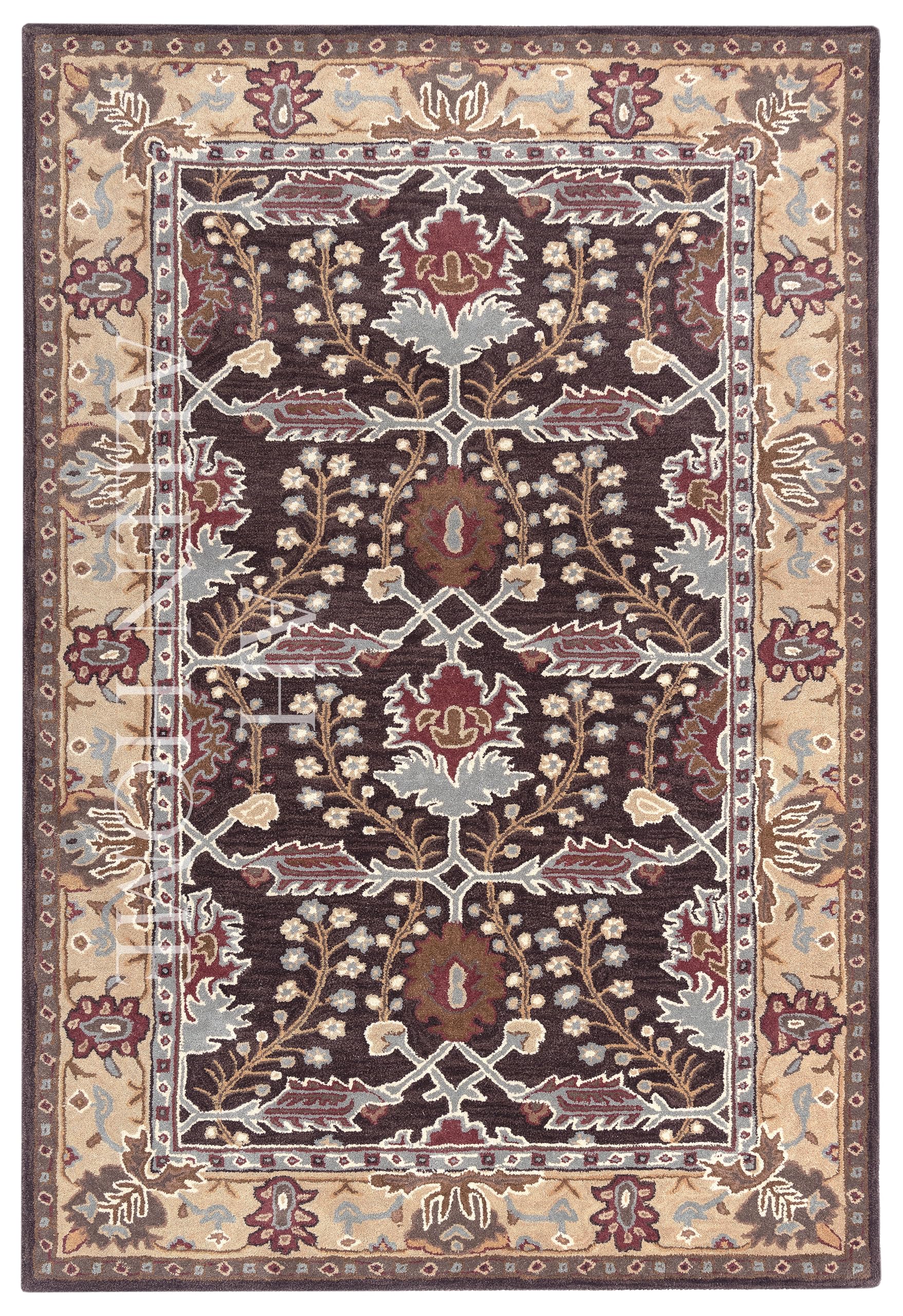
4. SAFAVIEH Blossom Wool Area Rug 8’x10′, Traditional Green & Multi BLM402B

Hand-Tufted 5/8-Inch PilePersian Floral

An 8’x10′ wool rug with rich Persian floral color and serious density.

Color is the thing here. This 120″L x 96″W rug spreads a Persian floral in deep green with rust, goldenrod, tan, and dusky blue accents — and color is what owners rate highest of anything, calling it rich without being loud. At 5/8 inch thick with a hand-tufted pile, the surface has enough density to recover from furniture and take heavy foot traffic while feeling soft under bare feet.

The dimensions alone set it apart from the four smaller SAFAVIEH wool picks above — it fits a full living room or king bed footprint where a 6’x9′ feels thin. The sculpted surface gives it a rich, tactile quality, and owners describe the wool as comfortable to walk and sit on, with one point about it being perfect next to a bed for that first cold-morning step. Value for money is the second-highest point after color.

The one recurring gripe is shedding. Because the pile is thick, the initial fiber release runs heavier than a lower pile would, and a few owners note the density can make it a handful to position in the largest sizes. It settles with regular vacuuming. If you want a full-room rug with saturated color and real cushioning, this is the standout in the green-and-multi space.

Why color-lovers rate it

  • Rich Persian floral in deep green — owners call it bold without being loud.
  • 5/8-inch hand-tufted pile with real density and recovery.
  • Large 120″ x 96″ footprint that anchors a full room or king bed.

What to prepare for

  • Heavy initial shedding at this pile depth is common.
  • Dense wool at this size is genuinely heavy to move.
  • Needs a rug pad on hardwood to stay put.

Your fit if: you want a full-room wool rug in deep saturated color and you love a plush, dense surface underfoot.

Consider another if: you want minimal shedding — thicker piles release more fiber at the start.

Premium Muted Classic

5. Hand Tufted Traditional Wool Area Rugs by Allen Home – 8′ x 10′ – Allie Brown

100% Wool PileYarn-Dyed & Washed

A big muted traditional wool rug that compares to the designer stores.

For buyers who want the traditional look at the top of the range, this 120″L x 96″W hand-tufted rug is yarn-dyed and washed for a soft, dense surface. Appearance and quality are the two points owners rate highest, with color right behind. At 0.4 inches the pile is moderate rather than towering — dense underfoot without a towering profile, which keeps it manageable in a full 8-foot-by-10-foot room.

Two things stand out. First, the colors run more muted than the stock photos — several owners note the Allie Brown reads as warm tan and beige rather than vivid, which is a feature if you want calm, an adjustment if you expected bright. Second, it comes in an 8’x10′ and up to 9’x12′, with natural variation of up to 5% in size and 10% in color, which is normal for a hand-made wool tuft. Owners repeatedly compare it to a much pricier designer brand and say it holds up well.

Shedding is the one to plan for. A subset of shoppers say it releases wool for the first several months before settling — one describes it plainly as shedding too much for the first five months. That is the real cost of a dense, plush hand-tufted wool tuft. If you can accept a break-in period, you get a designer-feeling rug for a fraction of the luxury-store tag. If you want low maintenance from day one, a flatter weave is the better call.

What owners love about it: it looks and feels like a designer traditional rug, with soft dense wool and muted earth-tone color that reads calm rather than loud.

The break-in reality: some owners see heavier-than-usual shedding for several months before it settles, so this one rewards a patient buyer who vacuums regularly.

Go for this if: you want a large traditional wool rug with muted, sophisticated color and a designer feel without the designer-store outlay.

Look elsewhere if: a long shedding phase would frustrate you — a lower-pile or tighter weave is calmer on that front.

Understanding the Specs

Pile Height

Pile height is the thickness of the rug’s surface, measured from the backing to the top of the wool fibers, and it sets both the feel and the practical fit of the rug. A low pile of roughly 3/8 inch sits firm underfoot and lets doors swing freely, which suits dining rooms and hallways. A taller pile of half an inch or more gives a plush, cushioned surface that sinks under bare feet but can catch under a low door. Thicker is not automatically better — it is about matching the pile to how you use the room. As a rule, a taller pile feels more luxurious but needs more careful vacuuming to keep it from catching, while a flatter pile is easier to live with in busy spaces.

Shedding

Shedding is the loose wool fiber that works free from a new rug as you walk on it and vacuum it. Almost every wool rug sheds to some degree at the start, because the fibers that were cut during manufacturing are not fully bound into the pile yet. Regular vacuuming lifts those fibers out, and the shedding usually eases over the first weeks or months. On a shorter pile it settles faster; on a dense, high tuft it can run longer and heavier. The practical move is to vacuum regularly without a beater bar during the break-in period, which pulls loose fiber free without disturbing the pile structure.

FAQ

What exactly makes a rug a 100 wool rug?
A 100 wool rug has a pile made entirely from wool, with no polyester, polypropylene, viscose, or other synthetic fiber mixed in. The material line on the spec sheet is the giveaway: it should read wool and nothing else. If a listing says “wool blend” or names a synthetic fiber alongside wool, part of the pile is man-made, which changes how it wears over time. Pure wool springs back after furniture presses it down, while synthetic fibers tend to flatten and stay flattened.
How long does a new wool rug shed before it stops?
Most wool rugs shed loose fiber for the first few weeks to a couple of months, depending on how tall and dense the pile is.A thicker, denser tuft releases more fiber and can shed longer than a flat weave. Vacuuming regularly without a beater bar lifts the loose fibers free and usually gets the shedding to settle faster. Hand-tufted wool tends to shed more at the start than a hand-loomed rug because of how the yarn sits in the pile. If a rug is still shedding heavily months in, it is worth increasing how often you vacuum rather than assuming something is wrong with it.
Should I use a rug pad under a wool area rug?
A rug pad is worth adding on hard floors, especially with rugs that have a cotton backing — cotton grips less than a latex or rubber backing and can slide underfoot. A pad also cushions the wool, which helps it resist crushing under furniture, and it protects the finish of the floor beneath the rug. Some rugs here have a backing with natural latex or rubber, which adds grip on their own, but a pad still helps. On carpet, a non-slip pad is less critical, though it can still reduce movement over time.
Will a thick wool rug block my door from opening?
It depends entirely on pile height and the clearance under your door. A flat pile around 3/8 inch sits low enough that most doors swing over it without catching. A taller pile of half an inch or more can interfere with a low-hanging door, which is why a flatter weave is often the smarter choice for a doorway or hallway. If you have already picked a taller rug and want it in a doorway, measure the clearance first, or choose a lower-profile pick like a hand-loomed wool rug.
How do I clean a wool rug without damaging the pile?
Vacuum regularly using a low setting without a beater bar, which is a spinning brush that can catch and pull at the loops of a hand-tufted or hand-hooked rug. Blot spills at once with a clean cloth rather than rubbing, pressing inward from the edge of the spill so you do not spread it or disturb the weave. For deeper cleaning, spot clean with a mild detergent and warm water on a cloth. Professional cleaning is the safest option when a rug needs a full refresh.
Is a 100 wool rug better than a wool blend for pets and kids?
A pure wool pile holds its density better under heavy traffic than a blend, and wool is a naturally springy fiber that recovers from furniture and footfalls. That said, wool does shed, and a household with pets and children will notice the loose fiber more than a quiet room would. A moderate-pile, neutral-toned rug is often the easiest to live with because the color hides daily dirt while the wool keeps its structure. Regular vacuuming is the single biggest factor in keeping a wool rug looking good in a busy home.
Why do hand-tufted wool rugs vary in color from the photos?
Hand-tufted rugs are made by artisans working the yarn by hand, so slight variation in color placement and tone between pieces is normal. Undyed wool rugs shift even more, because the natural fiber tone changes from batch to batch rather than matching a fixed swatch. Lighting and screen settings on your device can also make a color look different in person. If exact color matching matters, look for a rug with a dyed, consistent pile and check the listing notes about variation before ordering.
Does the backing material on a wool rug matter?
Yes — the backing decides how well the rug grips the floor and how long it holds its shape. A cotton backing is common on handmade wool rugs and works best paired with a separate rug pad on hardwood. A backing that includes natural latex or rubber adds grip on its own, which helps the rug stay put in a busy hallway or under a dining set. The backing also supports the pile, so a well-reinforced backing helps the wool resist crushing and keeps the rug from curling at the edges.
What size wool rug should I get for a living room or dining room?
Size depends on the furniture you are anchoring. In a living room, you generally want the front legs of your seating to sit on the rug, so a larger size like a 9’x12′ or 8’x10′ fits an open seating area while a 6’x9′ suits a smaller arrangement. In a dining room, the rug should extend beyond the chairs when they are pulled out, which usually calls for a bigger footprint than the table alone. For a hallway or entryway, a narrower, longer pick works better than a square. Measure the room and the furniture footprint before ordering.
Can a wool rug be used on hardwood floors?
Yes, wool rugs work well on hardwood — that is exactly the surface where a cotton or latex backing and a rug pad matter most, because they stop the rug from sliding and protect the wood finish underneath. A pad also cushions the wool so it resists crushing. Some rugs here have a backing with natural latex or rubber that adds grip on its own, though a pad still helps. Avoid placing a wool rug directly on a damp floor, since moisture under the backing can affect both the rug and the wood.
How much does a wool rug actually weigh, and does it matter?
Weight matters more than most buyers expect, because a heavy rug is harder to move and position. A large hand-tufted wool rug can weigh well into the tens of pounds — several picks here run between 42 and 68 pounds at full size. The upside is that a heavy wool rug tends to stay put on the floor without a lot of shifting, and its mass helps it lay flat once creases relax. The trade-off is that you will want a second person to help unroll it and position it, especially in the larger sizes.

Final Thoughts: The Verdict

For most rooms, the 100 wool rugs winner is the SAFAVIEH Chelsea Wool Area Rug 9’x12′ because its 0.25-inch hand-hooked pile stays flat under furniture, takes heavy foot traffic, and holds up as a neutral anchor for a large space. If you want a plush, dramatic round under a dining table, the SAFAVIEH Heritage Collection 6′ Round delivers that 1-inch hand-tufted depth in a size that is genuinely hard to find. And for a room that needs saturated color and a full-width 8’x10′ footprint, the SAFAVIEH Blossom Wool Area Rug is the one to reach for. Whichever you pick, give a new wool rug a few weeks to settle — the early shedding eases, and what is left is a dense, springy surface that outlasts any synthetic blend.

How We Picked

We do not accept paid placement. Every pick is matched to a real buyer and a real use-case; we do not hands-on test units.

Sources & Methodology

Specifications: manufacturer listings and product documentation. Review insights: verified customer reviews, as of September 2026. Pricing: not shown on this page (it changes often); check the current price via the retailer link.

As an Amazon Associate, Non Toxic Blog earns from qualifying purchases. This does not affect which products we feature.

Related Guides