Specs are compiled from manufacturer listings and verified buyer reviews and can change over time — please confirm the key details on the product page before buying.
One honest heads-up before you scroll: a dehumidifier rated for 1200 square feet comes in several pint sizes, and not every pick below is printed with that exact number. Some are rated a little lower, some a little higher, and the matching is human, not exact. What matters more is how many pints of water a unit pulls out per day and whether you have to babysit the bucket — that is what actually decides if your basement feels dry or stays musty. If you want the short answer: the Midea 22 Pint is the safest all-rounder for most 1200 sq ft spaces, and the price-friendly picks at the bottom still do real work. The rest of this page explains why, with the specs that matter and the everyday trade-offs nobody puts on the box.
I’m Mo Min — the founder and writer behind Non Toxic Blog. This guide is built by comparing the manufacturers’ published specifications and the patterns across verified customer reviews, so you get each pick’s real strengths and trade-offs instead of marketing spin.
Dehumidifier sizing confuses almost everyone, because the square feet on the carton rarely match the room you actually own. This walkthrough covers the pint rating that fits a real 1200 sq ft space, the drainage setup that ends bucket duty, and which units hold up in a cold crawl space or a humid summer basement, so the 1200 sq ft dehumidifier you buy actually fixes the damp.
Our Picks at a Glance


How To Choose The Best 1200 Sq Ft Dehumidifier
Your first job is to stop trusting the big square-foot number on the front of the box. That figure assumes a warm, open, ideal room. A real basement with a cold concrete floor, a closed door, or a crawl space under the house will hold far more moisture than any chart predicts. The number that actually predicts performance is pints per day — how much water the machine pulls out in 24 hours at those box conditions. Everything else is comfort and convenience.
Match the pint rating to the wetness, not just the size
For a 1200 sq ft space that is merely a bit clammy, a unit pulling around 20 to 22 pints per day is the sensible floor. If your space floods, smells musty, or sits in a humid climate, look higher — a 30, 34, or even 55 pint per day unit gives you headroom so the compressor is not running flat out all summer. The pint figure is measured at 95°F and 90% relative humidity, which is swampy air. In a cooler room, that same machine removes noticeably less, which is exactly why the mid-size units here still make sense for moderate damp.
Decide how you want to empty it before you buy
Every tank unit eventually asks you to carry water. A 20-pint tank in a genuinely damp space can fill in a day, and a full tank means the unit shuts off until you empty it. If a floor drain, sump pit, or lower window is anywhere near, buy a unit that ships with a drain hose and run it continuously — the machine then runs non-stop and you never touch the bucket again. A built-in pump is the premium version of that idea: it can push water upward when no downhill drain exists.
Think about noise and cold before the extras
A compressor dehumidifier makes sound, so the decibel rating matters if it lives near a bedroom. Some units here run as low as 40 dB — roughly a quiet fridge hum — while others sit closer to 50 dB or higher. In an unheated crawl space, an auto-defrost feature is non-negotiable: it briefly stops the compressor when coils start to freeze so the unit keeps working instead of icing over and quitting.
Quick Comparison
| Model | Best For | Pints Per Day | Rated Coverage | Drainage | Amazon |
|---|---|---|---|---|---|
| Midea 22 Pint★ Best Overall | Best all-rounder | 22 pints per day | 1,500 sq ft | Tank or hose | Amazon |
| Waykar 34 PintTop Performer | Big damp basement | 34 pints per day | 2,000 sq ft | Tank or hose | Amazon |
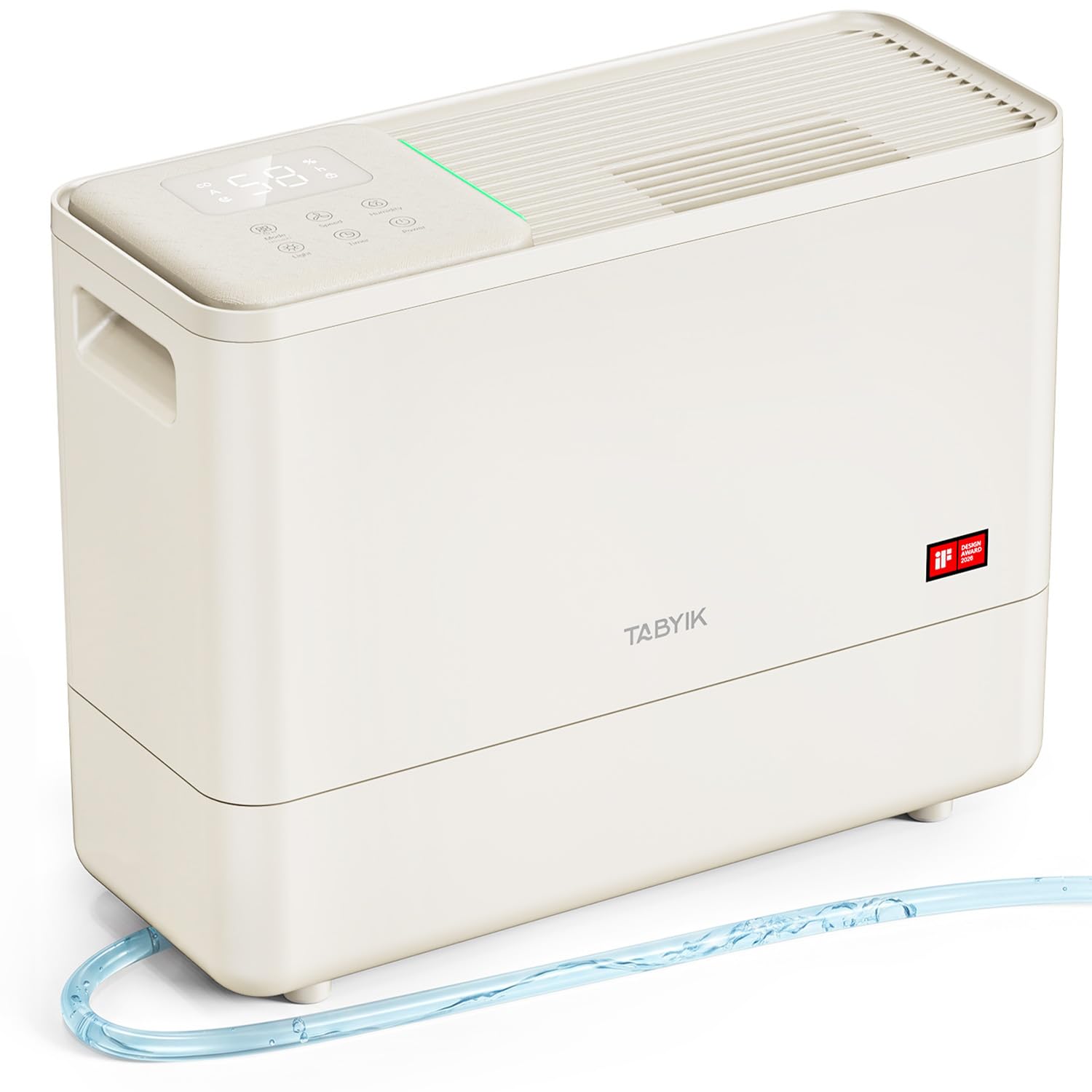
| TABYIK 1500 Sq.FtCompact Pick | Small tight rooms | 21 pints per day | 1,500 sq ft | Tank or hose | Amazon |
| Midea Cube 20 Pint | Long tank runs | 20 pints per day | 1,500 sq ft | 3.2 gal tank or hose | Amazon |
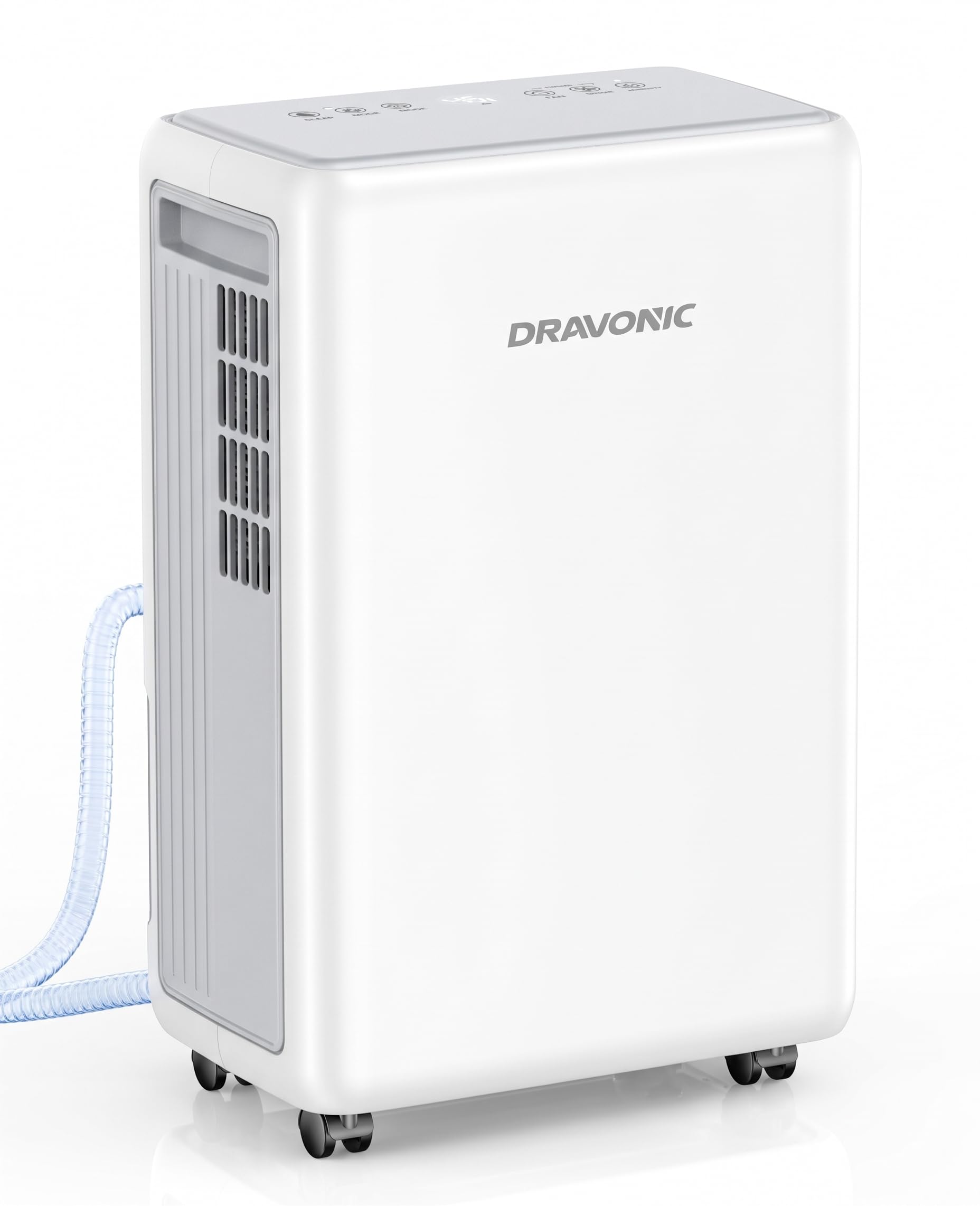
| Dravonic 30 Pint | Quiet bedrooms | 30 pints per day | 2,000 sq ft | 0.5 gal tank or hose | Amazon |
| ALORAIR Sentinel HD35P | Crawl space with pump | 35 pints per day | 1,000 sq ft | Pump, 19.6 ft lift | Amazon |
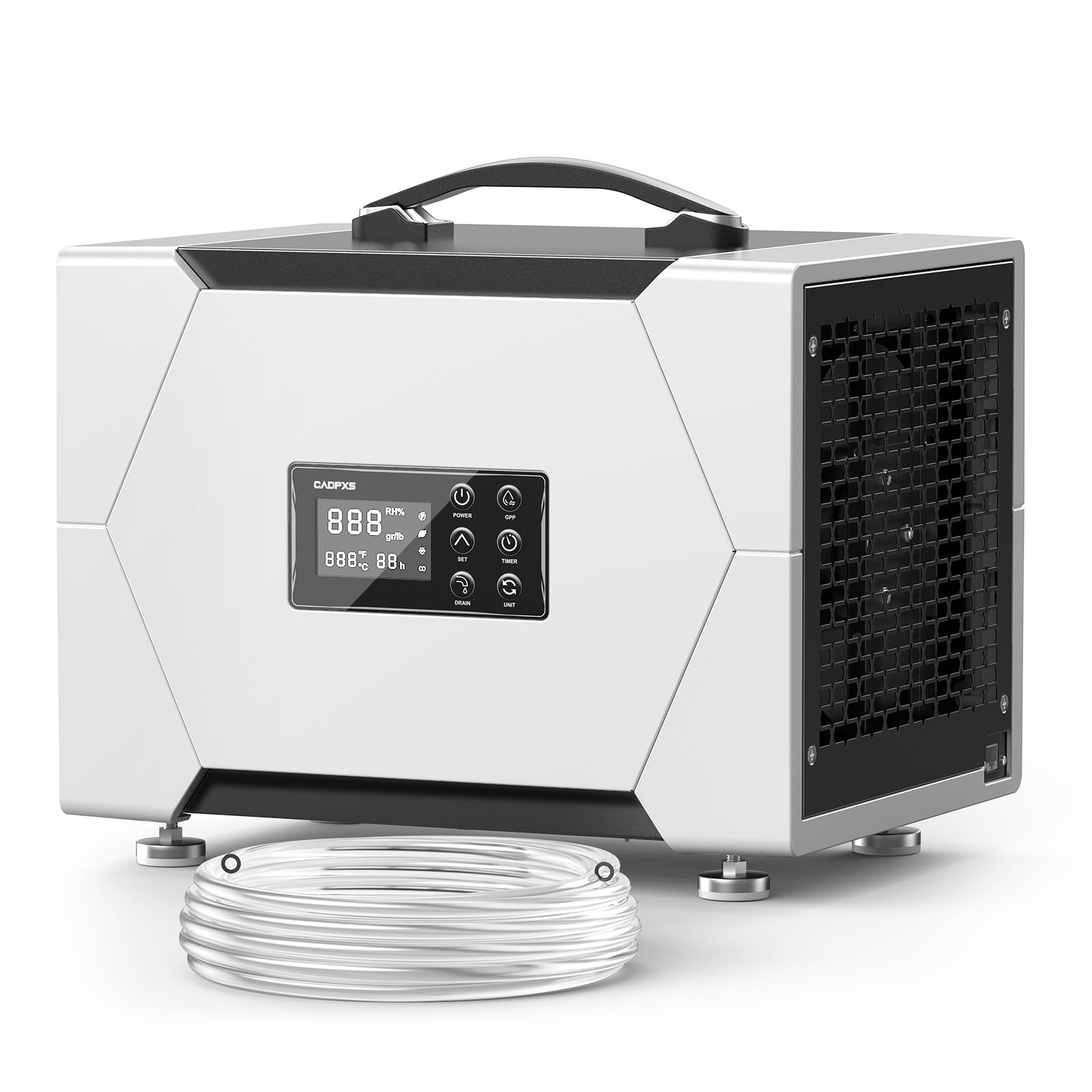
| CADPXS Remois XP70 | Tight crawl spaces | 38 pints per day | 1,000 sq ft | Pump, 19.6 ft lift | Amazon |
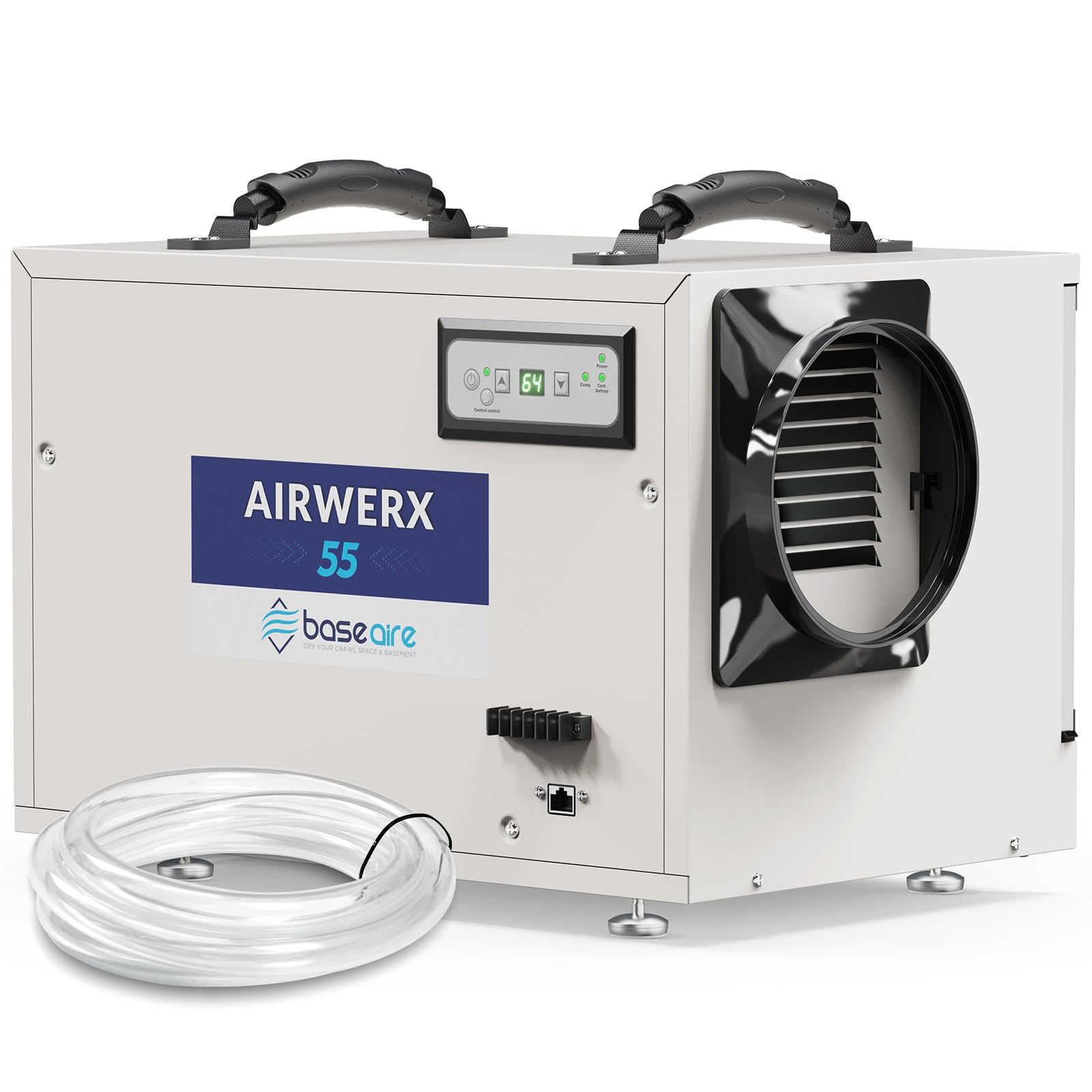
| BaseAire AirWerx 55 | Low-clearance crawl spaces | 55 pints per day | 1,200 sq ft | Gravity, 6.56 ft hose | Amazon |
| ARGENDON Sandidry 55C | Pump draining for basements | 55 pints per day | 1,300 sq ft | Pump, 19.6 ft lift | Amazon |
| ALORAIR Sentinel HD55 Blue WiFi | Remote monitoring | 113 pints per day | 1,200 sq ft | Auto drain, no tank | Amazon |
In‑Depth Reviews
1. Midea 22 Pint Dehumidifier for Basement, 1,500 Sq. Ft, Energy star
Our pick — over 4★ from 7,000+ verified ratings; the strongest balance of quality and price.
The quiet, connected workhorse that makes a damp basement livable
This is the pick to start with if you want one dehumidifier to cover a 1200 sq ft space without guesswork. It pulls up to 22 pints of water per day, which is the mid-size rating that handles a genuinely damp basement without running flat out all summer. You set the humidity anywhere from 35% to 85% and it cycles to hold your target — a lot of owners aim for the 45% to 55% balance. The machine runs at 47 dBA, a level close to a quiet fridge, so it disappears into background noise. At 33.5 pounds it is not featherweight, but the 360° wheels let you roll it from room to room rather than carry it. If you want certainty, this is the crowd favorite — 4.4 stars across 7,000+ owners.
It is the connectivity that dates this apart from the cheap tank-only crowd. The unit is Wi‑Fi enabled and works with voice commands through Alexa or Google Assistant, so you can nudge the humidity setting without walking downstairs. Drainage is your call: empty the tank, or connect a standard hose to the built-in socket for continuous draining. When the tank fills, the unit stops and restarts itself once you empty it, so a full bucket is annoying rather than a flood risk. Energy Star certification keeps running costs in check, and the multi-layer features — turbo mode for a fast pull-down, a programmable timer, auto defrost, and auto restart after a power cut — make it forgiving in real-world use.
Owners in a 1200 sq ft high-rise apartment report it noticeably improved comfort in the space. Reviews consistently praise speed and simplicity: a bathroom drops from 68% to 33% humidity in about two hours, and setup takes around five minutes. What wins people over is how quietly it goes about its job; several note there is no plastic rattle and the 47 dB reads more like background noise than machinery. The honest caveat is movement: it is a fairly heavy 33.5 pounds, and the compressor blows warm air, so placing it right beside a thermostat can confuse that thermostat. Give it clearance for airflow and the trade-off disappears.
What Makes It the Standard
- Adjustable humidity from 35% to 85% holds your chosen level automatically
- Wi‑Fi control plus Alexa and Google Assistant voice commands
- Runs at 47 dBA — quiet enough to sleep beside
- Hose socket feeds a drain for hands-free emptying
Where It Tests Your Patience
- 33.5 pounds is a real lift on stairs, despite the wheels
- Blows warm air, so keep it clear of a nearby thermostat
- Hose for continuous drain is not included
Best for: anyone who wants a proven, connected mid-size unit that quietly covers a 1200 sq ft basement or apartment.
skip it if: you need to push water uphill to a distant drain — there is no pump here, so the hose must run downhill.
2. Waykar 34 Pints 2000 Sq. Ft. Energy Star Dehumidifier for Home
The high-capacity puller for basements that stay wet all summer
If your space is truly damp and not just a little clammy, the pint rating here is the reason to look up the list. This Waykar removes up to 34 pints of moisture per day, so it sits well above the 21 pints of the budget picks below and gives you headroom to dry a flooded basement rather than merely slow the damp. Coverage is rated to 2,000 square feet, which leaves margin for a 1200 sq ft basement with rooms off it. The real differentiator is the humidity range: it goes down to 30%, where most standard units stop at 40%. That deeper setting matters for crawl spaces, storage rooms, and the days after heavy rain, when you want the last of the residual moisture gone.
Practical touches are thoughtful. There are two fan speeds, so you run high for a fast pull-down and low to hold a level quietly. A manual 90° airflow flap lets you point the dry air toward one problem corner — under a workbench, behind stored furniture — instead of hoping circulation reaches it. The 24-hour timer lets you run it around your schedule, and an auto-restart picks up your settings if the power blinks. Drainage runs two ways: a 2.5L removable tank, or the included hose for continuous draining when you are away on vacation or simply tired of carrying water. A detachable washable filter keeps the intake clean without buying replacements.
What buyers rave about most is effectiveness, and the pattern holds — this is a machine that controls a basement and makes it smell less like a basement. Quiet operation and moisture removal both get strong marks, and the design is easy to live with. The caveat to know: a couple of owners have found the humidity readout reads high versus a separate meter, and the included drain hose feels flimsy. Neither stops the unit working; you simply set your target higher to compensate and consider swapping in a sturdier hose. Note too that this model carries the higher-capacity Waykar name, so the 34-pint rating here is the whole-home neighbor of units several sizes larger.
Why it earns its spot: 34 pints per day and a 30% humidity floor give you the drying muscle that mid-size tank units lack, plus the dual fan speeds and 90° airflow let you aim that power.
Good fit for: larger or persistently wet basements where you want extra capacity and a deeper drying target.
Think twice if: you want a bedside-quiet machine — this one prioritizes output, and the flimsy included hose is worth replacing.
3. 1500 Sq.Ft Dehumidifier for Basement with Drain Hose and 1.2 Gal Tank
A slim, quiet compressor unit built for tight rooms, not whole floors
The footprint here is the headline. This TABYIK measures 6.29″D x 15.9″W x 12″H, and that makes it a fraction of the depth of the Midea at 10.51″D. If the only place you can put a dehumidifier is a narrow slot beside a water heater or under a shelf, that slimness is what gets it through the door. It removes up to 21 pints of moisture per day, and the compressor inside is a real one that pulls water from the air rather than a weak fan that just stirs it around. Three operating modes keep it adaptable: Continuous for maximum drying, Auto to hold a target between 40% and 70%, and Sleep for low-speed quiet with a dimmed display.
Where it surprises is extras for the size. It carries a 1M drain hose for continuous draining so you can skip tank duty entirely, and a 4.5-liter (1.2 gal) tank with auto shut-off and a full indicator if you would rather empty it by hand. The unit runs as low as 40 decibels, quieter than a normal conversation, which makes a bedside spot realistic. A built-in digital display shows live humidity, and three ambient light modes — a humidity-indicating color light, a seven-color cycle, or lights-off — let it double as a nightlight. Safety touches include overload protection, auto-defrost, and a child lock for homes with kids or pets.
The honest limit is coverage. Owners in a 650 sq ft apartment at 77°F and 55% humidity report it pulls just 6 to 8 cups in 12 hours on 100 watts, with no meaningful drop across the whole space — so treat it as a single-room unit despite the 1,500 sq ft rating. It shines for a small bathroom, laundry corner, or a camper. Buy it for the tight-space talent and the quiet, not for drying a full 1200 sq ft basement.
Where It Wins
- Slime 6.29″ depth slips into gaps other units cannot fit
- Runs as low as 40 dB with a dimmed Sleep mode
- Child lock and auto-defrost for homes with kids
- Ambient light modes double as a nightlight
Set Your Expectations
- Real-world coverage is closer to a single room than 1,500 sq ft
- Small tank for a genuinely damp space
- Not the pick if you need to dry a whole basement floor
Reach for this if: space is your constraint and you want a quiet compressor unit for one room or a tight corner.
Look elsewhere if: you are buying for a full open basement — the pint rating here is sized for a single room.
4. Midea Cube 20 Pint Dehumidifier for Basement, 1,500 Sq. Ft

The extendable design and huge 3.2-gallon bucket that buy you time
This is the unit for someone whose real enemy is the chore of emptying the tank. The Midea Cube collects up to 20 pints of water per day, and its removable bucket holds 3.2 gallons — the largest tank on this list by a wide margin. That capacity is what lets it run longer between empties than a conventional unit, and it is the lift-and-twist design on top that makes this a genuinely different machine: it operates in a nested form when space is tight and extends to full capacity when you need it. The unusual shape is the reason it stands out, not the pint count.
For a 1200 sq ft space, the plan is straightforward and it is the plan owners endorse: run it on the tank and it keeps a room near 50% to 55% humidity, which is the level that lets you set the thermostat higher and run the air conditioner less. In a 900 sq ft garden apartment, buyers report it holds that range with tank empties every few days. If you would rather not touch water at all, the unit comes with a drain hose and a garden hose adapter, so you can remove the tank and let it flow to a drain, sink, or window. Wi‑Fi control and Alexa or Google Assistant voice commands let you adjust it remotely, and auto-restart plus auto-defrost handle power blips and cold nights.
The trade-off is honest: this is a 20-pint machine, so in a genuinely large or very wet basement it works as a holding tool rather than a fast fix — plenty of owners mention it holds a target level well but struggles to drive humidity down to a low setpoint in one pass. The weight also climbs when the big bucket fills, so plan to empty it before it tops out rather than hauling a full load. Treat the generous tank as the feature you are buying, and it earns its place.
The case for the bucket: 3.2 gallons of tank capacity is the single best way to cut down on trips to the drain, and the extendable design lets it shrink for storage when the season dries out.
Go with it if: you want the longest runs between empties and value a nested design that stores small.
Consider another if: you need to pull humidity down hard in one pass — a 20-pint unit is a holder, not a heavyweight.
5. Dravonic 2,000 Sq.Ft Dehumidifier for Basement & Large Room with Drain Hose
Real compressor power plus a 30% drying floor, without premium pricing
For the money, this Dravonic punches above its class on raw drying capability. It removes up to 30 pints of moisture per day with a real refrigerant compressor, which is the same working principle as the far pricier crawl space units on this list, just in a friendlier package. Coverage is rated to 2,000 square feet, and the humidity target spans 30% to 80%. That 30% floor is the tell that it will dry, not just maintain — most budget tank units stop around 40% and settle for holding the level. Auto-defrost keeps the coils clear in cooler spaces, so a chilly garage or unheated room does not stop it working the way a warm-only unit would.
The control set fits a range of jobs. Auto Mode holds your target by sensing humidity and cycling on and off, so it is not running flat out. Dry Mode speeds up indoor laundry drying, and Continuous Mode runs hard in very humid conditions. The real-time display shows your exact humidity percentage whenever you want to glance at it, and power-off memory restores your settings after an outage. A 3.3 ft drain hose is included for hands-free gravity draining — though note the hose must run downhill, because there is no built-in pump here. A reusable mesh screen rinses clean under the tap, and a child lock keeps settings safe.
Where it lands for a 1200 sq ft space is simple: it has enough power for an open living area or a bedroom, and it does well on a couple of things owners point to repeatedly. The portability is real — wheels make it easy to move as the day’s moisture shifts. The recurring note to be ready for is noise, because a compressor working hard is audible; on its low fan speed it settles to around 40 dB, quiet enough to live beside. Treat it as a value workhorse: strong output and honest features at a price that sits below the premium crawl space tier.
Standouts
- 30 pints per day from a real refrigerant compressor
- 30%–80% humidity range for genuine drying, not just holding
- Auto, Dry, and Continuous modes for different jobs
- Around 40 dB on low fan speed
Worth Knowing
- The 0.5-gallon tank is small for steady use — lean on the hose
- Loud on the high fan setting when it is working hard
- Gravity drain only, so the hose needs a downhill path
Best for: value-minded buyers who want compressor power and a real drying floor without stepping up to the commercial tier.
Not for: a damp space where you want to run on the tank alone — the small bucket fills fast, so plan on the hose.
6. ALORAIR 70 PPD Dehumidifier with Pump for Crawl Space and Basement

The crawl space specialist that pushes its own water uphill and out
If you have ever stared at a crawl space with no floor drain in sight, this is the unit built for that exact problem. The ALORAIR Sentinel HD35P removes 35 pints per day under standard AHAM conditions and is rated up to 1,000 square feet — a crawl space or a small, heavily used basement, not a whole open floor. The headline feature is the built-in condensate pump. It can lift water up to 19.6 feet vertically, so you can run the included 19.6 ft hose up and out of the space with no downhill drain required. That is the difference between a unit that works in a real basement and one that needs you standing over it with a bucket.
The build reflects the job. A steel body and a MERV-1 filter, which is a basic air filter that captures larger dust particles and protects the internal components, keep it running in a dusty, humid space. Auto-defrost clears the coils in cold conditions, and auto-restart resumes operation after a power interruption. It runs at under 50 dB during normal use, and there is an intuitive control panel for setting your target. The warranty is generous at six years limited, with the first two years at full coverage. For flexibility you can use gravity drainage or pump drainage, whichever fits your space.
What reliably earns praise is how long this thing runs without complaint — the pattern in the reviews is steady work and dry basements, with owner after owner noting moisture gone within a day and no plastic rattle to show for it. The pump is the one part to understand before you buy: it needs the unit to sit level, and the screen and float inside should be cleaned if you get an error code, which is a maintenance point rather than a flaw. Keep it level, keep the pump clean, and this is the dependable crawl space answer for a small basement.
The pump is the point: 19.6 feet of vertical lift turns a space with no drain into a space that drains itself, and the 6-year limited warranty backs the unit that does the lifting.
Made for: crawl spaces and small basements with no downhill drain, where a pump is the only way to empty the water.
Caveat: the pump is the part that needs care — keep the unit level and clean the screen if an error code appears.
7. CADPXS 80 Pints Crawl Space Dehumidifier with Pump & Drain Hose
Compact enough for a low crawl space, strong enough to dry one out
This one is chosen for a very specific place: a crawl space or utility room where headroom is tight and the floor is dirt. It measures 15.6″D x 12″W x 12.6″H, a compact box that slides into hard-to-reach spots, and it can be floor- or ceiling-mounted for places you cannot easily reach. The capacity is rated for up to 1,200 square feet and up to 80 pints per day at saturation, with 38 pints per day under standard AHAM conditions and 24 pints per day per DOE ratings. That high-saturation figure is the one to keep in mind — it is what the unit can pull in swampy air, while the AHAM and DOE numbers tell you what to expect in everyday conditions. There is a built-in handle, and the low profile is the reason it fits where others will not.
Drainage is fully automatic here. A heavy-duty built-in pump pushes water up to 19.6 feet vertically through the included 19.6 ft hose, so you can lift condensate out of a space with no drain at all. You also get gravity drainage as a backup, so you can pick whichever route your layout allows. The extras suit a workhorse install: a 24-hour timer, GPP mode, which tracks grains of moisture per pound of air for a more precise reading of the air’s actual moisture load, and memory restart to keep your settings after a power cut. There is an optional remote (sold separately) if you want to adjust it without crawling down to the panel.
Owners who put this in a flooded crawl space report it does the heavy lifting — One owner described drying a 16-inch crawl space with about a foot of standing water within a week, enough to replace ductwork that had been sitting in the damp. It removes impressive volumes of water and the build feels heavy-duty rather than flimsy. The watch-out is expectation-setting: this is a unit for slow, thorough drying of a rough space, not a living room appliance, so if your target is a finished basement you want the lower-profile models above instead.
Why Crawl Spaces Want It
- 15.6″ depth and compact body fit tight, low spaces
- Built-in pump lifts water 19.6 ft vertically, hose included
- Gravity drainage as a second option
- 5-year limited warranty and cETL safety listing
Read Before You Buy
- A rough-space workhorse, not a bedroom-friendly appliance
- Loud for a finished living area
- More unit than most above-grade rooms actually need
Choose it for: a low-clearance crawl space or utility area where a compact box and a pump make the install possible.
Overkill if: you simply want to dehumidify a finished basement room — the mid-size units above fit that job better.
8. BaseAire 113 Pints Crawlspace Dehumidifier with Drain Hose for 1200 Sq Ft
Commercial-grade drying in a body slim enough for a low crawl space
For the person who needs a crawl space genuinely dried out and is done with consumer-grade units, this BaseAire is the heavyweight. It removes 55 pints per day at standard AHAM conditions, rising to 113 pints under nearly saturated conditions, and it is rated to cover 1,200 square feet. That combination is the entire point: a 1200 sq ft crawl space needs the higher saturation capacity because crawl spaces hold water the surface rooms never show. The body measures 19.2″D x 12.2″W x 13.3″H, slim enough to slide into low-clearance spaces, and it can be placed freestanding, on a countertop, or suspended between floor joists for a truly out-of-the-way setup.
Operation leans on automation. An easy-operation panel runs auto on/off to hold your humidity target, with auto defrost, auto drain, and auto restart after an outage. The auto-defrost system watches ambient temperature and, when it drops, pauses the compressor while the fan clears frost from the coils, then resumes — which keeps the unit efficient and extends its life in cold spaces. A 6.56 ft drain hose supports gravity drainage to a floor drain. The MERV-1 filter and its extra build quality also matter in a crawl space, because finer dust control helps protect the internal parts from the grit that settles down there. It carries a 5-year limited warranty with lifetime tech support.
Owners with an automatic drain in place report it keeps humidity within a degree or two of their setting. The trade-off to size honestly: a few customers note the unit being noisy and the reliability receiving mixed feedback, which is a fair caveat for a commercial-grade compressor working this hard. Note that a hard freeze in an unheated basement can still challenge it. For a damp, disciplined crawl space that the unit drains itself, this is the durable, heavy-duty answer.
Why capacity matters here: 55 pints per day at AHAM, up to 113 at saturation, and a low-clearance body mean this is one of the few units that can genuinely dry a 1200 sq ft crawl space rather than just hold it steady.
Built for: damp crawl spaces and basements where you want commercial-grade drying and have a drain to route water to.
Know this: it is noisy for a living area and leans on a reliable drain — plan the install before you buy.
9. ARGENDON Crawlspace Dehumidifiers with Pump and Drain Hose
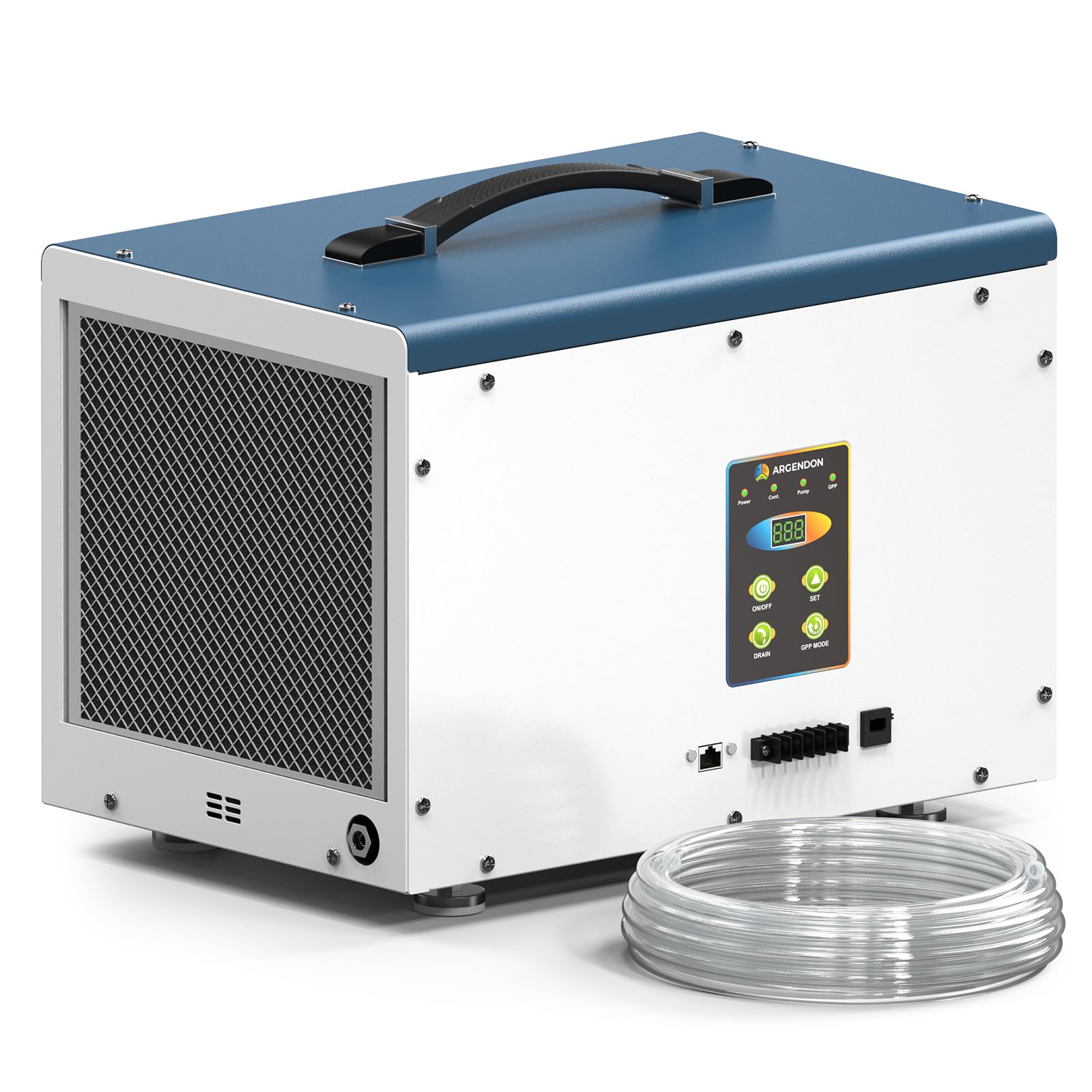
Pump-powered drying that covers 1,300 sq ft and pushes water out of a window
This ARGENDON is the pick for a basement or crawl space where you want the most water out with the least hands-on effort. It removes up to 120 pints per day at saturation, with 55 pints per day at standard AHAM conditions, and it is rated to cover 1,300 square feet — a touch more reach than the BaseAire above. For a 1200 sq ft space, that margin covers a crawl space plus the adjoining basement. The included 6.5 ft hose handles standard gravity draining to a floor drain, and the powerful built-in condensate pump is the upgrade: it can push water up to 19.6 feet vertically or horizontally, so you can run it straight out a window when there is no drain low enough to reach. That is the difference between a fixed install and settling for wherever gravity takes you.
Controls are simple and modern. A 4-button digital panel lets you set target humidity and choose Continuous Mode or GPP Mode, and there is an intelligent diagnostic display that tells you what the machine is doing and why. Auto-restart resumes your settings after a power outage, and auto-defrost protects the coils in low temperatures. A MERV-1 filter, a basic air filter for larger dust particles, keeps the intake air cleaner. It carries ETL safety listing and a 5-year limited warranty with lifetime support. The unit also ships with a note about extra filters, so read the product page for the details on registering those.
What consistent reviews land on is quality and quietness for a unit this capable — Owners who ran it non-stop for a week report pulling a moldy crawl space down to their target and having it hold there afterward. The pump is the feature you are paying for, and it is the one to maintain: keep the unit improve enough that gravity drainage is the backup, not the primary, and understand the pump is doing the work. A handful of owners note getting it set up correctly takes a little thought, which is expected for a commercial-grade install. For a genuinely wet 1200 sq ft space with a place to run a hose upward, this is the pump that ends the bucket era.
What It Does Better
- Up to 120 pints per day at saturation, 55 at AHAM
- Built-in pump pushes water 19.6 ft up or out a window
- GPP Mode for readings based on actual moisture load
- ETL listed with a 5-year limited warranty
Plan For
- Setup asks you to learn the panel and drainage plan
- Heavy and meant to stay put once installed
- The 6.5 ft hose is the one to check fits your run
Pick it for: a wet 1200–1300 sq ft space with no downhill drain, where the pump removes the last reason to empty a tank.
Look past it if: you want a move-and-go tank unit — this is an install-and-forget machine.
10. ALORAIR Smart Wi-Fi 113 Pints Crawlspace Dehumidifier, Sentinel HD55 Blue
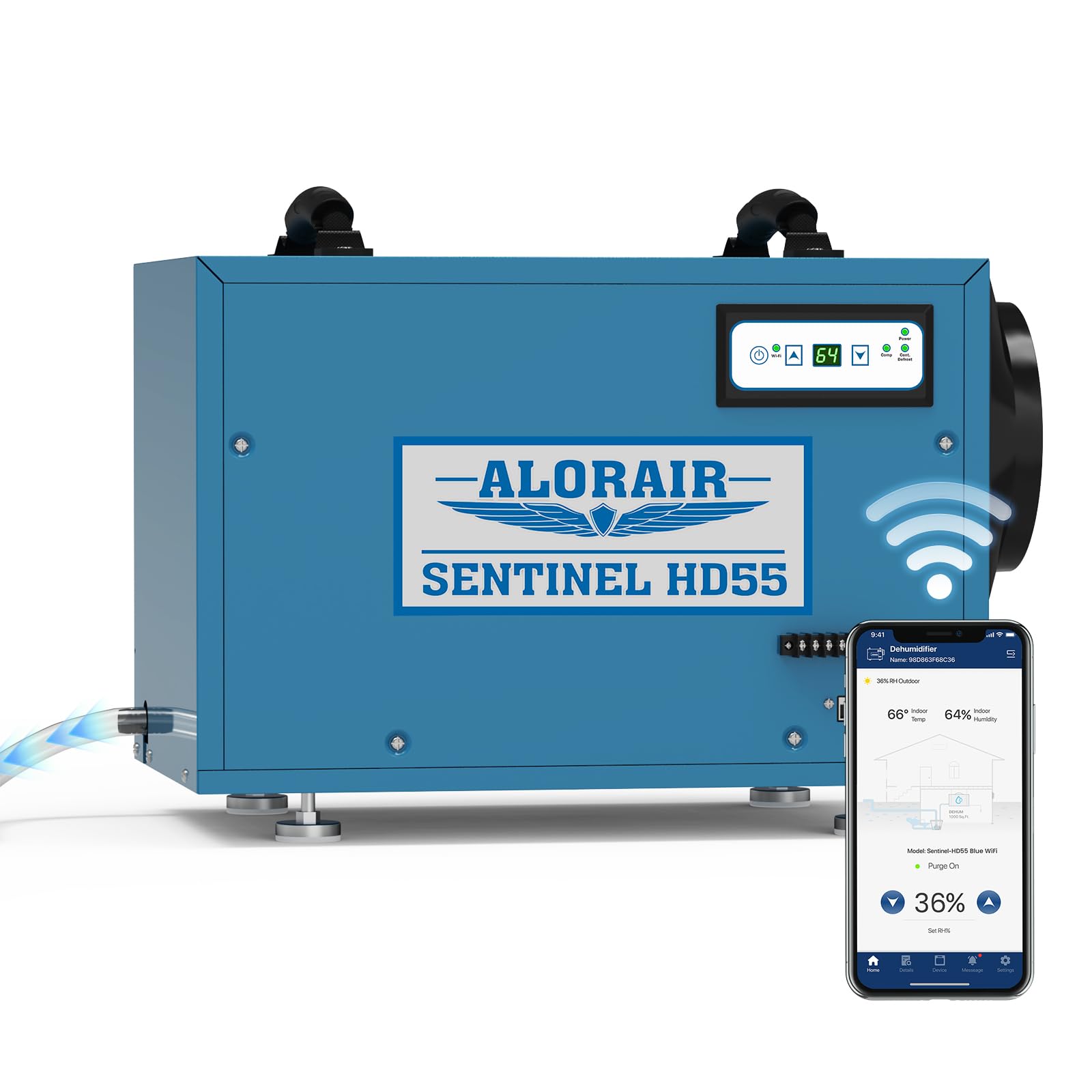
High-capacity crawl space drying you can watch and adjust from your phone
This is the pick for the owner who wants to keep an eye on a crawl space without climbing into it. The ALORAIR Sentinel HD55 Blue is rated for 1,200 sq ft and removes 113 pints of moisture. There is no tank at all — this is a unit meant to drain itself automatically, which is the right setup for a space you never want to visit with a bucket. The Wi‑Fi app is the standout: you monitor real-time humidity, adjust settings, and track progress from anywhere, so you know the space is dry even when you are away for the week. It uses durable construction and a metal body with filtration media, and it carries the 6-year limited warranty with two years of full coverage.
The practical features support a hands-off install. Auto-defrost keeps it running in low temperatures, and the MERV-1 filter, a basic air filter for larger dust particles, protects the internals while it works. There is a leak-protection design so condensation routes out rather than pooling, and the low-profile body fits under a low ceiling. The whole appeal is a machine that runs quietly and continuously while reporting back to you. Note the layout caveat up front: this unit has no tank, so it must have a drain and cannot be used as a tank-style portable.
Owners describe it as reliable and easy to set up, with One owner notes it works well even at 50 degrees — meaningful for a cool crawl space where lesser units weaken. Its compact size, build quality, and quiet operation also earn mention. The thing to weigh honestly: the Wi-Fi app is advertised as Bluetooth-capable by some listings and one buyer found that connection problem unsupported, so check the spec sheet against your exact model before ordering if that feature matters to you. For space near the size this article is built around, with a drain in place, this is the connected, no-tbucket crawl space answer.
Remote confidence: 113 pints of daily capacity with an app you check from the couch means you never guess whether the crawl space is dry, and the 6-year limited warranty backs a machine designed to run unattended.
Ideal for: crawl space owners who want high capacity, no tank, and phone-based monitoring from anywhere.
pass on it if: you have no drain nearby — with no tank, this unit has to discharge water continuously to work.
Understanding the Specs
Pints Per Day
This is the real measure of drying power — how much water the machine pulls from the air in 24 hours at 95°F and 90% relative humidity. It matters because square-foot ratings assume a warm open room. A unit pulling 20 to 22 pints per day is the sensible floor for a 1200 sq ft space that is merely clammy; a space that floods or smells musty wants 30 to 55 pints per day. Two numbers appear on some cartons and they can confuse buyers: the AHAM figure is measured under standard warm, humid conditions, while the saturation figure is what the unit can pull in swampy air, so it runs higher.
Tank Size and Drainage
The tank is how much water the unit holds before it stops, and a full tank shuts the machine off until you empty it. A 0.5-gallon tank in a genuinely damp space can fill in a day, while a 3.2-gallon bucket buys several days. The alternative is continuous drainage through a hose to a floor drain or sump, which lets the unit run non-stop. Gravity drainage needs the hose to run downhill, but a built-in pump can push water up — often as high as 19.6 feet — which is what a crawl space with no drain depends on.
Noise in Decibels
Decibels measure loudness, and a compressor dehumidifier is never silent. As a rough guide, 40 dB is around a quiet fridge hum, while 47 to 50 dB is a steady background drone. Lower fan settings drop the number, and a dedicated Sleep mode both slows the fan and dims the display. If the unit lives near a bedroom, look at the dB rating and whether it has a quiet mode; if it stays in a crawl space or garage, noise is a non-issue.
Auto Defrost and Humidity Range
Auto defrost clears frost off the cooling coils when the space gets cold, pausing the compressor briefly so the unit keeps working instead of icing up and quitting — essential in an unheated crawl space. The humidity range is how low you can set the target: many budget units stop at 40%, while the better ones reach 30% for deeper drying. A wider range lets you pull residual moisture out after rain rather than settling for a damp-but-not-wet room.
FAQ
How many pints per day do I need for a 1200 sq ft space?
Can I run a dehumidifier continuously without emptying a tank?
Will a dehumidifier keep working in a cold unheated basement?
Is a compressor dehumidifier better than a small thermoelectric one?
How loud is a dehumidifier and will it keep me awake?
Can I place a dehumidifier inside a crawl space with no floor drain?
What humidity level should I set for a basement?
Should I drain a dehumidifier into a sump pump or a floor drain?
Do I need to empty the tank if I connect a drain hose?
How long does a dehumidifier last before it needs replacing?
Final Thoughts: The Verdict
For a 1200 sq ft space with ordinary damp, the 1200 sq ft dehumidifier to start with is the Midea 22 Pint, because it pairs a 22-pint daily pull and a 35%–85% adjustable range with quiet 47 dB operation and Wi-Fi control — a proven, connected unit that just works. If your space is genuinely wet and you want more headroom, the Waykar 34 Pint dries harder and reaches down to 30% humidity. And for a crawl space with no drain, the ALORAIR 70 PPD with Pump lifts its own water 19.6 feet up and out, so you never touch a bucket. Pick the one that matches your wetness and your drainage, and the damp problem stops being a chore.
How We Picked
We do not accept paid placement. Every pick is matched to a real buyer and a real use-case; we do not hands-on test units.
Sources & Methodology
Specifications: manufacturer listings and product documentation. Review insights: verified customer reviews, as of September 2026. Pricing: not shown on this page (it changes often); check the current price via the retailer link.
As an Amazon Associate, Non Toxic Blog earns from qualifying purchases. This does not affect which products we feature.