Specs are compiled from manufacturer listings and verified buyer reviews and can change over time — please confirm the key details on the product page before buying.
If you are shopping for a 14-inch flexible duct, the short answer is this: a PVC hose with adjustable ropes gives you the tightest seal and survives the roughest job sites, while an insulated aluminum run is what you want when hot or cold air needs to stay hot or cold over distance. This guide covers both types in plain language so you can pick the right one in a couple of minutes.
I’m Mo Min — the founder and writer behind Non Toxic Blog. This guide is built by comparing the manufacturers’ published specifications and the patterns across verified customer reviews, so you get each pick’s real strengths and trade-offs instead of marketing spin.
A quick note before the picks: this list uses flexible, human-like matching for 14-inch diameter, so some listings offer 14 inches as one selectable size option and may describe a nearby size in the same product family. The nearest same-type size serves the same purpose, and every spec below is copied straight from the listing. Here is everything worth knowing about the Best 14-Inch Flexible Duct.
Our Picks at a Glance


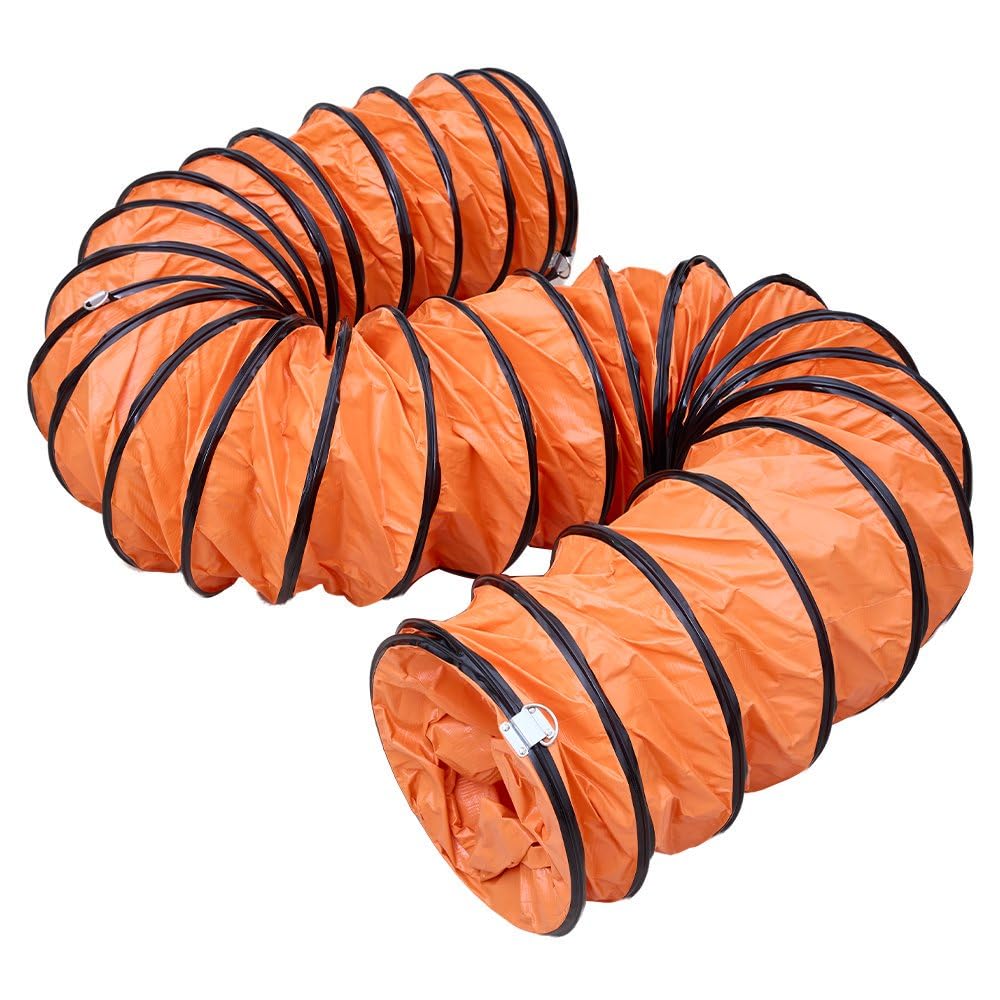
How To Choose The Best 14-Inch Flexible Duct
Two ducts can both say “14 inch” and still behave nothing alike. One is a woven PVC hose with a wire spring inside that you hang from D-rings and cinch with a rope. The other is a foil-and-polyester tube that you slide over a rigid collar and hold with a clamp. Neither is better in the abstract — they solve different problems.
Match the material to the job
PVC over vinyl-woven polyester is what you want for welding fume extraction, dust control, and any run that gets dragged around, re-hung, or rolled up weekly. Aluminum foil duct is lighter and cheaper-feeling by comparison, and it is the right call for dryer venting, bathroom exhaust, and HVAC runs where the hose mostly stays put. If you plan to move the hose every day, lean PVC.
Check whether the 14 inches is the inner or outer measurement
This is the single most common reason a duct gets returned. A 14-inch figure can describe the outside of the hose, the inside of the core, or the nominal size that the manufacturer expected to slide over a 14-inch collar. Before you buy, measure the fitting you intend to connect to and compare it to what the listing calls out.
Decide if you need insulation
If you are moving conditioned air — heating, cooling, or a portable AC — an insulated duct with an R-value is worth the extra bulk, because it keeps the air near the temperature it started at. If you are moving fumes, dust, or warm exhaust air out of a shop, skip the insulation entirely and put the money into a thicker hose wall instead.
Count the hanging hardware before you commit
Long ducts get heavy, and a hose that has to be strapped with rope can collapse under its own weight. Ropes, D-rings, and screw-tightened clamps are the difference between a five-minute install and an afternoon of wrestling. Check what is actually in the box.
Quick Comparison
| Model | Best For | Diameter | Length | Material | Amazon |
|---|---|---|---|---|---|
| 14in PVC Flexible Duct Hose, 16FT Fan Ducting★ Best Overall | All-round shop use | 14 inches | 16 feet | PVC | Amazon |
| Flexible 14 Inch Aluminum Ducting – 4 Layer ProtectionBest for Tight Spaces | Tight-space venting | 14 inches | 12 feet | Aluminum | Amazon |
| 14IN 25FT Ducting Hose PVC with Adjustable RopeBuilt for Long Runs | Long workshop runs | 14 inches | 16 feet | PVC | Amazon |
| 16ft Ducting Hose 14in PVC Flexible Duct Hosing | Air scrubber routing | 14 inches | 16 feet | Vinyl, Polyester, Carbon Wire | Amazon |
| Simple Deluxe 14 Inch 25 Feet Ducting | Dryer and solar tube rerouting | 14 inches | 25 feet | Aluminum | Amazon |
| 32FT Ducting Hose 14 Inch PVC with Adjustable Rope | Paint booth exhaust | 14 inches | 393 inches | PVC | Amazon |
| GAF Master Flow 14″ X 25′ Insulated Flexible Duct R6 | Conditioned-air runs | 14 inches | 25 feet | Insulated (R6) | Amazon |
| HVAC Premium 14″ Insulated R-6.0 Aluminum Duct, 25′ | Attic and mobile home HVAC | 14 inches | 25 feet | Aluminum with fiberglass blanket | Amazon |
In‑Depth Reviews
1. 14in PVC Flexible Duct Hose, 16FT Fan Ducting
Our pick — over 4.5★ from 100+ verified ratings; the strongest balance of quality and price.
Shop-grade PVC that shrugs off dragging, heat, and being rolled up every night
Pick this one if you are moving fumes, not conditioned air. It is a 14-inch by 16-foot hose built from flexible vinyl woven polyester wrapped around a carbon wire spring, with a smooth inside wall so air keeps moving instead of catching on the ribs. The temperature rating runs from -22°F to 212°F, which covers a welding bay, a cold basement, and everything in between.
What wins people over is how solid it feels in the hand. Owners describe it as heavy duty with real ways to attach the ends to structure, and the D-ring plus 3 load hooks mean you can hang it along a ceiling run without lashing it with rope. The threaded adjustable rope at the head cinches down over blower fittings to seal the connection, and the wear strip resists the abrasion that kills cheaper hoses.
One real limit: the same fitted end that seals so well cannot stretch over a 16-inch round adapter without cutting the ring out of the hose — buyers report exactly that. So measure your blower collar first. If it matches 14 inches, this is the most versatile duct on the list, and it comes in at 2.32 kg lighter than the 25-foot Misriga stand-in later in this list, which matters every time you carry it across a site.
What Buyers Keep Coming Back To
- Carbon wire spring holds the tube open without collapsing on long runs
- -22°F to 212°F range survives high-heat welding and cold basements alike
- D-ring plus 3 load hooks hang from a ceiling without rope straps
- Adjustable rope collar seals against blower lips to stop air leaking
- Collapses down for storage between jobs
What To Plan Around
- The fitted end will not slide over a 16-inch round adapter without trimming the ring
- Only one end is rope-adjustable, so scrubbers needing a custom fit on both sides are awkward
Reach for this if: you run a welding hood, plasma table, or blower exhaust and want a hose that survives daily abuse.
Think twice if: your fittings are 16-inch or you need both ends cinched to different sizes.
2. Flexible 14 Inch Aluminum Ducting – 4 Layer Protection Dryer Vent Hose
The 12-foot foil run for a short, awkward exhaust path
Twelve feet is the number that defines this one. It is a 14-inch aluminum duct made from four layers — aluminum foil, PET (a strong plastic film), aluminum foil again, and an outer black PVC skin — so the wall resists the rips and pinholes that turn a single-layer foil hose into a leaky mess within a season. The aluminum is corrosion-resistant and handles high heat, and two stainless steel clamps ship in the box so you are not hunting for hardware.
Function is where it earns its place. Owners mention it moves air well and feels heavy-duty flexible, and it bends through whatever angle your run needs before you screw the clamp down. At 2.32 kg it is light enough to hold overhead with one hand while you tighten the other. That is a real advantage over the 25-foot Misriga PVC hose, which weighs in at 5.99 kg and needs two people to position cleanly.
Here is the catch, and it is the one buyers keep hitting: the stated 14 inches reads larger than the actual opening on some units, so sliding it onto a rigid steel 14-inch duct can take real effort — customers note it running past half an hour even with a second pair of hands. Cut a slightly generous length and leave yourself slack, and it goes on far more easily.
The honest sizing read: the four-layer wall and included clamps give you a genuinely sturdier hose than bare single-layer foil, but you should treat the diameter as approximate and test-fit before you commit to a long permanent run.
Suits: a bathroom vent, stove exhaust, or blower connection where the run is short and the path is tight.
Not for: anyone who needs a precise, no-effort slide onto a rigid 14-inch collar.
3. 14IN 25FT Ducting Hose PVC Flexible Duct Hosing with Adjustable Rope
Orange, heavy, and built to stay put while you drag fumes across a whole workshop
Hanging hardware is the reason to look here. The kit includes two stainless steel rings plus 4 D-shaped rings on two meters of rope, which lets you suspend the whole run from a ceiling without wrapping straps around the tube — and straps are exactly what crush a flexible duct and choke your airflow. The adjustable drawstring at the mouth tightens to fit the blower lip, and the whole hose stands up to -22°F to 212°F (from deep cold to oven-hot).
What reviewers point out is a hose that stays where you put it: owners describe pairing it with an 8-inch ventilator and getting a snug, secure fit with no slipping, because the drawstring closes the gap instead of relying on friction alone. The orange color is easy to spot across a busy shop floor, the spiral reinforcing keeps it open, and the PVC resists kinking even when the run takes a hard turn.
Be ready for two things. It weighs 5.99 kg, so hanging it is a two-hand job, and the fresh PVC gives off a noticeable odor that fades within hours once air starts moving through it. It is also the shortest-data pick of the PVC group in terms of owner feedback, so you are buying on a smaller sample than the top pick.
Where it beats the Best Overall: the D-ring count is higher and the included rope is longer, which makes a permanent ceiling-mounted run considerably easier to set up.
Where it gives ground: at 5.99 kg it is well over double the weight of the 12-foot aluminum duct above, so plan the hanging points before it arrives.
Pick this for: a workshop exhaust that needs to be routed overhead and left in place.
Look elsewhere if: you need something light enough to carry room to room.
4. 16ft Ducting Hose 14in PVC Flexible Duct Hosing

The air-scrubber hose that does the same job as the trade-supply version
Start with the number that matters on a dusty job site: 4.42 kg for 16 feet of hose, which is light enough to lift onto a scrubber outlet single-handed. The build is the same recipe as the other PVC picks — vinyl woven polyester over a carbon wire spring, flame-retardant, rated from -22°F to 212°F (from deep cold to oven-hot), with a smooth inside wall and an adjustable rope at the mouth to cinch onto any size fitting.
Contractors are the ones who notice the value. Shoppers say using it on a construction air scrubber and routing it easily to a window, and one notes that the same item was quoted well over two hundred dollars from a trade supplier. It connects multiple ducts without needing a separate connecting collar, which saves both a part and a trip.
The honest caveat is diameter tolerance. At least one buyer measured the opening at 13.5 inches rather than a true 14, which made it impossible to fit onto a duct fitting — so if your connection is rigid and unforgiving, dry-fit before you cut. For a scrubber outlet or a blower lip where the rope takes up the slack, that margin does not matter.
Why Contractors Reach For It
- 4.42 kg for 16 feet — light enough to position without help
- Adjustable rope takes up slack on any size fitting
- Connects multiple ducts without a separate collar
- -22°F to 212°F range and flame-retardant construction
Before You Cut It
- Some units measure closer to 13.5 inches than 14, so rigid fitting connections are a gamble
Best match: air scrubbers, blower outlets, and any rope-sealed connection where exact diameter is less critical than weight and cost.
skip it if: you are clamping onto a rigid 14-inch steel collar that leaves no room for error.
5. Simple Deluxe 14 Inch 25 Feet Ducting, Non-Insulated Flex Air Aluminum Foil Duct
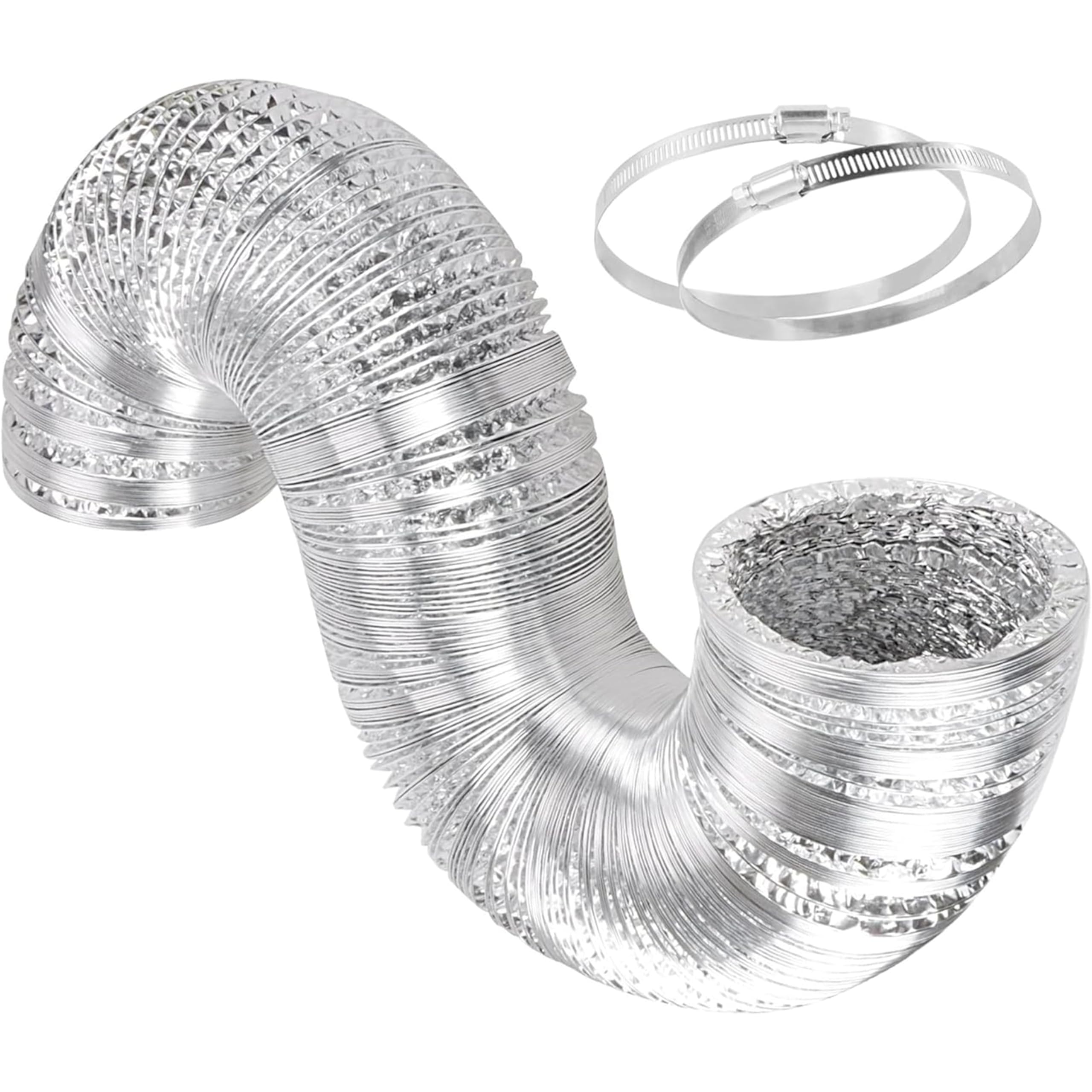
Twenty-five feet of foil that bends around tight corners without fighting back
Length and bendability are the pair to focus on. This is a 14-inch by 25-foot non-insulated aluminum duct at 7 pounds for the whole run, with four layers — an inner and outer flame-retardant heavy-duty foil wall around two more — rated from 0 to 185°F. It cuts to length with a knife or wire cutter and ships with two clamps in the matching opening size.
Flexibility is what people call out: owners describe maneuvering it around bends without the wrestling match that stiff foil ducts demand, and re-routing solar tubes or replacing a crushed dryer hose is exactly the job it was made for. It collapses compactly for storage, holds the shape you bend it into, and the two-layer foil wall is thicker than the mylar film (a thin plastic sheet) you find on bargain hoses.
The trade-off to accept going in is that thin foil walls tear if you drag them across a sharp seam. Buyers report it tearing while being pushed onto a fitting and recommend sealing the last stretch near the end with vent tape. Size has also been inconsistent on some units. Handle it gently on install and it performs fine for years.
Where it earns its keep: the 25-foot length plus real flexibility means you can route around joists, appliances, and obstacles without buying a joiner.
The recurring gripe: the foil is not armored, so any rough edge or sharp vent seam will claim a hole — tape the seams before you slide it on.
Good fit for: dryer venting, solar tube rerouting, and hydroponic or bathroom exhaust where you need length and easy bends.
Better to avoid if: your route crosses sharp metal edges or you plan to drag the hose in and out repeatedly.
6. 32FT Ducting Hose 14 Inch PVC Flexible Duct Hosing with Adjustable Rope

When the exhaust point is a full room away from the fan
At 393 inches — roughly 32 feet — this is the longest PVC duct in the group, and that single number changes what jobs it can handle. A paint booth at one end of a shop and a window at the other is no longer a problem, and you do not have to daisy-chain two shorter hoses and tape the joint. It is flame-retardant, corrosion-resistant PVC with a carbon wire spring, and the adjustable rope at the mouth cinches down around the blower lip.
Owners mention running it as a paint booth exhaust and being pleased with how it moves air, and the drawstring connection point fits multiple size exhaust fans, so it is not fussy about which blower you pair it with. Hanging is handled by D-rings for walls or columns, and the whole run collapses for storage. Airflow holds up along the full length because the smooth inside wall and the spring keep the tube from collapsing on itself.
It is the heaviest hose here at 8.78 kg, so plan how you will suspend it before it arrives, and give the rope connection a real tug to confirm it will not release mid-job. Customers note that hose clamps hold more securely than the cord on a fan with a small lip, which is worth doing if your blower has a narrow edge. There is a rare report of the rubber holding the wire letting go — treat the end fittings gently rather than yanking the hose to move it.
The standout spec: 32 feet from one hose means one connection instead of two, which removes the leak point where two shorter ducts would have to be joined.
What to prepare for: 8.78 kg needs proper hangers, and a blower with a very small lip will hold better with clamps than with the supplied cord.
The right call when: your fan and your exhaust point are far apart and you want a single continuous run.
Weigh the downside if: you only need a short hop — the extra weight is not worth carrying.
7. GAF Master Flow 14″ X 25′ Insulated Flexible Duct with R6 Insulation

The insulated run that keeps heated and cooled air at the temperature you paid for
R6 insulation is the headline: 33% more than the R4.2 products it is measured against, wrapped in a heavy-duty silver jacket over a 14-inch by 25-foot run. It meets the UL181 standard and is ETL listed for HVAC use, and at 23.3 pounds the jacket and blanket are genuinely there.
Function is where owners find value. It works well in standard heating and air conditioning systems and in venting applications, and one owner notes it effectively replaces the stock ducts that come with portable AC units. It is tough enough that the plastic duct stretches instead of tearing when you pull it around a corner, and it can be cut and prefabricated before you climb into an attic — which is the tip that turns a miserable install into a manageable one.
Two things to know before you order. The stated size refers to the inner diameter only, so the outer sleeve is bulkier than the number suggests and needs more clearance. And keeping the outer sleeve long enough to fully cover the clamp takes a little care — cut the inner casing longer than the insulation and the clamp has nothing to bite. Get those two details right and the airflow and quiet hold up for years.
What The Insulation Buys You
- R6 rated 33% higher than standard R4.2 products
- Covers roughly 350 square feet over the 25-foot run
- Meets UL181 and is ETL listed for HVAC use
- Durable silver jacket resists tears when routed around corners
Install Details To Get Right
- The quoted size is inner diameter only, so outer clearance is greater than expected
- You must keep the outer sleeve long enough to cover the clamp or it will not hold
Made for: heating, cooling, and venting runs where air temperature has to survive the trip through an attic or crawl space.
Pass on it if: you are exhausting fumes or dust and do not need the thermal blanket at all.
8. HVAC Premium 14″ Insulated R-6.0 Aluminum Duct, 25′

Double-walled aluminum with an air-tight core for the cleanest airflow on the list
Two numbers set this apart from every other insulated pick here. First, the thick fiberglass blanket gives it an R-value of 8.7, the highest in this group. Second, the inner core is air-tight, which reduces pressure loss along the run and keeps fiberglass out of the airstream entirely. The outer jacket is a tough reinforced metallized polyester designed to resist tears and punctures, and the whole 25-foot run is engineered to take sharp bends without kinking.
Aluminum line both inside and out is the reason it holds up on long runs: reviewers point out using it on overhead runs through floor joists and on mobile home ductwork, and describe it as easy to work with and sturdier than the smaller units they had on hand. At 12.2 kg it is lighter than the 23.3-pound GAF insulated duct above, so one person can manage the attic end while the other feeds from below.
Worth knowing: the closed-cell-like construction that holds air in also holds moisture and dirt if the run collects condensation, so make sure the path stays clear. And an occasional unit arrives with thinner foil wrap than expected — if the jacket feels flimsy from the start, that is your signal to check before installing.
The spec that decides it: R-value 8.7 beats the R6 rating of the Master Flow above by a clear margin, and the air-tight inner core means less pressure loss over the full 25 feet.
A fair caveat: thicker insulation means a bulkier outer profile, so plan your joist clearances before you route it.
Choose this when: you want the highest R-value here and an air-tight core that keeps fiberglass out of your airstream.
Choose the Master Flow instead if: your budget or clearance points toward a lighter, value-first insulated duct.
Understanding the Specs
Diameter: inner versus outer measurement
“14 inch” can mean the outside of the hose, the inside of the core, or the nominal size the maker expects to slide over a 14-inch collar. That single ambiguity is why a duct sometimes refuses to fit a fitting it should match. Measure the collar you are connecting to and compare it to what the listing actually states before you buy.
Material: PVC versus aluminum foil
PVC over vinyl woven polyester with a carbon wire spring is the material to pick when the hose gets dragged, re-hung, or rolled up often — it resists kinking and abrasion. Aluminum foil duct is lighter and collapses more compactly, and it suits dryer venting and HVAC runs that mostly stay put. Neither material is wrong; they match different jobs.
R-value on insulated duct
The R-number tells you how well the insulation blanket resists heat moving through the duct wall. Higher R means conditioned air arrives closer to the temperature it started at, which matters most on long runs through hot attics or cold crawl spaces. Non-insulated ducts have no R-value at all — that is the trade-off for their lighter weight and lower bulk.
What ships in the box
Ropes, D-rings, and screw-tightened clamps decide how long install takes. A hose with threaded ropes at the mouth seals against a blower lip without extra tape. D-rings let you suspend a run overhead without wrapping straps around the tube, which is what crushes a flexible duct and kills airflow. Count the hardware before you commit.
Temperature range
The Fahrenheit and Celsius range printed on the listing tells you where the hose can safely live. A duct rated from -22°F to 212°F covers welding bays, cold basements, and hot attic runs in one product. A foil duct rated from 0 to 185°F suits standard dryer and HVAC venting but has less headroom at the cold end.
The wire spring inside
A carbon or high-carbon wire spring coiled through the wall is what keeps the tube open under vacuum and lets you bend it without collapse. Thicker springs hold shape better on long runs and reduce the chance the hose pinches itself shut when you are pulling air hard through it.
FAQ
Will a 14-inch flexible duct fit a 14-inch rigid duct collar?
Should I choose PVC or aluminum foil for a welding fume extractor?
What does R-value mean on an insulated flexible duct?
Can I cut a flexible duct shorter without damaging it?
Why does my flexible duct collapse when the blower runs?
How do I stop air leaking where the hose meets the blower?
Do I need insulated duct for a portable air conditioner?
How much does a 25-foot 14-inch duct weigh and does it matter?
Will a PVC duct smell when it is new?
Can I use flexible duct as a dryer vent hose?
Final Thoughts: The Verdict
For most people buying a 14-inch flexible duct, the 14in PVC Flexible Duct Hose, 16FT Fan Ducting is the one to get — a flame-retardant PVC hose with a carbon wire spring that hangs from D-rings, cinches with an adjustable rope, and survives the abuse a shop throws at it. If you are pushing conditioned air instead of fumes, grab the GAF Master Flow 14″ X 25′ R6 Insulated Duct and let the insulation carry the temperature through the attic. And when you want the highest R-value here with an air-tight core, the HVAC Premium 14″ Insulated R-6.0 Aluminum Duct is the strong finish — measure your collar before you cut anything.
How We Picked
We do not accept paid placement. Every pick is matched to a real buyer and a real use-case; we do not hands-on test units.
Sources & Methodology
Specifications: manufacturer listings and product documentation. Review insights: verified customer reviews, as of September 2026. Pricing: not shown on this page (it changes often); check the current price via the retailer link.
As an Amazon Associate, Non Toxic Blog earns from qualifying purchases. This does not affect which products we feature.