Specs are compiled from manufacturer listings and verified buyer reviews and can change over time — please confirm the key details on the product page before buying.
If you are shopping for a 16 Qt pressure canner, the honest truth is that only one thing matters: whether your jars come out sealed and safe every single time. Everything else — the handle shape, the finish, the manual — is secondary. This guide walks you through what actually separates a canner you will hand down from one you will replace in two seasons, and it shows you exactly which picks deliver on that promise.
I’m Mo Min — the founder and writer behind Non Toxic Blog. This guide is built by comparing the manufacturers’ published specifications and the patterns across verified customer reviews, so you get each pick’s real strengths and trade-offs instead of marketing spin.
Before you buy, know that this list matches 16 quart capacity loosely, so it accepts canners in the roughly 15-to-16-quart range and skips the small 8-to-12-quart cookers entirely. A few picks run a little larger, and the nearest same-type size does the same job. Three things decide which of these 16 qt pressure canner picks fits your kitchen: the sealing system, the stove you actually own, and how much produce is sitting on your counter.
Our Picks at a Glance

How To Choose The Best 16 Qt Pressure Canner
The seal tells you almost everything
Two seal designs dominate. The first is a rubber or silicone gasket (a soft ring that sits between the pot and the lid); it works well but needs replacing on a schedule, and a dried-out gasket is a common cause of a canner that will not hold pressure. The second is a metal-to-metal seal, where machined surfaces clamp together with no gasket at all — nothing to dry out, nothing to buy again. If you want the lowest-maintenance option and you plan to can for years, the gasket-free route is worth the higher upfront outlay.
Weighted regulator versus dial gauge
A weighted regulator is a small metal weight that rocks or jiggles at the target pressure — you listen for it and adjust the burner until the rhythm is steady. A dial gauge shows pressure as a number you have to watch. Many experienced canners prefer the weight because it never drifts out of calibration, and a dial on top of the weight is a nice bonus rather than a requirement. The trade-off with a weight is that it can take a firm push to seat, so check that your hands are comfortable with the motion.
Match the canner to your stove before you buy
Aluminum canners are heavy and they sit right on the burner. A large aluminum canner loaded with filled jars can be far too much weight for a glass cooktop. If your kitchen has one, look for a model listed as suitable for flat tops or glides across the surface with care, and check the weight limit on an induction hob if that is what you own. Gas is the least fussy option for any of these.
Jar capacity: pints, quarts, and stacking
The spec that decides your batch size is how many jars fit on the rack. Pint jars are the everyday workhorse; quart jars are what you reach for with tomatoes and stock. Some 16-quart bodies fit only a single layer of pints, while larger vessels stack two layers and hold more quart jars at once. If you can twice a week through harvest, that extra layer turns a long afternoon into a manageable one.
Quick Comparison
| Model | Best For | Stated Capacity | Seal / Regulator | Stove Compatibility | Amazon |
|---|---|---|---|---|---|
| All American 1930 15.5qt (The 915)★ Best Overall | Lifetime purchase, gasket-free | 15.5 qt | Metal-to-metal, no gasket | Gas, electric, flat top | Amazon |
| WantJoin 16Qt Aluminum Pressure CookerBest Value | Induction owners on a budget | 16 qt | Locking lid, release valve | Gas and induction | Amazon |
| Mirro 92116 Polished Aluminum | Beginners who want a jiggle cue | 16 qt | 5/10/15 PSI weighted regulator | Stovetop | Amazon |
| Presto 01755 Aluminum Canner | Reliable mid-range all-rounder | 16 qt | Outer lid, 15 lb weight | Stovetop, smooth top | Amazon |
| Kritkin 24qt Canning Kit | Big batches plus accessories | 24 qt | Two release valves, gauge | Stovetop | Amazon |
| Presto 16 Quart Warp-Resistant Canner | Twice-weekly quart canning | 16 qt | Outer lid, warp-resistant body | Stovetop, glass surface | Amazon |
In‑Depth Reviews
1. All American 1930 15.5qt Pressure Cooker/Canner (The 915)
Our pick — over 4.5★ from 9,500+ verified ratings; the strongest balance of quality and price.
A canner machined to be handed down, not replaced in a few seasons
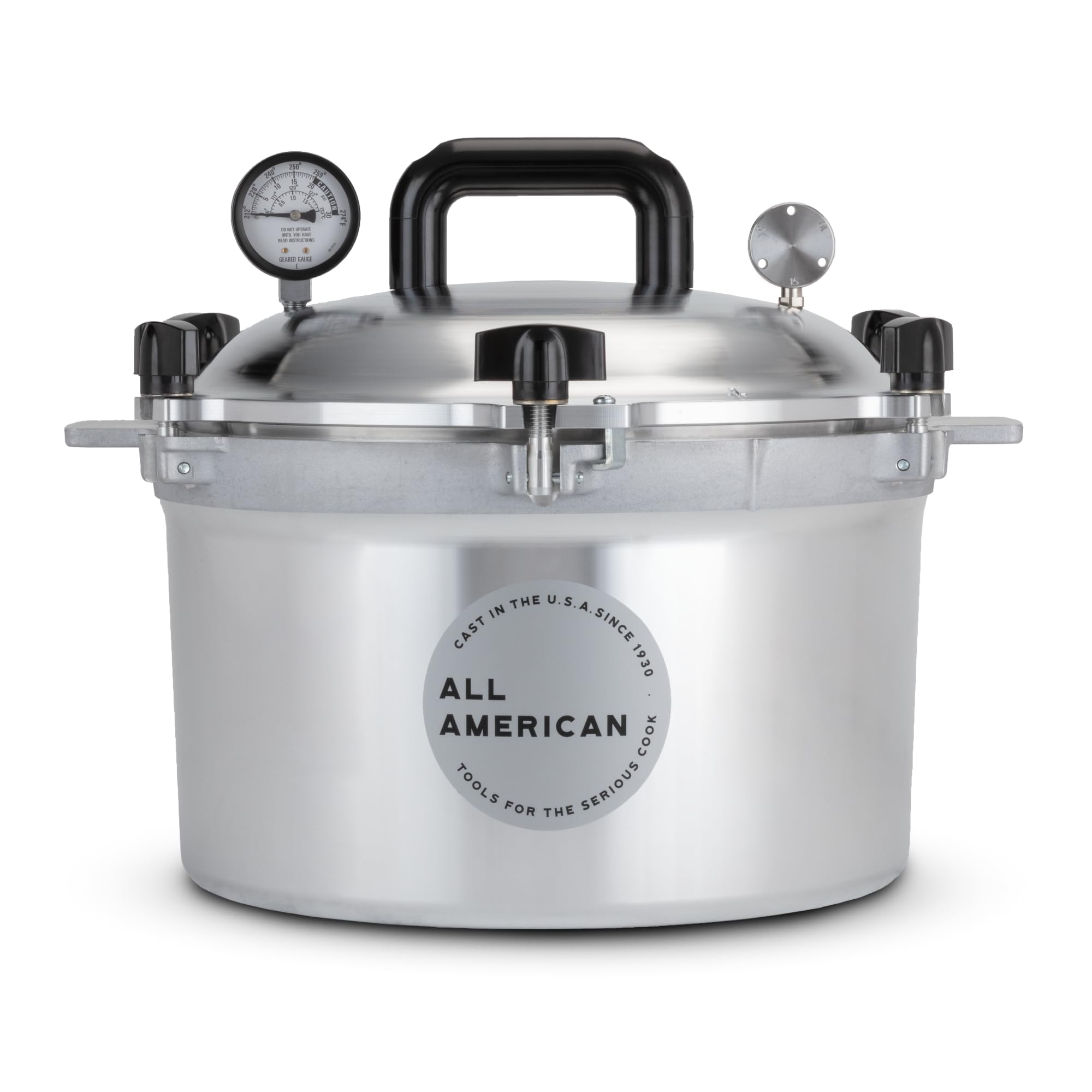
There is no rubber gasket anywhere on this canner — instead, a precision-machined metal-to-metal sealing system clamps the lid down with positive-action wingnuts that form a steam-tight seal. That means there is no seal to dry out, crack, or replace on a schedule, which is why owners describe it as something they expect to buy only once. The 15.5 qt body holds about 10 pint jars or 7 quart jars per load. It sits on gas, electric, or flat top stoves, and the whole thing weighs 18 pounds before you add anything to it.
What wins people over is the way it keeps working with almost no fiddling. The weighted regulator rocks at pressure with the easy-to-read steam gauge sitting on top as a reference point, so you can adjust the burner to a steady rhythm instead of squinting at a dial. Because the weight holds the setting, there is no annual gauge testing to fuss over. Buyers report that a 15.5 qt fill holds 7 quarts with no stacked pints and that it fits a gas stove cleanly. The review pages sum it up best: “built like battleship.”
Its weight draws mixed feelings. At 18 pounds empty, it is a two-hand lift onto the burner, and loading it onto a glass cooktop is asking for trouble — keep it on gas or a solid electric element. The other quirk is the lid: if you leave it clamped down after the pressure drops to zero, it can stick, and the fix is a gentle pry with a flat screwdriver. A film of olive oil around the rim every few uses keeps that from happening. One owner found the rubber overpressure release needs periodic replacement, and noted that steam condensate can drip down the cover when you open it.
Where it earns its keep
- Gasket-free metal-to-metal seal means no consumable to buy or dry out
- Holds about 10 pint jars or 7 quart jars per batch
- Weighted regulator with steam gauge as backup — no annual gauge testing
- Suits gas, electric, or flat top stoves and is made in the USA
What to plan around
- 18 pounds empty makes it a two-hand lift; not for a glass cooktop
- Lid can stick if left clamped once pressure hits zero — pry gently
- Higher upfront outlay than the aluminum imports
Reach for this if: you want one canner to last decades, you cook on gas or a solid electric element, and you would rather never shop for a replacement gasket.
Look elsewhere if: your range has a glass cooktop or you physically want a lighter load to lift.
2. WantJoin 16Qt Aluminum Pressure Cooker with Release Valve
The induction-friendly entry ticket for a first canning season
If your kitchen runs on an induction hob (a cooktop that heats the pot with a magnetic field), this is one of the few picks here that is explicitly rated for it — unlike the All American above, which the maker lists for gas, electric, or flat top only. The 16 qt aluminum body feeds 10 to 14 people in one go, according to the maker, so a single batch covers a big family or a full day of canning. It reaches up to 70 Kpa with a claimed 239°F boiling point, which the maker says is hot enough for low-acid foods. Eight built-in safety features sit inside, including a self-locking valve, a limit valve, an anti-blocking lid, a safety valve, and a pressure release window. A canner rack is included, and the outer body measures 22 by 14.2 by 11.8 inches.
The practical detail worth knowing before you buy: the weight matters. Owners mention a loaded weight of 45 pounds with a normal fill, within an induction hob’s 50 pound limit. That is the kind of thing you want to know before you lift it onto a glass or induction surface. The included 11 inch rack sits about halfway down the pot, and one canning-focused owner swapped in a 9 inch stainless rack to sit under the jars. Push the top weight and it jiggles at 15 pounds of pressure, which is where low-acid foods need to be.
Here is the catch, and it is worth taking seriously. Quality is what buyers praise most here, and the cooking speed and dishwasher-safe design both get good marks. But durability draws a different response — several customers note the interior discoloring black over time, and some describe it failing to hold pressure. This is not a canner you buy for a lifetime of use; it is a canner you buy to find out whether you actually enjoy canning.
Honest read on the build: the heat conduction is genuinely quick and the safety valve stack is thorough for the tier, but the aluminum interior asking to be seasoned and cared for tells you this is an entry-level body. Work sealing-ring cleaning into your routine — the maker notes residue on the ring affects the seal.
The right buyer: a first-timer on an induction hob who wants to test drive canning without a big commitment.
Think twice if: you plan to can every season for the next twenty years — the durability scoreboard says this is not that canner.
3. Mirro 92116 Polished Aluminum 5 / 10 / 15-PSI Pressure Cooker/Canner

Listen for the jiggle and stop watching a dial entirely
The Mirro hands you three pressure settings on one regulator — 5, 10, and 15 PSI (pounds per square inch, the force the steam exerts) — so you can dial in low pressure for delicate work and step up to 15 PSI for the low-acid vegetables and meats that need the full temperature. Rather than a numbered dial you must monitor, a weighted regulator holds the pressure automatically and tells you it is there by rocking. The 16 qt body holds 16 pint jars or 5 quart jars per load. It arrives with two cooking racks plus dual side cool-touch handles. The exterior is mirror-polished aluminum over a natural interior finish, and it weighs 9.5 pounds.
Owners who have left canning and come back tend to land here for one reason: the jiggle. One returner, five years out of practice, chose this over the alternatives specifically to avoid watching a gauge and preferred listening for the rhythm instead. The performance story holds up in use — clear instructions, quick heating, and a steady temperature that needs almost no burner adjusting once you are at pressure. Jars seal, and siphoning (liquid escaping past the lid and losing your fill level) is reported as virtually nonexistent, even with something tricky like chicken stock. A first-timer has called it a simple but trustworthy canner to learn on.
The one recurring annoyance is the regulator itself: seating it takes a firm, deliberate push — owners describe needing two solid pops to get it home. That is not a flaw so much as a technique to learn on your first batch. One longer-term user did note a rust-colored stain forming around the steam vent after the first use, and this is cosmetic rather than structural — that particular owner canned meat, frozen vegetables, and water-bath batches for two years and rated everything else at the top.
Beginner angle: the three-pressure regulator gives you one dial-free control for the entire learning curve, which is why so many people describe this as the canner they recommend to newcomers.
Seasoned canner angle: an experienced hand will find the capacity limiting — 5 quart jars per load is modest if you are putting up a full garden.
Buy it for: a first canning season on a stovetop where you want clear feedback that pressure is holding.
Consider skipping if: you need to move a lot of quart jars at once — the 5 quart load will slow you down.
4. Presto 01755 16-Quart Aluminum Pressure Canner and Cooker
The middle-of-the-road canner that simply does the job right
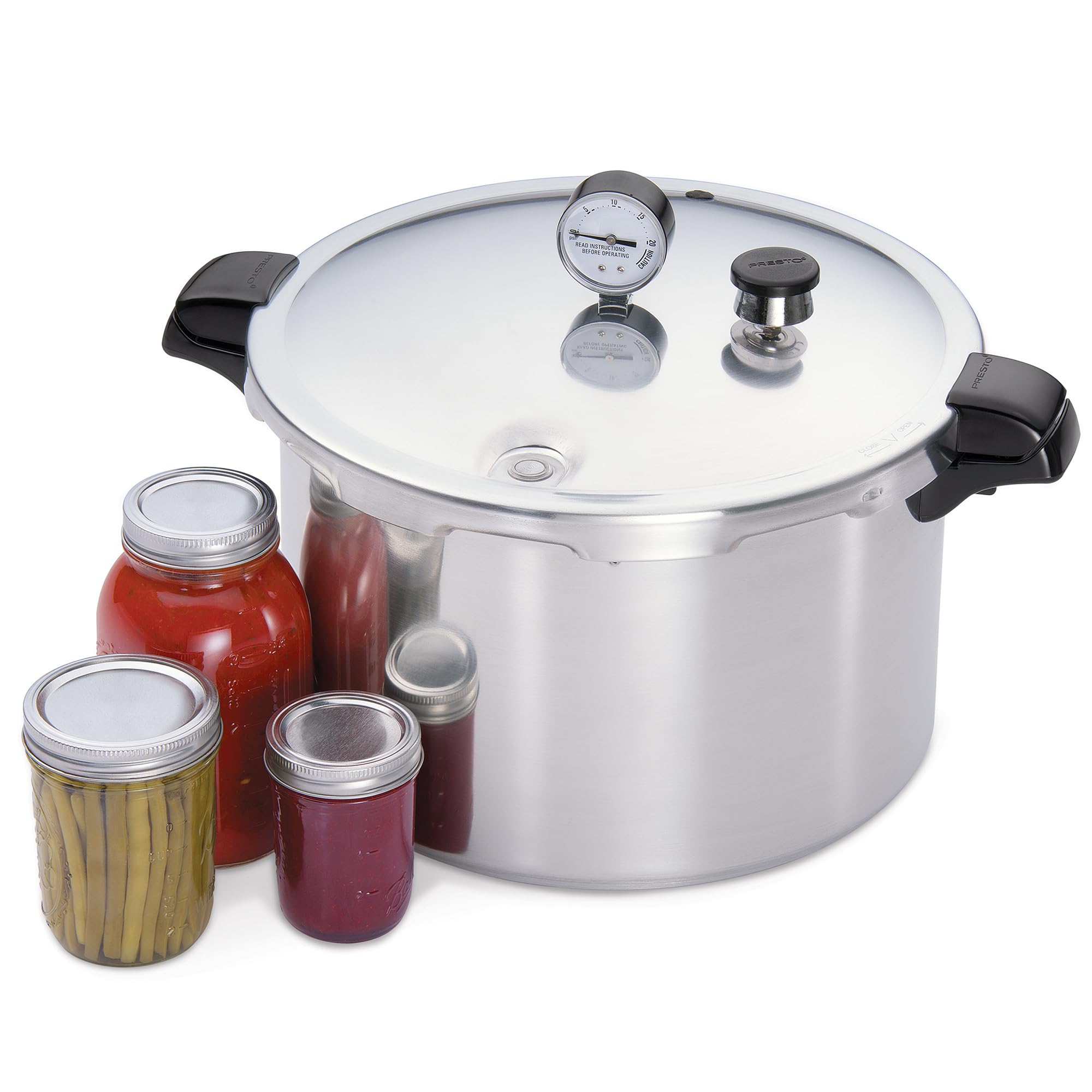
Performance is the entire argument for this one. This is the 16-quart pick a huge number of home canners settle on, and the reason is unglamorous: it holds steady pressure, it seals, and it makes the process boring in the best way. The outer-lid design seats firmly with the included 15-pound weight, which owners describe as light enough to lift off the burner without a struggle. It runs on smooth top stoves as well as standard elements, and the body weighs 10.5 pounds. The package includes the air vent, a cover lock, and the warp-resistant aluminum body.
Where this Presto beats the Mirro above is flexibility of use: it doubles as a water bath canner for high-acid work like pickles and jam, so you are not storing a second pot. A 15 PSI held for 30 minutes covers the low-acid load, and the manual walks you through it clearly enough that beginners get there on the first try. Owners specifically call out even heating, consistent pressure, and no leaking at the seal. One is emphatic about the lid: “Love this canner easy to get the lid off and on and works great.”
The honest snag is the lid’s temperament. Some owners find it awkward to open and close next to the smooth-locking alternatives, and the pressure control draws mixed feedback from a smaller group. One buyer did report receiving older stock with a dried-out gasket — Presto sent a replacement at no charge, and the original still held pressure through the batch. That is a packaging-and-aging edge case, not a design problem, but worth a glance at the gasket on arrival.
Standout strengths
- Holds even temperature and consistent pressure for the full processing time
- 15-pound weight is comfortable to lift on and off the burner
- Sits on smooth top stoves as well as standard elements
- Doubles as a water bath canner for pickles and jam
Small trade-offs
- Lid draws mixed reports — a few find it fiddly to seat
- Occasional old-stock gasket on arrival; check it before your first batch
Confident pick for: a canner who wants one pot for both pressure and water bath work without a steep price tag.
Not the one for you if: you expect a lock so smooth it practically seats itself — this lid needs a deliberate hand.
5. Kritkin 24qt Pressure Canner Supplies Kit

A jumbo canner that arrives with the tools you would otherwise buy separately
Nothing else in this roundup goes this big. The 24 qt aluminum-alloy body handles water bath canning, pressure canning, and steam canning in the same pot, and the maker positions it for large family meals from soups to stews in a single process. The kit ships with canning tongs, a stainless steel steam rack, a pressure gauge, and two pressure release valves, so a first-time canner does not have to source accessories. It weighs 15 pounds and uses a mechanical knob controller with a locking lid.
The 24 qt size solves the exact problem the Mirro above runs into. Where the Mirro holds 5 quart jars per load, this one lets you put up multiple batches of jelly at once — a genuine advantage when the fruit is riper than your patience. Reviewers point out reaching 12 PSI and holding a 90-minute cook at reduced heat with no change in the stainless steel interior or exterior color. It is also a value play: shoppers say it comes in below other brands while still including the accessories, and the supply kit handles the lifting and racking you would otherwise improvise.
Now the two things you should hear straight. First, the pressure control draws mixed feedback — some units build pressure beautifully, and a few do not build it at all. Second, the directions are thin; buyers report needing to research the process online before their first batch. One arrived with a lid that would not lock because the handle holes were drilled at the wrong angle, and it was replaced overnight at no cost with no questions asked. That kind of backup matters when a canner arrives wrong. The maker also warns not to exceed 100Kpa (14.5 PSI) or fill past three-quarters, or the pot will leak.
Where the money goes: into capacity and the included tool set, not into a premium body. For someone putting up a serious harvest, that is the trade you want.
What it asks of you: read the safety limits carefully and keep the sealing ring clean, because residue on the ring compromises the seal.
Right fit: a high-volume canner with a big garden or a big family who wants the rack and tongs in the box.
Wrong fit: anyone who wants a manual to walk them through step one — that guidance lives on the internet, not in the packaging.
6. Presto 16 Quart Warp-Resistant Aluminum Pressure Cooker/Canner

Built for the person who cans two or three times a week, not twice a year
The stated capacity is 12 half-pint, 10 one-pint, or 7 one-quart jars per load. That quart figure is the one to focus on — it matches the All American above on quart capacity in a body that weighs 10.2 pounds instead of 18, so lifting it onto the burner is a one-person job. It carries a 12 year warranty, the longest in this roundup, and runs on a glass cooktop with care.
People who use this regularly tend to report the same thing: follow the booklet and it behaves. One canner running two to three batches a week describes the heat distribution as very good and the results as consistently perfect. Another notes it is noticeably lighter than a previous 16-quart Presto, which is worth flagging given the warp-resistant claim — if you are moving up from an older aluminum canner, expect a different feel in hand. Assembly is part of the ritual: tighten every screw and the vent lock properly or the unit will not reach pressure.
Two things deserve a fair hearing. The size gets mixed reviews — it is not tall enough to completely cover quart-size jars for water bath work, so if you plan to use it that way, plan around it. And an occasional unit has not held up over months of light use, while most owners mention sturdy, long-running performance. That is a spread, not a pattern, and the 12 year warranty backs the body. One owner does flag a gritty grey machining residue inside a new unit and recommends washing it inside and out before the first batch, with gloves on.
The frequent-use case: twice-or-three-times-a-week canning is exactly what a lighter 16-quart aluminum body with a stated 7-quart capacity is made for, and the routine rewards the person who follows the pressure-up sequence without shortcuts.
For you if: you can through the season on a rotation and want a lighter body than a cast aluminum classic.
Skip if: full-immersion water bath canning of quart jars is on your list — the body is not deep enough for it.
Understanding the Specs
Pressure rating and PSI
PSI stands for pounds per square inch — it is the measure of how hard the steam pushes against the inside of the canner. The higher the pressure, the higher the internal temperature, and low-acid foods like green beans, corn, and meat need to reach the temperature that only 15 PSI reliably delivers. Canners that let you choose between 5, 10, and 15 PSI give you a lower setting for delicate work and the full 15 for the low-acid job. A weighted regulator holds its pressure by rocking, so you adjust the burner to the rhythm rather than chasing a number.
Jar capacity and stacking
The stated jar capacity tells you how much fits on the rack in a single load. Pints are the everyday size for most home canners; quarts are what you fill with tomatoes, stock, and other bulk produce. Some 16-quart bodies fit only a single layer of pints, while larger vessels stack two layers of pints or hold more quart jars at once. Check whether the canner you are considering is deep enough to fully submerge quart jars if you also want to use it for water bath canning, because a shorter body may not cover them.
Seal type: gasket versus metal-to-metal
A gasket is a rubber or silicone ring that sits between the pot rim and the lid to make the seal. It works, but it ages and needs replacing, and a dried-out gasket is a common reason a canner stops holding pressure. A metal-to-metal seal replaces the gasket entirely with machined surfaces that clamp together, so there is nothing to replace. The trade-off is a higher upfront cost and a lid that can stick if you leave it clamped down after pressure drops to zero — a light film of oil around the rim keeps that from happening.
Stove compatibility and canner weight
Aluminum canners are heavy before you load them with filled jars, and a glass or induction cooktop has a weight limit. Check the maker’s stated stove list — some canners are rated for gas, electric, and flat top, while others add induction, and a few heavier bodies are better kept on gas or a solid electric element. Empty weight matters for the lift you do every batch; a lighter body is easier on the back but may feel less substantial in use, so choose according to your cooktop and your strength rather than the number in isolation.
FAQ
Do I really need a 16 qt pressure canner, or will a smaller cooker do?
Can I use a pressure canner on an induction cooktop?
What is the difference between a weighted regulator and a dial gauge?
Why does my canner lid stick, and how do I get it open?
How many quart jars fit in a 16 qt canner?
How long does a pressure canner last?
Should I buy a stovetop canner or an electric one?
Why does my canner lose pressure or leak during processing?
Does a larger canner take longer to heat up and cool down?
Do I need to replace the sealing ring or gasket regularly?
Final Thoughts: The Verdict
The best pick for most canners is the All American 1930 15.5qt (The 915), because its gasket-free metal-to-metal seal removes the single part most likely to fail on a canner and holds 7 quarts per load. Over 9,000 owners rate it 4.9 stars, the highest score in this roundup. If you are looking for a lighter 16-quart mid-range option for regular weekly batches, the Presto 16 Quart Warp-Resistant Canner is the one to reach for. And if you want the machine to monitor the temperature for you, the Presto 02153 23-Quart Digital Canner takes the whole process off your hands. Whichever you choose, match the canner to your stove and your jar size before you buy — that is the decision that determines whether the tool serves you for one season or twenty.
How We Picked
We do not accept paid placement. Every pick is matched to a real buyer and a real use-case; we do not hands-on test units.
Sources & Methodology
Specifications: manufacturer listings and product documentation. Review insights: verified customer reviews, as of September 2026. Pricing: not shown on this page (it changes often); check the current price via the retailer link.
As an Amazon Associate, Non Toxic Blog earns from qualifying purchases. This does not affect which products we feature.